 MineArchive
Cwmtillery Colliery
| Also known as | Tir Nicholas Colliery, South Wales Colliery |
|---|---|
| Location | Cwmtillery, near Abertillery, Blaenau Gwent — 51.7450, -3.1300 (approximate) |
| Commodity | Coal |
| Type | Coal |
| Worked | 1840s–1982 |
| Maximum depth | Deepened to 240 yards under John Russell, from an original 130 yards. |
| Operators | Thomas Brown (1840–1852), John Russell (1852–1900), National Coal Board (1947–1982) |
Overview
A Western Valleys colliery above Abertillery, sunk in the 1840s on the land of a farm called Tir Nicholas in search of the Elled seam and worked for some 140 years until 1982. It suffered four underground explosions between 1857 and 1876, the worst of them in December 1876.
History
During the 1840s Thomas Brown acquired the right to sink a shaft at the site of a farm known as Tir Nicholas, hoping to reach the Elled coal seam. The shaft went down 130 yards, and the colliery was known at first as Tir Nicholas Colliery and later as the South Wales Colliery. In 1852 it changed hands, John Russell taking ownership; he increased the original shafts and deepened the mine to 240 yards.
Four underground explosions are recorded between 1857 and 1876. The first, on 27 May 1857, killed thirteen (see Disasters, below). The worst came on 18 December 1876 (see Disasters, below).
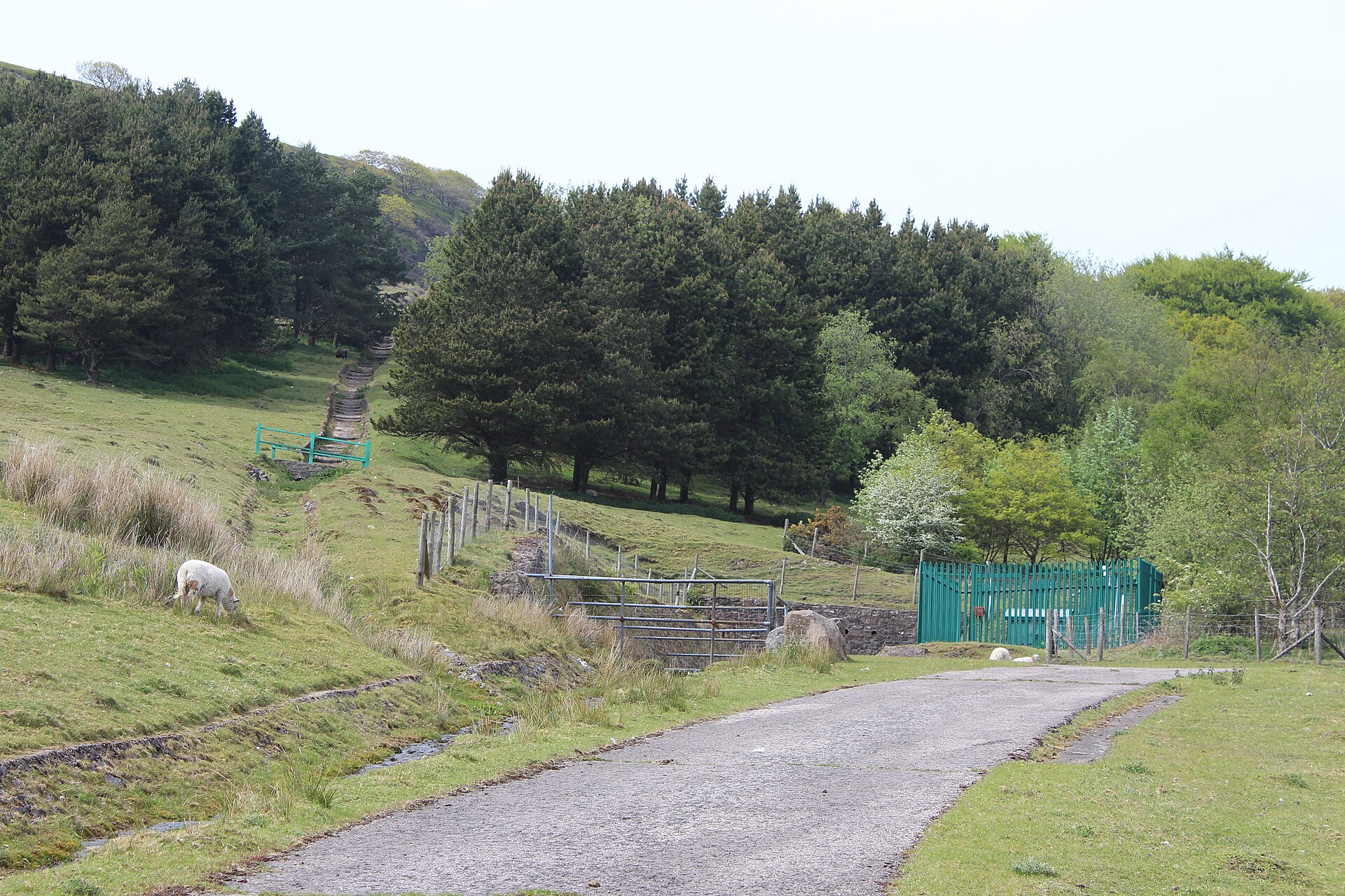
The colliery worked on through nationalisation and closed in 1982. The site has since been reclaimed, and the valley above Abertillery is now walked for its lakes and hillside paths rather than worked for coal.
Geology
The colliery worked the Coal Measures of the eastern side of the South Wales Coalfield, the Elled being one of the named Monmouthshire seams that the Western Valleys pits were sunk for. Four explosions in twenty years point to gassy ground: the seams here gave off firedamp freely, and the 1876 disaster came from it.
Workings
Sunk to 130 yards in the 1840s to reach the Elled seam, and deepened to 240 yards after 1852 when John Russell increased the original shafts. The colliery worked under the names Tir Nicholas and South Wales Colliery before settling as Cwmtillery.
Closure
The colliery closed in 1982.
What remains
The colliery has been reclaimed. The site is now open ground and lakes above Abertillery, with walking trails from gentle lakeside paths to hillside climbs of over 580 metres.
No colliery structures survive; the site has been landscaped.
Related mines
- Groesfaen Colliery — Groesfaen's power-loading equipment was transferred to Cwmtillery Colliery on its closure in 1968.
- Rose Heyworth Colliery — The two pits were held by the same company from the start, were connected underground for ventilation, and were formally joined in 1959 as the Abertillery New Mine, after which a single drift raised the coal of both.
Nearby mines
- Cwmtillery Red Ash Colliery — 0.6 miles (0.9 km) NW
- Penybont Colliery — 0.6 miles (0.9 km) S
- Gray Colliery — 0.8 miles (1.2 km) S
- Rose Heyworth Colliery — 0.9 miles (1.5 km) W
- Rhiw Colbren Colliery — 1.1 miles (1.8 km) W
Straight-line distance, within 9 miles (15 km). Show on the map.
Disasters & major incidents
-
Cwmtillery Colliery explosion, 1857
1857 · Explosion · 13 fatalities
On the morning of 27 May 1857 firedamp exploded in the Three-Quarter seam of John Russell's Tyr Nicholas (Cwmtillery) Colliery, a pit with no furnace and one ventilating door. Thirteen died, among them the fireman Samuel Merrifield, whom the jury blamed for walking into gas with an open lamp. -
Cwmtillery Colliery explosion, 1866
18 May 1866 · Explosion · 3 fatalities
An explosion of firedamp at the Cwmtillery pits on 18 May 1866 burned three men, a father and son among them, who died over the following weeks; the inquest jury blamed a canvas ventilation door left open. -
Cwmtillery Colliery roof fall, 1868
29 July 1868 · Collapse / Roof Fall · 2 fatalities
Two men taking down the top in a squeezed old road at Cwmtillery Colliery on 29 July 1868 were killed by a fall of roof, hemmed in by the drams they had placed on either side of them. -
Cwmtillery Colliery explosion, 1873
1873 · Explosion · 6 fatalities
In the early hours of 5 April 1873 firedamp exploded in reopened old workings at Cwmtillery Colliery, where eight night men were working on the roads. None survived. The inspector found that brattice sheets had been left down while the men slept, and that they then walked into the gas with naked lights. -
Cwmtillery Colliery Explosion, 1876
18 December 1876 · Explosion · 23 fatalities
An explosion at Cwmtillery Colliery on 18 December 1876 killed either sixteen or twenty-three men and boys, depending on which account is followed. It was the worst and the last of four underground explosions at the colliery in twenty years. -
Cwmtillery Colliery overwind, 1889
8 June 1889 · Winding / Shaft Accident · 2 fatalities
When a cage carrying eight men was overwound at Cwmtillery Colliery on 8 June 1889, two jumped out while it hung from the detaching hooks in the headgear and fell back down the shaft; the six who stayed in were unhurt.
What's uncertain
Points where sources disagree or the record could not be settled; both accounts are kept. All open questions in the archive.
- Thomas Brown acquired the right to sink at Tir Nicholas farm in the 1840s in the hope of reaching the Elled seam; the shaft was sunk to 130 yards. (uncertain) 1
- John Russell took ownership in 1852, increased the original shafts and deepened the mine to 240 yards. (uncertain) 1
- Four underground explosions are recorded at the colliery between 1857 and 1876. (uncertain) 1
- The colliery closed in 1982. (uncertain) 1
Recorded claims
Individual factual claims, each attached to the source(s) that support it below. Where sources disagree, both are kept.
- Thomas Brown acquired the right to sink at Tir Nicholas farm in the 1840s in the hope of reaching the Elled seam; the shaft was sunk to 130 yards. (uncertain) 1
- John Russell took ownership in 1852, increased the original shafts and deepened the mine to 240 yards. (uncertain) 1
- Four underground explosions are recorded at the colliery between 1857 and 1876. (uncertain) 1
- The colliery closed in 1982. (uncertain) 1
Photographs & further reading
The rolls of those killed in the colliery's explosions, with ages, occupations and the families each man left.
View sourceSources
- (secondary) Cwmtillery — Wikipedia
- (secondary) Cwmtillery Colliery disasters: death rolls — Welsh Coal Mines
Record created: 3 September 2026 · Last researched: 3 September 2026