 MineArchive
Cwmsymlog Mine
| Location | Trefeurig, Ceredigion — 52.4364, -3.9131 (exact) |
|---|---|
| Commodities | Lead, Silver |
| Type | Metal |
| Worked | 1585–1901 |
| Maximum depth | 130 fathoms below adit (Skinner's Shaft) |
| Operators | Company of Mines Royal (1585–?), Sir Hugh Myddelton (1617–1631), Thomas Bushell (1636–?), William Waller's Mine Adventurers (1698–1722), William Corbett and John Paynter (1748–1771), Chauncey Townsend (1751–1770), Job Sheldon & Co. (1805–?), Williams brothers of Scorrier (1828–?), John Taylor & Sons (1838–1882) |
Overview
Once described as 'the richest in lead and silver of any in His Majesty's Dominions', one of the most important and longest-documented lead and silver mines in Wales.
History
Cwmsymlog was probably first worked in prehistoric or Roman times, though most of its surviving visible features date from the 16th to 19th centuries. The Society of Mines Royal leased it from 1583 for the silver in its lead ore, finding older workings already there, and organised working began in 1585, when the Crown-chartered company started excavation; the site is exceptionally well documented from that point onward. Sir Hugh Myddelton leased Cwmsymlog and neighbouring Darren from the Society in 1617, and from the 1620s, under Myddelton, the mine and its surrounding community grew, with a chapel built to serve mineworkers; he is said to have taken some £24,000 a year in silver alone from the Blaen-cwmsymlog workings. His agent and successor Thomas Bushell began the Great Level, a drainage adit over 700 yards long, which William Waller's Company of Mine Adventurers completed around the turn of the 18th century only to find that the old men had already taken the ore; by 1710 the mine had a mile and a half of levels, some 45 shafts, four adits, a stamp mill and a chapel, and the company held it until 1722. In 1747 the antiquarian Lewis Morris described Cwmsymlog as 'the richest in lead and silver of any in His Majesty's Dominions'. William Corbett and John Paynter found a rich lode in 1749, and Chauncey Townsend's manager Thomas Bonsall worked it from 1751 by taking only the richest ore and leaving no pillars, which left the ground unstable. Reopened after 1805 by Job Sheldon & Co., it employed 300 men by 1813, and was worked by the Williams brothers of Scorrier before John Taylor took it by 1838. A Cornish pumping engine was installed in 1840, but by then the accessible reserves were nearly exhausted and the mine closed soon after, although the Northern Mine Research Society's account has Taylor still at work, and some £10,000 down, in 1847; it was reopened in 1850 as East Darren Mine, where Taylor's Shaft reached 104 fathoms below adit by 1861, the mine paid its shareholders good returns through the 1860s, and it yielded 24,460 tons of lead and 415,850 ounces of silver after 1845. It worked successfully until 1882, went into receivership in 1884 and was wound up in 1889, with further, more limited working continuing until final closure in 1901.
Geology
Cwmsymlog worked lead and silver-bearing veins typical of the Central Wales orefield, in the upland Cambrian Mountains area of Ceredigion: an east-west vein through Silurian and Ordovician grits, shales and mudstones, one-and-a-half miles east-north-east of the Darren main vein. Its unusually rich silver has been attributed to tetrahedrite, a copper-antimony mineral that carries silver.
Geological setting: Veins and Lodes (well documented example)
Workings
The mine worked an east-west vein that crossed three estates, the Evans estate at the west end, the Pryse family's Gogerddan estate in the centre and the Crown's Blaen-cwmsymlog at the east. Bushell's Great Level drained the old workings, and by 1710 there were a mile and a half of levels, about 45 shafts and four adits. In the 19th century Reid's and Taylor's Shafts were sunk to a deep orebody at the centre and west of the mine, Pryse's Shaft was cleaned out and sunk to 44 fathoms, and Skinner's Shaft at the east end was sunk through old workings to 130 fathoms below adit. Ore was worked from multiple shafts, including those known as Skinner's Shaft, Taylor's Shaft and Pryse's Shaft, with ore dressing supported by leats and waterwheel pits on site: pumps were worked by rods from waterwheels at Taylor's, Reid's, Pryse's and Skinner's, with a steam engine at Pryse's for wet periods, and a 30-foot pumping wheel was installed when the mine reopened in 1850.
Closure
The original mine closed in the early 1840s once its accessible reserves were exhausted, although the Northern Mine Research Society records John Taylor working on through that decade; reopened as East Darren Mine in 1850, it worked until 1882, with the site finally closing for good in 1901. East Darren paid its last dividend in 1876, cut costs in the 1880s by working old pillars and retreating spoil, went into receivership in 1884 and was wound up in 1889; one account says the Taylors dissolved their company in 1882 when the Pryse estate would not lower its royalties. Short-lived ventures followed until closure in 1901/2.
What remains
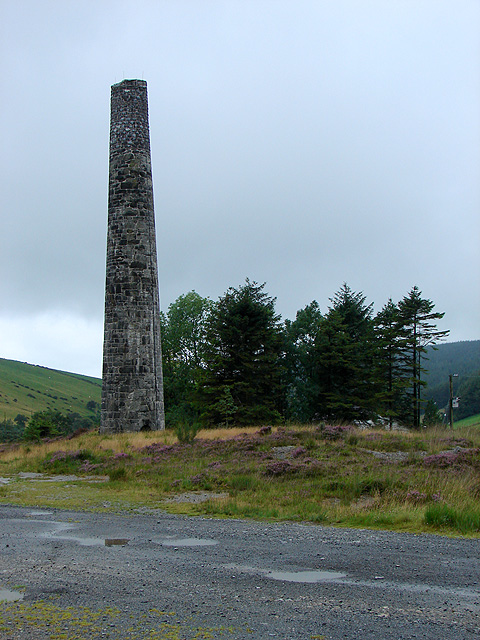
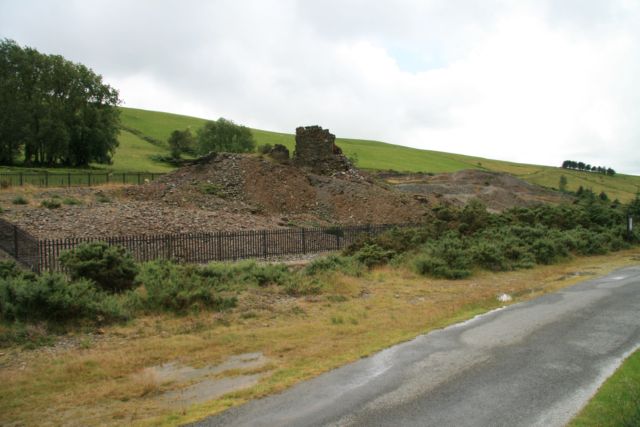
A well-documented upland archaeological site with substantial surviving mining remains, protected as a Scheduled Monument. Most of the site has been landscaped and re-seeded to stop the spread of toxic dust from the old workings, and the engine-house chimney was repaired in 2006-7 under the 'Spirit of the Miners' initiative, reopening in 2007 with an interpretation panel.
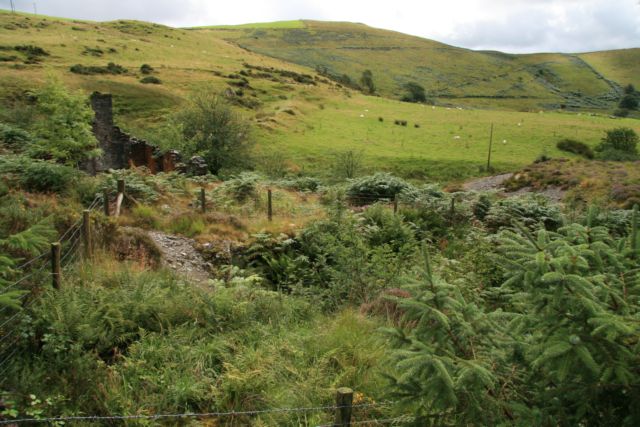
Shaft mounds, a surviving mine chimney, a tramway, leats, waterwheel pits, spoil tips and a reservoir remain visible across the site. The dressed-stone chimney, some 14 metres high and Grade II listed, stands by the site of the engine house; Pryse's Shaft retains a balance-bob pit and tunnels for its transmission rods, a partly filled stope is attributed to Bushell, and Skinner's Shaft keeps its waterwheel pit, bob pit and capstan circle. Around them survive the mining settlement's listed chapel, a Georgian house thought to have been the mine manager's, and a short terrace of 19th-century houses.
Related mines
- Gwaith Yr Afon Mine — Gwaith Yr Afon developed minor veins on the same fault system as the larger Cwmsymlog mine.
Nearby mines
- Gwaith Yr Afon Mine — 0.7 miles (1.1 km) W
- Bwa-Drain Mine — 2.6 miles (4.2 km) S
- Llywernog Mine — 2.6 miles (4.2 km) SE
- Hafan Mine — 3.2 miles (5.1 km) NE
- Bwlch Glas Mine — 3.5 miles (5.6 km) N
Straight-line distance, within 9 miles (15 km). Show on the map.
People
- Thomas Bonsall · manager, 1751–1793 — Townsend's manager from 1751; took only the richer ore and left no pillars, leaving the ground unstable.
- Thomas Bushell · agent, from 1617 — Myddelton's agent and successor; began the Great Level adit and took over the mine in 1636.
- Thomas Bushell · lessee, from 1636 — via the operator record
- Sir Hugh Myddelton (d. 1631) · lessee, 1617–1631 — Leased Cwmsymlog from the Society of Mines Royal in 1617; the mine and its community grew under him.
- Sir Hugh Myddelton (d. 1631) · lessee, 1617–1631 — via the operator record
What's uncertain
Points where sources disagree or the record could not be settled; both accounts are kept. All open questions in the archive.
- Myddelton is said to have taken about £24,000 a year in silver alone from the Blaen-cwmsymlog workings (£25,000 in another account), from ore carrying around 100 ounces of silver to the ton. (uncertain) 6,7
- The Northern Mine Research Society's history records no closure in the 1840s: it has John Taylor holding the mine by 1838, losing an estimated £10,000 by 1847 while sinking Reid's and Taylor's Shafts to a deep orebody. (disputed) 5
- One account says the Taylors dissolved their company in 1882, at a time of low lead prices, when the landowner Pryse refused to lower royalties. (uncertain) 7
- Cadw's scheduling dates the stone chimney to 1855, while its listing description says it almost certainly dates from the Cornish beam engine installed by John Taylor & Sons about 1839, and may have been a ventilation chimney. (disputed) 1,6
Recorded claims
Individual factual claims, each attached to the source(s) that support it below. Where sources disagree, both are kept.
- The antiquarian Lewis Morris described Cwmsymlog in 1747 as 'the richest in lead and silver of any in His Majesty's Dominions'. 1
- Organised working began in 1585 under the Crown-chartered Mines Royal company, though the site was probably worked earlier still, in prehistoric or Roman times. 1,2
- A Cornish pumping engine installed in 1840 could not offset nearly exhausted reserves, and the mine closed soon after; reopened as East Darren Mine in 1850, it worked until 1882, with final closure in 1901. 1,3,4
- The Society of Mines Royal leased Cwmsymlog from 1583 because of the richness of silver in its lead ore, and found earlier workings already there, 'so winding and ruinous' that men could work only three hours a day. 5
- Sir Hugh Myddelton leased Cwmsymlog and Darren from the Society of Mines Royal in 1617; his agent and successor Thomas Bushell began a drainage adit that was to be over 700 yards long, and took over the mine in 1636, spending some £11,000 on this Great Level. 5,6
- Myddelton is said to have taken about £24,000 a year in silver alone from the Blaen-cwmsymlog workings (£25,000 in another account), from ore carrying around 100 ounces of silver to the ton. (uncertain) 6,7
- William Waller's Company of Mine Adventurers of England completed Bushell's adit but raised only 35¼ tons of ore; by 1710 the mine had a mile and a half of levels, about 45 shafts, four adits, a smithy, a stamp mill, workers' housing and a chapel, and the company kept it working until 1722. 5
- William Corbett took the lease in 1748 and, with John Paynter, found a rich lode in 1749; Chauncey Townsend worked the mine from 1751 with Thomas Bonsall as manager, whose practice of taking only the richer ore and leaving no pillars left the ground unstable. 5,6
- Reopened by Job Sheldon & Co. (after 1805 in Cadw's account, 1810 in the NMRS's), the mine employed 300 men by 1813. 6,7
- The Northern Mine Research Society's history records no closure in the 1840s: it has John Taylor holding the mine by 1838, losing an estimated £10,000 by 1847 while sinking Reid's and Taylor's Shafts to a deep orebody. (disputed) 5
- Taylor's Shaft was 104 fathoms below adit by 1861 (115 fathoms by 1862 in another account), and East Darren was one of the few Welsh mines to give its shareholders good returns through the 1860s, paying its last dividend in 1876; Skinner's Shaft was sunk to 130 fathoms below adit. 5,7
- After 1845 the mine yielded 24,460 tons of lead and 415,850 ounces of silver. 6
- In the 1880s the mine cut costs by working old pillars and retreating spoil; it went into receivership in 1884 and was wound up in 1889, and short-lived ventures followed until closure in 1901/2. 5
- One account says the Taylors dissolved their company in 1882, at a time of low lead prices, when the landowner Pryse refused to lower royalties. (uncertain) 7
- Cadw's scheduling dates the stone chimney to 1855, while its listing description says it almost certainly dates from the Cornish beam engine installed by John Taylor & Sons about 1839, and may have been a ventilation chimney. (disputed) 1,6
- Most of the site has been landscaped and re-seeded to stop the spread of lethal dust; the engine-house chimney stack was repaired in 2006-7 under the 'Spirit of the Miners' initiative and opened in 2007 with an interpretation panel. 8
Photographs & further reading
Scan of the British Geological Survey's 1881-1883 plan of East Darren or Cwmsymlog Mine, with notes and a section.
View sourceThe Royal Commission's site record for the mine, with a note on the landscaping of the site and the 2006-7 conservation of the chimney.
View sourceA detailed history of Cwmsymlog and the neighbouring Darren mines, from the Mines Royal lease of 1583 to closure in 1901/2.
View sourceThe archaeological trust's description of the Cwmsymlog valley, its mine remains and the surviving buildings of the mining settlement.
View sourceSources
- (secondary) Cwmsymlog Lead Mine, Trefeurig, Ceredigion — Ancient Monuments
- (secondary) Cwmsymlog History — Ceredigion Historical Society
- (secondary) Cwmsymlog — Wikipedia
- (secondary) Cwmsymlog (Historic Landscape Character Area) — Heneb (Clwyd-Powys Archaeological Trust)
- (secondary) The Darren Mines (incl. Cwmsymlog or East Darren Mine) — Northern Mine Research Society
- (primary) Cwmsymlog Mine chimney, Trefeurig (Cadw listed building 83663) — Cadw, via British Listed Buildings
- (observational) Cwmsymlog - Buddlepit Mine Database — Buddlepit
- (primary) Cwmsymlog Lead Mine (General); East Darren Lead Mine (NPRN 33830) — RCAHMW Coflein
- (primary) East Daren or Cwmsymlog Mine: location of mine, notes & section (BGS mine plan KP16919, 1881-1883) — British Geological Survey
Record created: 21 August 2026 · Last researched: 18 September 2026