 MineArchive
Cwmgwrach Colliery
| Also known as | Blaengwrach Colliery, Empire Colliery |
|---|---|
| Location | Cwmgwrach, Vale of Neath, Neath Port Talbot — 51.7203, -3.6249 (exact) |
| Commodities | Anthracite, Coal |
| Type | Coal |
| Worked | Early 1800s–c. 1960 |
| Maximum depth | Unknown. |
| Operators | Empire Collieries Ltd (1898–?), Bryndu and Port Talbot Collieries Ltd (1903–1905), Caerbryn and Empire Collieries Co. Ltd (1908–1915), Cwmgwrach and Empire Collieries Co. Ltd (1915–1925), C. and E. Collieries Ltd (1930–1947), National Coal Board (1947–?) |
Overview
Cwmgwrach is one of the older mining grounds of the Vale of Neath: coal was being worked here from the early 1800s, and an explosion in 1820 killed five people, two of them girls aged six and twelve. The colliery proper began in 1898 when Empire Collieries Ltd reopened the Cwmgwrach Nos. 1 and 2 levels, and the Caerbryn and Empire Collieries Co. sank the Empire colliery into the old level in 1903. Two more drifts followed in 1924 and 1927 and the workforce passed a thousand. Under the National Coal Board it raised 150,000 tons of anthracite in 1947. The ground outlasted the old colliery: the National Coal Board drove a new drift alongside it that opened in 1962 as the Blaengwrach mine, ventilated through the old Empire shaft, and worked on until 1983.
History
There has been mining at Cwmgwrach since the early 1800s, including a mine owned by E. W. Protheroe in 1815. An explosion on 9 June 1820 killed five people, two of them young girls (see Disasters, below). A list of 1869 records the Cwmgwrach level under N. E. V. Vaughan. The modern colliery dates from 1898, when Empire Collieries Ltd started the Empire Colliery by reopening the Cwmgwrach Nos. 1 and 2 levels. The Caerbryn and Empire Collieries Co. Ltd sank the Empire colliery into the old Cwmgwrach level in 1903, and by 1908 it employed 102 people; the workforce was 360 by 1918. Two further drifts, Cwmgwrach 2 and 3, were opened in 1924 and 1927, and the workforce grew quickly to over a thousand. The Cwmgwrach and Empire Collieries Co. Ltd held the colliery from 1915 to 1925 and C. and E. Collieries Ltd from 1930 to 1946. The Lists of Mines return 500 people in 1923 and 930 in 1933, 1937, 1940 and 1947, when the colliery raised 150,000 tons of anthracite for the National Coal Board; 766 were working in 1945.
The company that began the modern colliery never legally existed: Empire Collieries Ltd was registered on 14 February 1899 but never went to share allotment, and was dissolved in 1905. Behind it were the Blindell brothers, William Alfred and John Saville, who had set the undertaking going about eighteen months before a report of 1899 noted that they had formed a company to reopen Blaengwrach Level, abandoned some seventy years earlier, and had just struck the Six Feet seam. The Cwmgwrach No. 2 level they reopened took in most of Protheroe's old Fforchgoch workings, and a shaft 10 feet in diameter and 120 yards deep was sunk as an upcast. The colliery's fortunes swung about: by 1903 the Bryndu and Port Talbot Collieries Ltd -- another of William Alfred Blindell's ventures -- were in control, the colliery lay idle through 1904 and 1905, and it restarted in 1906 under Thomas Jones and, after his death, his executors Thomas Braithwaite and Cuthbert Lewis Jones. The Caerbryn and Empire Collieries Co. Ltd took over in late 1908, and the Empire Colliery itself was abandoned on 9 January 1909 and never reopened. The Welsh Coal Mines page disagrees with itself here: its main account has the Caerbryn and Empire company sinking the Empire colliery into the old level in 1903, while Cooke's notes have the shaft sunk with the Blindells' reopening in 1898-99 and that company arriving only in 1908. A further shaft, 15 feet in diameter and 128 yards deep, was sunk at Cwmgwrach in 1918 and equipped as the upcast, the original shaft becoming the downcast, and 500 men were employed in 1921. In 1924 the Cwmgwrach and Empire Company opened the Empire No. 2 Rhondda level on Mynydd Pen-y-cae and reopened the Old Level Fawr; Level Newydd followed, started and completed in 1925. By 1931 the workings were being returned as Cwmgwrach Nos. 1, 2 and 3 Drifts, since they were in effect cross-measure drivages, the Empire No. 2 Rhondda having ceased work on 10 July 1930.
The National Coal Board began a new drift here in the 1950s, and it opened in 1962 as the Blaengwrach mine, working the Six Feet seam at first; the old Empire pit served it as the upcast ventilation shaft. The Nine Feet seam made it a success. Until mechanisation came in the late 1970s the faces were worked with wooden props, AB15 undercutters and an armoured conveyor turned once every twenty-four hours, and Blaengwrach turned out 4,400 tons a week, in the source's phrase, like clockwork. After mechanisation output fell away until the last week of all produced 83 tonnes, and the mine closed in 1983.
Geology
Cwmgwrach worked the anthracite of the Vale of Neath, on the northern outcrop of the South Wales coalfield. The seams named for the workings on this ground are the Six Feet, Nine Feet, Upper Four Feet and Bluers, and anthracite, steam and manufacturing coals were all raised from them.
Geological setting: Sedimentary Beds and Seams (well documented example)
Workings
Levels and drifts rather than deep shafts: the Cwmgwrach Nos. 1 and 2 levels reopened in 1898, the Empire colliery sunk into the old level in 1903, and the Cwmgwrach 2 and 3 drifts opened in 1924 and 1927. The Empire pit later served as the upcast ventilation shaft for Blaengwrach. The Empire shaft of 1898 was 10 feet in diameter and 120 yards deep and served as the upcast until 1918, when a second shaft of 15 feet and 128 yards took over that duty and the first became the downcast. Beyond the two Cwmgwrach drifts of 1924 and 1927 the company also worked the Empire No. 2 Rhondda level on Mynydd Pen-y-cae from 1924, the reopened Old Level Fawr and Level Newydd of 1925; by 1931 the three Cwmgwrach drifts were being returned as cross-measure drivages. The National Coal Board's Blaengwrach drift of 1962 worked the Six Feet and then the Nine Feet, its faces held on wooden props and cut by AB15 undercutters until mechanisation arrived in the late 1970s.
Closure
The National Coal Board is recorded as operating the mine from 1947 to about 1960. The Board began work during the 1950s on a new drift nearby, which opened in 1962 as the Blaengwrach mine and worked the Six Feet seam and then the Nine Feet, ventilated through the old Empire pit. Mechanisation in the late 1970s was followed by a collapse in output -- 4,400 tons a week before it, 83 tonnes in the final week -- and that mine closed in 1983. A coal tip at Cwmgwrach has since needed safety works to reduce the risk of landslip.
What remains
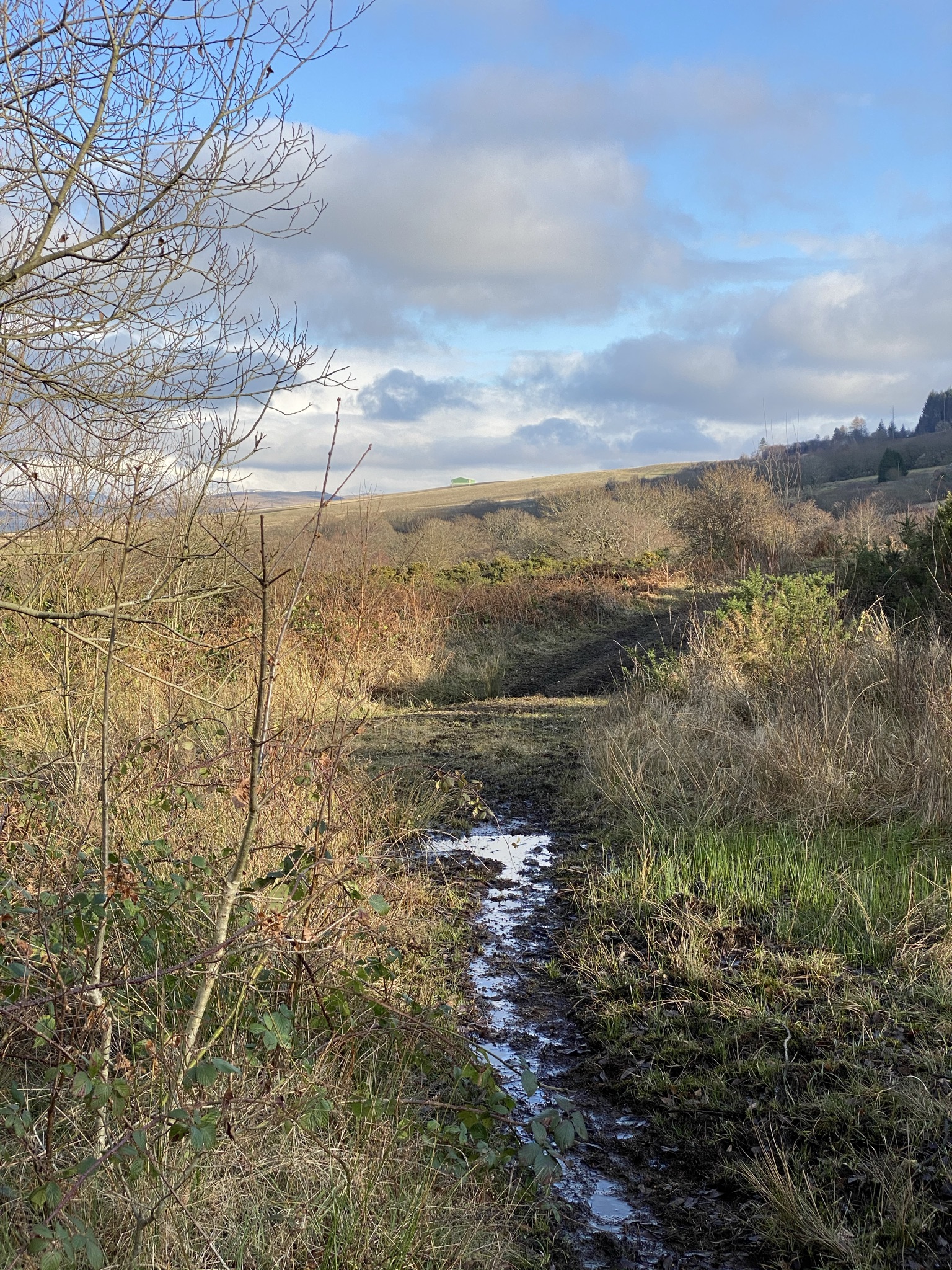
The colliery is gone and its ground carries forestry tracks and footpaths to the old coal levels above the village. The colliery tip has required safety works to reduce the risk of landslip.
The colliery is gone; its tip has needed safety works, and tracks lead to the old coal levels above the village.
Nearby mines
- Lyn Colliery — 1.4 miles (2.2 km) W
- Pwllfaron Colliery — 1.7 miles (2.8 km) NW
- Rheola Colliery — 1.9 miles (3.0 km) W
- Rhigos Colliery — 1.9 miles (3.1 km) N
- Graig y Fforest No.2 Colliery (Pinetrees) — 2.0 miles (3.2 km) NW
Straight-line distance, within 9 miles (15 km). Show on the map.
Disasters & major incidents
-
Cwmgwrach explosion, 1820
9 June 1820 · Explosion · 5 fatalities
On 9 June 1820 an explosion in the coal workings at Cwmgwrach, in the Vale of Neath, killed five people. Two of them were girls, Elizabeth Pendry, aged six, and Annie Tonks, aged twelve. The names of the other three dead, the owner and the cause are not recorded. -
Cwmgwrach Colliery suffocation, 1919
28 October 1919 · Gas / Asphyxiation · 2 fatalities
A night fireman and a repairer were suffocated in fenced-off gassy workings at the Empire Colliery, Cwmgwrach, on 28 October 1919.
What's uncertain
Points where sources disagree or the record could not be settled; both accounts are kept. All open questions in the archive.
- The BGS mine-plans catalogue holds a Mining Remediation Authority abandonment plan titled 'Cwmgwrach' (catalogue SW222, Nine Feet, dated 1954); the catalogue gives no location and the plan's details do not clearly tie it to this working, so it may belong to another of the same name. (uncertain) 3
- The Welsh Coal Mines page's main account credits the Caerbryn and Empire Collieries Co. Ltd with sinking the Empire colliery into the old Cwmgwrach level in 1903; Tony Cooke's notes on the same page have the upcast shaft sunk as part of the Blindells' reopening of 1898-99, with Caerbryn and Empire taking over only in late 1908. (disputed) 1
Recorded claims
Individual factual claims, each attached to the source(s) that support it below. Where sources disagree, both are kept.
- There has been mining activity at Cwmgwrach since the early 1800s, including a mine owned by E. W. Protheroe in 1815, and a list of 1869 records the Cwmgwrach level under N. E. V. Vaughan. 1
- In 1898 Empire Collieries Ltd started the Empire Colliery by reopening the Cwmgwrach Nos. 1 and 2 levels, and the Caerbryn and Empire Collieries Co. Ltd sank the Empire colliery into the old Cwmgwrach level in 1903. 1
- Two more drifts, Cwmgwrach 2 and 3, were opened in 1924 and 1927 and the workforce quickly grew to over a thousand; 766 were working in 1945. 1
- The Lists of Mines return 500 people in 1923 and 930 in 1933, 1937, 1940 and 1947, when the colliery raised 150,000 tons of anthracite. 2
- The colliery passed through Empire Collieries Ltd, the Caerbryn and Empire Collieries Co. Ltd, the Cwmgwrach and Empire Collieries Co. Ltd and C. and E. Collieries Ltd to the National Coal Board in 1947. 1,2
- The BGS mine-plans catalogue holds a Mining Remediation Authority abandonment plan titled 'Cwmgwrach' (catalogue SW222, Nine Feet, dated 1954); the catalogue gives no location and the plan's details do not clearly tie it to this working, so it may belong to another of the same name. (uncertain) 3
- Empire Collieries Ltd, which began the modern colliery in 1898, was registered on 14 February 1899 but never went to share allotment and was dissolved in 1905; the undertaking was in fact that of the Blindell brothers, William Alfred and John Saville. 1
- A report of 1899 recorded that the Blindell brothers had formed a company about eighteen months earlier to reopen Blaengwrach Level, abandoned some seventy years before, and had just struck the Six Feet seam. 1
- The shaft sunk with the 1898 reopening was 10 feet in diameter and 120 yards deep and served as the upcast; a second shaft of 15 feet and 128 yards was sunk in 1918 and took over as the upcast, the first becoming the downcast. 1
- Ownership passed to the Bryndu and Port Talbot Collieries Ltd by 1903, the colliery lay idle in 1904 and 1905, restarted in 1906 under Thomas Jones and his executors, and was taken over by the Caerbryn and Empire Collieries Ltd in late 1908; the Empire Colliery itself was abandoned on 9 January 1909 and never reopened. 1
- The Cwmgwrach and Empire Company opened the Empire No. 2 Rhondda level on Mynydd Pen-y-cae in 1924 and reopened the Old Level Fawr, with Level Newydd started and completed in 1925; by 1931 the workings were returned as Cwmgwrach Nos. 1, 2 and 3 Drifts, cross-measure drivages, the Empire No. 2 Rhondda having stopped on 10 July 1930. 1
- The National Coal Board's new drift, begun in the 1950s and opened in 1962 as the Blaengwrach mine, worked the Six Feet and then the Nine Feet seam and was ventilated through the old Empire pit. 1
- Before mechanisation in the late 1970s Blaengwrach's faces were worked with wooden props, AB15 undercutters and an armoured conveyor turned every twenty-four hours, and the mine produced 4,400 tons a week; afterwards output fell until the final week yielded 83 tonnes, and the mine closed in 1983. 1
- The Welsh Coal Mines page's main account credits the Caerbryn and Empire Collieries Co. Ltd with sinking the Empire colliery into the old Cwmgwrach level in 1903; Tony Cooke's notes on the same page have the upcast shaft sunk as part of the Blindells' reopening of 1898-99, with Caerbryn and Empire taking over only in late 1908. (disputed) 1
Photographs & further reading
The three connected workings on one page: the early nineteenth-century mining and the 1820 explosion, the 1898 reopening of the levels, the 1903 Empire sinking, the later drifts, and the Blaengwrach mine that followed in 1962.
View sourceOwners, output and employment for each Lists of Mines year, with the names and circumstances of seven people killed at the colliery.
View sourceSources
- (primary) Blaengwrach, Cwmgwrach and Empire collieries — Welsh Coal Mines, with notes by Tony Cooke
- (primary) Durham Mining Museum: Cwmgwrach Colliery — Durham Mining Museum, from the Lists of Mines
- (primary) BGS / Mining Remediation Authority mine plans: CWMGWRACH — British Geological Survey / Mining Remediation Authority
- (observational) Track to the old coal levels above Cwmgwrach (photographed 2021) — Geograph Britain and Ireland, Alan Hughes
Record created: 10 September 2026 · Last researched: 20 September 2026