 MineArchive
Crump Meadow Colliery
| Also known as | Crump Meadow Colliey |
|---|---|
| Location | Valley Road, Cinderford, Forest of Dean, Gloucestershire — 51.8221, -2.5244 (exact) |
| Commodity | Coal |
| Type | Coal |
| Worked | 1829–July 1929 |
| Maximum depth | 696 feet (No. 3 shaft, to the Churchway High Delf). |
| Operators | Edward Protheroe (1829–1857), Aaron Goold & Co. (1847–1874), Bilson and Crump Meadow Collieries Co. Ltd (1874–1884), Lydney and Crump Meadow Collieries Co. Ltd (1884–1929) |
Overview
A Forest of Dean colliery near Cinderford, begun by Edward Protheroe in 1829 and reaching coal in 1839, which at its height employed over 700 and raised 80,000 tons a year before the coal ran out and it closed in July 1929.
History
Crump Meadow lay near Valley Road, Cinderford, in the Forest of Dean. Work began about 1829, when the Crown licensed Edward Protheroe to move a winding and pumping engine from his Protection Colliery and re-erect it there, but coal was not reached in the shafts until 1839. The 1841 coal awards confirmed Protheroe's title to the gales that made up the colliery. One shaft was then 235 yards deep with a 36-inch condensing engine that both pumped and wound. Output rose from 11,725 tons in 1841 to 27,833 in 1842 and 41,507 in 1856.
By 1847 the colliery was worked in the name of Aaron Goold & Co., Protheroe's agent, and the Goold family held it after his death in 1857. In 1874 they sold it to the new Bilson and Crump Meadow Collieries Company, which ran into debt and was put under a receiver after an action by its debenture holders in 1879; in 1884 it was reorganised as the Lydney and Crump Meadow Collieries Company under Joseph Hale. Output reached 80,746 tons in 1885, and in 1891 a 60-inch Cornish pumping engine was ordered from Harveys of Hayle.
There were three shafts, working the Twenty Inch, Lowery, Starkey, Rocky, Churchway High Delf and Brazilly seams; the Churchway was reached at 696 feet in No. 3 shaft. The Crump Meadow Fault, with a downthrow of up to fifty feet, kept the Brazilly unworked to its south, and pumping was a constant cost: in December 1903 water broke into the Twenty Inch seam. In 1904 the Crown cut the royalty because the remaining coal lay in thin seams, and the company looked to coal-cutting machines to work the 14-inch Lowery. It employed 706 people in 1900 and 573 in 1908.
By 1920 most of the coal was worked out, though closure was put off until July 1929. A few concrete foundations and a possible loading wharf are all that remain; the tip has largely been bulldozed.
Geology
Seams of the Supra-Pennant Group in the upper part of the Upper Coal Measures: the Twenty Inch, Lowery, Starkey, Rocky, Churchway High Delf and Brazilly. The Crump Meadow Fault, with a downthrow of up to fifty feet, ran through the workings.
Workings
Three shafts, the deepest reaching the Churchway High Delf at 696 feet; pumping by a 36-inch condensing engine in 1841 and a 60-inch Cornish engine from the 1890s. Linked by tramroad to the Forest of Dean Tramroad and later by the Great Western branch at Bilson and the Severn and Wye mineral loop.
Closure
Water from old workings and thin remaining seams made it costly to work after 1903; most of the coal was gone by 1920 and the colliery closed in July 1929.
What remains
The site is largely cleared and the tip bulldozed.
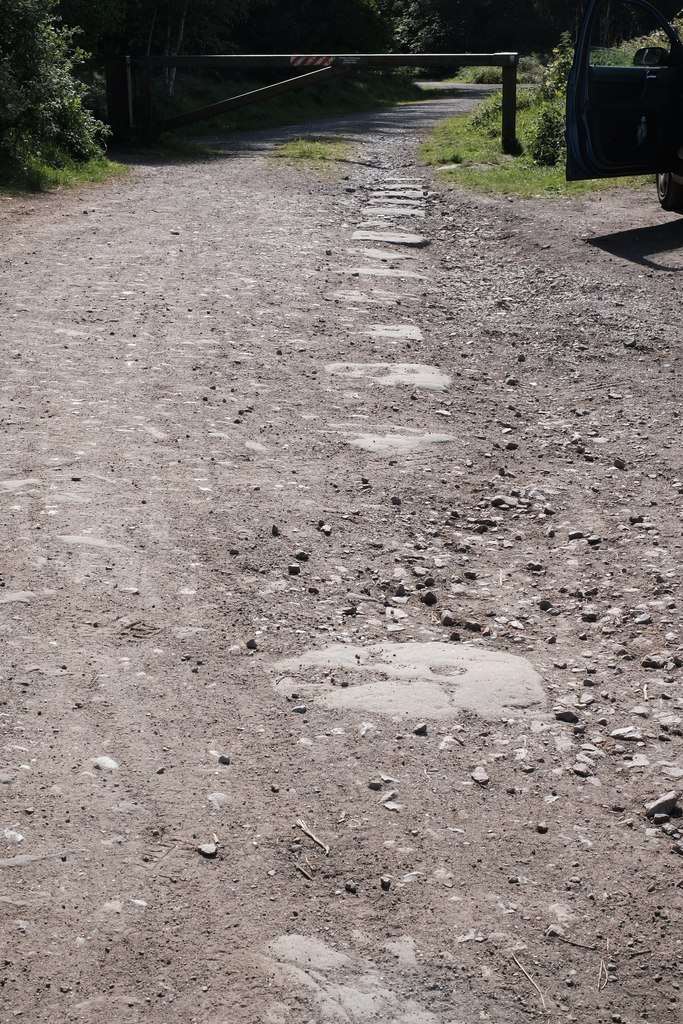
A few concrete foundations and a possible loading wharf; stone block sleepers of the old Crump Meadow tramway survive on a forest track.
Related mines
- Foxes Bridge Colliery — Both were Goold family collieries and were named together in the 1876 New Bilson, Crump Meadow, Foxes Bridge and Central Collieries company.
- Northern United Colliery — The Northern United deep gale was bought by the Lydney and Crump Meadow company in 1907 and sold by it to Henry Crawshay & Co. for development.
Nearby mines
- Foxes Bridge Colliery — 0.2 miles (0.4 km) S
- Northern United Colliery — 0.4 miles (0.7 km) N
- All Profit Colliery — 1.1 miles (1.7 km) N
- Haywood Colliery — 1.1 miles (1.8 km) NE
- Eastern United Colliery — 1.6 miles (2.6 km) S, Forest of Dean
Straight-line distance, within 9 miles (15 km). Show on the map.
Recorded claims
Individual factual claims, each attached to the source(s) that support it below. Where sources disagree, both are kept.
- Work at Crump Meadow began about 1829 under Edward Protheroe, but coal was not reached in the shafts until 1839. 1,2
- The colliery had three shafts, reaching the Churchway High Delf at 696 feet in No. 3. 1
- Output was 27,833 tons in 1842, 41,507 tons in 1856 and 80,746 tons in 1885. 1,2
- The Bilson and Crump Meadow Collieries Company was formed in 1874 and reorganised as the Lydney and Crump Meadow Collieries Company in 1884. 2
- The colliery employed 706 people in 1900 and 520 in 1923. 3
- Most of the coal was worked out by 1920 and the colliery closed in July 1929. 1,4
Photographs & further reading
A detailed history of the colliery's owners, output, pumping and railway connections from Lightmoor's Forest of Dean collieries pages.
View sourceSources
- (secondary) Crump Meadow Colliery (Forest of Dean Local History Society) — Forest of Dean Local History Society
- (secondary) Crump Meadow (Lightmoor: Forest of Dean collieries) — Lightmoor Press
- (primary) Crump Meadow Colliery (Durham Mining Museum) — Durham Mining Museum
- (primary) BGS mine plan: CRUMPMEADOW NOS 1 2 3 / BILSON / BONNETT / BOWSON / BROADMOOR, abandoned 1929 — British Geological Survey / Mining Remediation Authority
Record created: 25 October 2026 · Last researched: 25 October 2026