 MineArchive
Coanwood Colliery
| Location | Coanwood, near Haltwhistle, Northumberland — 54.9251, -2.4985 (approximate) |
|---|---|
| Commodity | Coal |
| Type | Coal |
| Worked | By 1792 (early working)–July 1931 |
| Maximum depth | Unknown. |
| Operators | Wilson & Crawhall (1860–?), Coanwood Coal Co. (1880–1914), Walton & Co. (1902–?), Burnhouse Coal Co. (1910–1910), F. G. Herdman & Co. (1930–1931) |
Overview
A South Tyne valley colliery beside Coanwood station, worked from 1860 by Wilson and Crawhall and the Coanwood Coal Company for coking coal, its seams given up one by one between 1892 and 1918; it closed in July 1931.
History
Coanwood Colliery lay beside the Haltwhistle to Alston railway at Coanwood, in the South Tyne valley about four miles south-west of Haltwhistle. Coal was being worked at Coanwood by 1792, possibly under a lease to the London Lead Company to supply its smelt mill at Whitfield. The colliery as it is recorded was worked from 1860 by Wilson and Crawhall in the Five Quarter, Yard, Coomb Roof and Slag seams. East Coanwood was opened in 1865 and joined to it by a tramway, and an inclined-plane tramway linked it with Crystallwell Colliery.
The Coanwood Coal Company had it by the 1880s, with Robert Hetherington as manager from 1882 until at least 1910. It raised coking coal in the 1890s and 1900s, with coke-making areas on the site; 95 people worked there in 1894, 53 of them underground, but only 17 in 1900. The shafts closed in 1898, and Walton and Co. were working the drifts in 1902. The Burnhouse Coal Company worked it in 1910, when it employed 49; the Coanwood Coal Company is named again as employing 63 people in 1914.
Its seams were given up one after another. The Herdley Bank Pit lost its Five Quarter in 1892, and in 1894 its Slag and Yard workings were drowned when the pumps of an adjoining colliery were stopped. The Cannel was abandoned in November 1900, the Whaley Drift's seams in 1904, the Coom Roof in 1913, the Five Quarter in 1914 and the Yard in 1918. F. G. Herdman and Co. held it in the 1930s, when three men worked the Slag, and the colliery closed in July 1931.
Geology
The Five Quarter, Yard, Coomb (Coom) Roof, Slag or Seven Quarter, Cannel and Three Quarter seams.
Workings
Shafts, among them the Herdley Bank Pit, closed in 1898, and drifts including the Whaley Drift. The second-edition map shows six old shafts and two inclined planes. A tramway joined the colliery to the Haltwhistle to Alston railway, and inclined-plane tramways ran to East Coanwood and Crystallwell collieries.
Closure
The seams were worked out or abandoned between 1892 and 1918, and a small working on the Slag seam ended with the colliery's closure in July 1931.
What remains
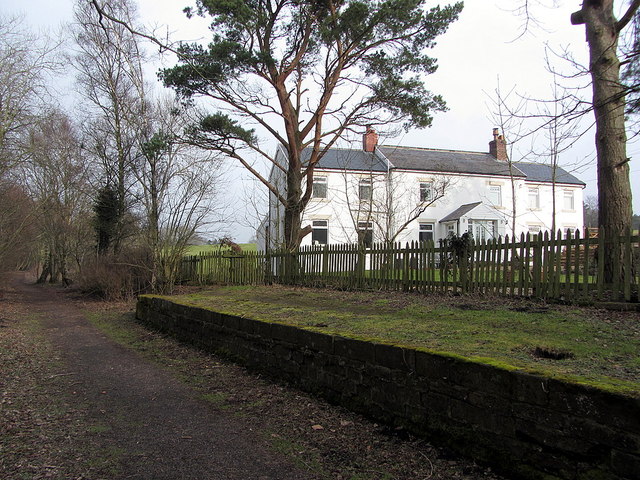
Disused; the historic environment record notes disused coke areas.
Redevelopment
Unknown.
Related mines
- Lambley Colliery — The Coanwood Coal Company worked both, reopening Lambley in the 1920s.
Nearby mines
- Lambley Colliery — 1.1 miles (1.8 km) W
- Midgeholme Colliery — 2.4 miles (3.9 km) W, Cumbria
- Blenkinsopp Colliery — 3.6 miles (5.9 km) N
- Blackett Colliery — 3.8 miles (6.2 km) NE
- Plenmeller Colliery — 3.8 miles (6.2 km) E
Straight-line distance, within 9 miles (15 km). Show on the map.
What's uncertain
Points where sources disagree or the record could not be settled; both accounts are kept. All open questions in the archive.
- Coal was worked at Coanwood by 1792, possibly under a lease to the London Lead Company for Whitfield smelt mill. (uncertain) 1
Recorded claims
Individual factual claims, each attached to the source(s) that support it below. Where sources disagree, both are kept.
- Coal was worked at Coanwood by 1792, possibly under a lease to the London Lead Company for Whitfield smelt mill. (uncertain) 1
- Worked from 1860 by Wilson and Crawhall in the Five Quarter, Yard, Coomb Roof and Slag seams. 2,1
- Employed 95 people in 1894, 53 of them underground. 2
- Robert Hetherington was manager from 1882 to at least 1910. 3
- In 1894 the Herdley Bank Pit's Slag and Yard workings were drowned out when the pumps of an adjoining colliery were stopped. 4
- Worked by the Burnhouse Coal Company in 1910. 1
- The Coanwood Coal Company employed 63 people in 1914. 5
- The Whaley Drift's Yard seam was abandoned in June 1904. 4,6
- The Seven Quarter or Slag seam of the Coanwood and Forster workings was abandoned in 1873. 7
- Closed in July 1931. 1
Photographs & further reading
The Northumberland historic environment record for the colliery.
View sourceSources
- (secondary) Coanwood Colliery, Coanwood (HER N5962) — Keys to the Past (Durham and Northumberland HER)
- (primary) Coanwood Colliery — Durham Mining Museum
- (primary) Coanwood Colliery: Colliery Management (prior to 1970) — Durham Mining Museum
- (primary) Catalogue of Plans of Abandoned Mines: Coanwood Colliery — Durham Mining Museum
- (secondary) Coanwood — Wikipedia
- (primary) Coanwood / Whaley Mine Plans (Mining Remediation Authority abandonment plan, Yard seam, abandoned June 1904) — British Geological Survey / Mining Remediation Authority
- (primary) Coanwood Forster Mine Plans (Mining Remediation Authority abandonment plan, Seven Quarter or Slag, abandoned 1873) — British Geological Survey / Mining Remediation Authority
Record created: 9 October 2026 · Last researched: 9 October 2026