 MineArchive
Celynen Colliery
| Location | Abercarn, Caerphilly — 51.6473, -3.1348 (approximate) |
|---|---|
| Commodity | Coal |
| Type | Coal |
| Worked | 1874–1985 |
| Operators | Newport Abercarn Black Vein Steam Coal Company Limited (1874–1935), Partridge Jones and John Paton (1935–1947), National Coal Board (1947–1985) |
Overview
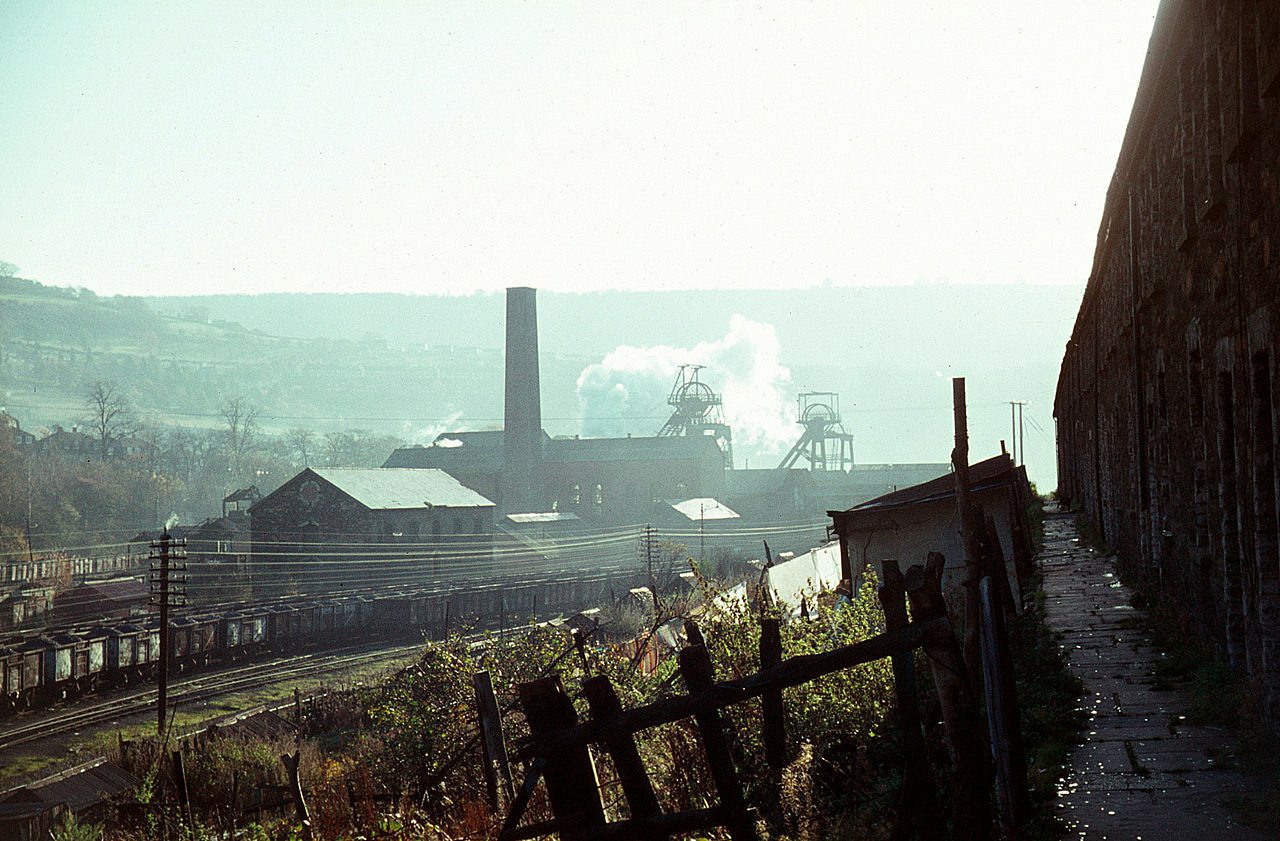
Twin collieries in the Ebbw valley near Abercarn — Celynen South, sunk from 1874, and Celynen North, sunk from 1913 — worked by the same company, eventually linked underground with the neighbouring Oakdale Colliery, and closed within months of each other at the end of 1985. Celynen South's long, accident-prone history earned it the grim nickname 'the Blood-Tub.'
History
Celynen South was sunk from 1874 by the Newport Abercarn Black Vein Steam Coal Company, with the first coal raised on 16 August 1876 from three shafts reaching between 357 and 410 yards. By 1900 the colliery employed 1,700 men and 200 horses, producing around 10,000 tons of coal a week. Its long history of fatal accidents earned it the grim local nickname 'the Blood-Tub.'
The same company began sinking Celynen North in 1913, on mineral rights leased from the Llanover Estate, raising its first coal in 1916. During sinking, on 9 May 1914, pump operator William Tedstone, aged 32, suffocated 75 yards underground when a steam joint blew into his lodge room under 160 lb of pressure. Celynen South also lost three men to separate runaway-dram accidents within seven weeks in early 1915, and two miners were killed together in a roof fall in 1909 (see Disasters, below). Both collieries passed to Partridge, Jones and John Paton and Co. in the 1930s and were nationalised together under the National Coal Board in 1947.
In 1982 Celynen North was linked underground with the nearby Oakdale Colliery complex (see MineArchive's own record). Celynen South, by then supplying high-quality coking coal to the Llanwern steelworks, closed in 1985; Celynen North's workforce was transferred to Oakdale that December as it too closed, ending Newport Abercarn's original sinking company's presence in the valley after well over a century.
Geology
South Wales Coal Measures worked through the Nine-Feet (Black Vein) and Five-Feet/Gellideg seams, the two collieries' shafts ranging from around 357 yards (Celynen South No. 1) to over 500 yards (Celynen North).
Workings
Two separate multi-shaft collieries — Celynen South (three shafts) and Celynen North (two shafts, downcast and upcast) — worked by the same company from adjoining ground, later connected underground with the neighbouring Oakdale Colliery in 1982.
Closure
Celynen South closed in 1985 after continuous working since the 1870s; Celynen North closed in December 1985, its workforce transferring to the linked Oakdale Colliery.
What remains
Unknown.
Related mines
- Oakdale Colliery — Celynen North was linked underground with Oakdale in 1982, and its workforce transferred there on closure in 1985.
Nearby mines
- Prince of Wales Colliery — 0.2 miles (0.4 km) SW
- Cwmcarn Colliery — 1.6 miles (2.5 km) SE
- Cwmdows Colliery — 1.6 miles (2.5 km) NW
- Twyn Gwyn Colliery — 1.6 miles (2.6 km) NW
- Risca New Pit — 1.8 miles (2.8 km) SE
Straight-line distance, within 9 miles (15 km). Show on the map.
Disasters & major incidents
-
Celynen Colliery roof fall (1909)
14 May 1909 · Collapse / Roof Fall · 2 fatalities
A heavy fall of rock at Celynen South Colliery's No. 3 pit trapped collier Joseph Absalom and his young assistant Alfred Phillips at the coal face. Despite a rescue effort lasting up to 26 hours, during which the trapped men could still be heard, both died before they could be freed.
Culture
- Celynen Collieries' Workmen's Institute and Memorial Hall (Learning)
The institute was built by the workmen of the Celynen collieries and carries their name; the colliery's owner John Beynon opened it in 1908.
What's uncertain
Points where sources disagree or the record could not be settled; both accounts are kept. All open questions in the archive.
- Within seven weeks in early 1915, three further men died at Celynen South in separate runaway-dram incidents: timberman Frederick Reed (42) on 2 March, and repairer Walter Bennett (40) and roadman John Vaughan (28, died six days later of his injuries) together later that month. (uncertain) 4
Recorded claims
Individual factual claims, each attached to the source(s) that support it below. Where sources disagree, both are kept.
- Celynen South was sunk from 1874 by the Newport Abercarn Black Vein Steam Coal Company, with the first coal raised on 16 August 1876 from three shafts reaching between 357 and 410 yards. 1,2
- Celynen South's long history of fatal accidents earned it the grim local nickname 'the Blood-Tub.' 2
- The same company began sinking Celynen North in 1913 on mineral rights leased from the Llanover Estate, raising its first coal in 1916. 3
- During the sinking of Celynen North, pump operator William Tedstone, aged 32, suffocated 75 yards underground on 9 May 1914 when a steam joint blew into his lodge room under 160 lb of pressure. 3
- Celynen North was linked underground with the neighbouring Oakdale Colliery in 1982; Celynen South closed in 1985, and Celynen North's workforce transferred to Oakdale that December as it too closed. 1,3
- Within seven weeks in early 1915, three further men died at Celynen South in separate runaway-dram incidents: timberman Frederick Reed (42) on 2 March, and repairer Walter Bennett (40) and roadman John Vaughan (28, died six days later of his injuries) together later that month. (uncertain) 4
Sources
- (secondary) Celynen South Colliery — Northern Mine Research Society
- (secondary) Celynen South Colliery, Abercarn — Welsh Coal Mines
- (secondary) Celynen North Colliery — Northern Mine Research Society
- (secondary) 1915 fatalities — Welsh Coal Mines
Record created: 28 August 2026 · Last researched: 29 August 2026