 MineArchive
Prince of Wales Colliery
| Also known as | Abercarn Colliery |
|---|---|
| Location | Abercarn, Ebbw Fach valley, Caerphilly — 51.6442, -3.1373 (exact) |
| Commodity | Coal |
| Type | Coal |
| Worked | 1836 (sinking)–1959 |
| Maximum depth | Shaft No. 1: 310 yards; Shaft No. 2: 352 yards |
Overview
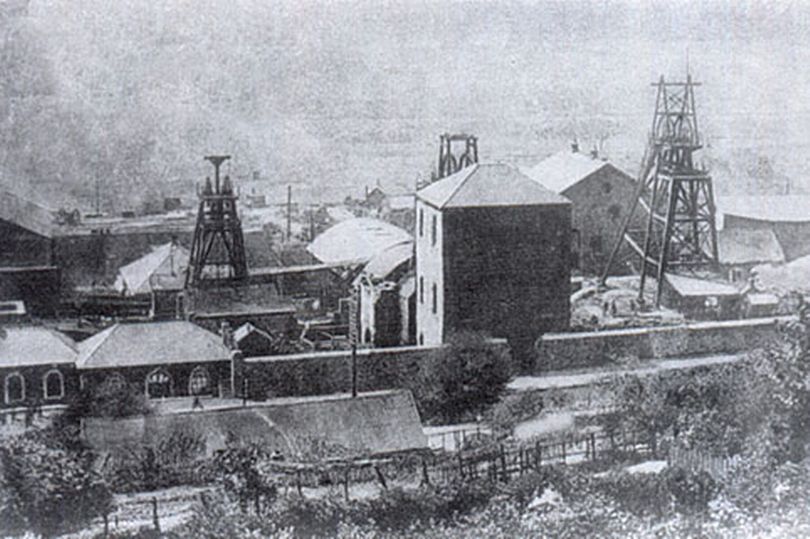
A South Wales coal mine in the Ebbw Fach valley at Abercarn, known contemporaneously as the Prince of Wales Colliery, first sunk in 1836 and substantially redeveloped from 1859-62 by the Ebbw Vale Company. On 11 September 1878 a firedamp explosion killed 268 men and boys, the third-worst death toll in South Wales Coalfield history; the mine was flooded to extinguish underground fires and most of the dead were never recovered. The colliery survived in reduced form as a pumping and ventilation pit for the neighbouring Cwmcarn Colliery before its shafts were filled and the site cleared around 1959.
History
Pits were first sunk at Abercarn in 1836 by the Monmouthshire Iron and Coal Company, reaching the No. 1 Rhondda seam at around 160ft; of six pits planned, only two were completed before the company ran into financial difficulty and closed the works in 1839. The colliery reopened in 1845 as Abercarn and Gwithen Collieries under the Abercarn Colliery Company, chaired by Sir Benjamin Hall, which invested £250,000 and employed around 1,000 men. It was sold in 1859 to Darby, Brown and Co/the Ebbw Vale Steel, Iron and Coal Company, who sank new pits into the Middle and Lower Coal Measures; the Ebbw Vale Company took full control in 1862, adding a second shaft to the Blackvein (Nine Feet) seam. A third shaft was sunk at Cwmcarn in 1876-77, at a cost of around £60,000, as a second downcast ventilation pit for the complex. By the time of the 1878 disaster the colliery employed around 1,000 colliers working the Black Vein seam across three shifts.
On 11 September 1878 the colliery was the scene of one of the worst disasters in British mining history — see Disasters, below. It reopened in 1882 under the Abercarn Coal Company, passing to United National Collieries Ltd (1894), back to the Ebbw Vale Company (1901), and finally to Partridge, Jones and John Paton and Co. Ltd (1935/36), by which point the pit's role had shrunk to pumping and ventilation for the neighbouring Cwmcarn Colliery; its own workforce fell from a peak of over 1,300 in the early 1920s to just 35 men by 1936. The shafts were filled and the surface site cleared around 1959. Official mine-plan records catalogue the site under the name 'Abercarn' rather than 'Prince of Wales', which appears to have been the colliery's contemporary popular name rather than its formal record-keeping title.
Geology
Coal of the South Wales field: the No. 1 Rhondda seam at around 160 feet among them.
Workings
Two principal shafts served the colliery at the time of the 1878 disaster: Shaft No. 1, 310 yards deep, and Shaft No. 2, 352 yards deep, both sunk into the Blackvein (Nine Feet) seam; the wider complex also worked the Five Feet/Gellideg, Rock Vein, Elled, Rhondda and No. 8 seams over its lifetime. A third shaft at Cwmcarn, sunk 1876-77, served as a second downcast ventilation pit.
Closure
Unknown.
What remains
The shafts were filled and the surface site cleared around 1959.
Related mines
- Cwmcarn Colliery — Parent and offspring, then the other way about: Cwmcarn began as shafts sunk to serve and ventilate the Prince of Wales at Abercarn, and its shaft was used by the rescue teams after the 1878 explosion there. By the mid-1930s the roles had reversed, the Prince of Wales surviving on 35 men as Cwmcarn’s pumping and ventilation pit until its shafts were filled in 1959.
Nearby mines
- Celynen Colliery — 0.2 miles (0.4 km) NE
- Cwmcarn Colliery — 1.6 miles (2.5 km) SE
- Cwmdows Colliery — 1.7 miles (2.7 km) NW
- Risca New Pit — 1.7 miles (2.7 km) SE
- Twyn Gwyn Colliery — 1.7 miles (2.8 km) NW
Straight-line distance, within 9 miles (15 km). Show on the map.
Disasters & major incidents
-
Abercarn Colliery shaft explosion, 1876
24 July 1876 · Explosion · 3 fatalities
An explosion of firedamp in the shaft being sunk at Cwmcarn for the Abercarn colliery killed three sinkers on 24 July 1876, two years before the Prince of Wales disaster. -
Abercarn colliery (Prince of Wales) explosion, 1878
11 September 1878 · Explosion · 268 fatalities
A firedamp explosion tore through Prince of Wales Colliery (Abercarn Colliery) on 11 September 1878, killing 268 men and boys — the third-worst death toll in South Wales Coalfield history.
Recorded claims
Individual factual claims, each attached to the source(s) that support it below. Where sources disagree, both are kept.
- Pits were first sunk at Abercarn in 1836 by the Monmouthshire Iron and Coal Company, reaching the No. 1 Rhondda seam at around 160ft, but the company closed the works in 1839 after only two of six planned pits were completed. 1
- The colliery was sold in 1859 to Darby, Brown and Co/the Ebbw Vale Steel, Iron and Coal Company, which sank new pits into the Middle and Lower Coal Measures; the Ebbw Vale Company took full control in 1862, adding a second shaft to the Blackvein seam. 1
- At the time of the 1878 disaster, Shaft No. 1 was 310 yards deep and Shaft No. 2 was 352 yards deep. 2,1
- By the 1930s the colliery's role had shrunk to pumping and ventilation for the neighbouring Cwmcarn Colliery, with its own workforce down to 35 men by 1936; the shafts were filled and the site cleared around 1959. 1
Sources
- (secondary) Abercarn Colliery — Welsh Coal Mines
- (secondary) Prince of Wales Colliery Explosion - Abercarne - 1878 — Northern Mine Research Society
Record created: 26 August 2026 · Last researched: 26 August 2026