 MineArchive
Bryntail Lead Mine
| Also known as | Bryn-tail Leadworks, Van Consols Mine |
|---|---|
| Location | Afon Clywedog, below the Clywedog Reservoir dam, near Llanidloes, Powys — 52.4686, -3.6006 (exact) |
| Commodities | Lead, Barite |
| Type | Metal |
| Worked | Worked from the late 18th century–1884 |
| Operators | Van Consols Barytes and Lead Mining Company (1870–1884) |
Overview
A small lead and barytes mine on the Van Lode, now overshadowed — almost literally — by the dam of the Clywedog Reservoir, and unusually complete: more of its processing buildings survive here than at most Welsh metal mines.
History
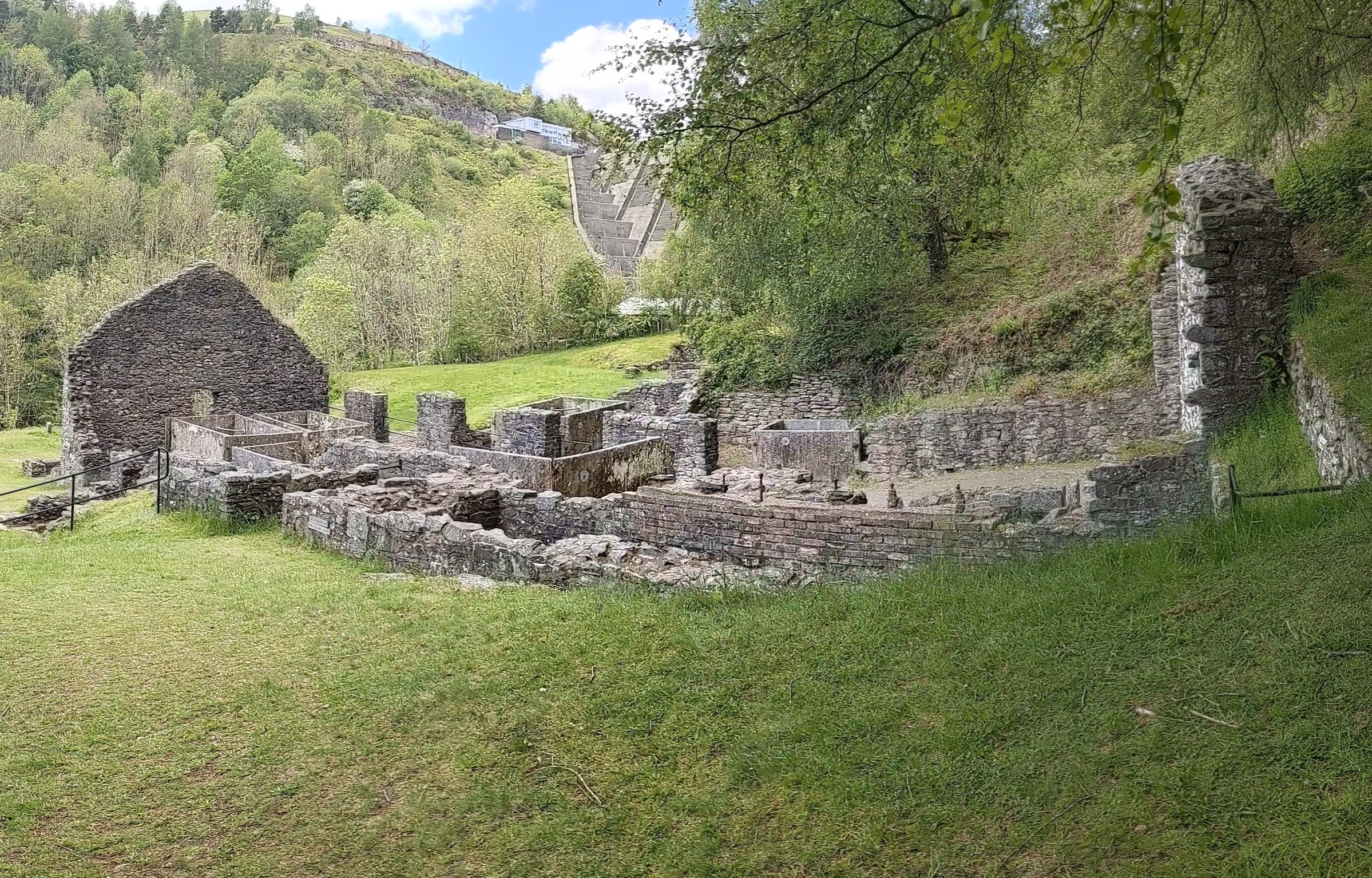
Bryntail worked the western end of the Van Lode, a vein of galena and barytes running from Llanidloes towards Aberystwyth that also fed the much larger Van mine nearby. Working ran from the late 18th century, and by 1892 the mine belonged to the Van Consols Barytes and Lead Mining Company. Like most of the district's mines it closed as the local lead boom ended, shutting in 1884. The site has been in the guardianship of Cadw, the Welsh historic monuments agency, since then, and sits immediately below the dam of the Clywedog Reservoir, built in the 1960s.
Geology
The Van Lode is a mineral vein of galena — lead sulphide — running with barytes, part of the same Central Wales orefield that produced lead and silver at hundreds of small mines across Ceredigion and Powys. Barytes at Bryntail was worked alongside the lead rather than as a separate later phase, which is reflected in the surviving buildings.
Geological setting: Veins and Lodes (well documented example)
Workings
Three shafts served the mine — Murray's, Gundry's and the Western Shaft — with most of the surviving buildings clustered around Gundry's Shaft: a barytes mill, two crushing houses, ore bins, roasting ovens and water tanks. A separate dressing floor to the east held further ore-separation equipment. Other buildings included a manager's office, a smithy, store buildings, a circular explosives magazine, and a footbridge for the miners crossing the Afon Clywedog.
Closure
Bryntail closed in 1884 as the Central Wales lead and barytes boom that had sustained it came to an end.
What remains
Unusually well preserved for a Welsh metal mine, and in the direct care of Cadw. The barytes mill, crushing houses, roasting ovens, magazine and other buildings have been conserved and are open to visitors, with interpretation panels on site; the mine stands in the shadow of the Clywedog dam immediately upstream.
The barytes mill, crushing houses, ore bins, roasting ovens, water tanks, magazine, manager's office, smithy and store buildings around Gundry's Shaft, plus the eastern dressing floor.
Redevelopment
Conserved as a Cadw guardianship monument, freely open to the public.
Related mines
- Van Mine — Bryntail worked the same vein of galena and barytes that also fed the much larger Van mine nearby.
Nearby mines
- Aberdaunant Mine — 0.7 miles (1.1 km) E
- Van Mine — 2.2 miles (3.6 km) E
- Nantiago Mine — 5.4 miles (8.7 km) W
- Plynlimmon Mine — 5.4 miles (8.7 km) W, Ceredigion
- Dylife — 7.5 miles (12.1 km) NW
Straight-line distance, within 9 miles (15 km). Show on the map.
Recorded claims
Individual factual claims, each attached to the source(s) that support it below. Where sources disagree, both are kept.
- Bryntail worked the western end of the Van Lode, a galena and barytes vein running from Llanidloes towards Aberystwyth. 1
- Three shafts — Murray's, Gundry's and the Western Shaft — served the mine, with a barytes mill, crushing houses, roasting ovens, ore bins and a magazine surviving around Gundry's Shaft. 1,2
- The mine closed in 1884 as the district's lead and barytes boom ended. 1
- The site is a Cadw guardianship monument with its buildings conserved and open to the public, standing immediately below the dam of the Clywedog Reservoir. 1,2
Photographs & further reading
Sources
- (primary) Bryn-tail Leadworks — Cadw
- (secondary) Bryntail lead mine — Wikipedia
Record created: 24 August 2026 · Last researched: 24 August 2026