 MineArchive
Brynlliw Colliery
| Also known as | Bryn-lliw Colliery, Brynlliw-Morlais Colliery |
|---|---|
| Location | Grovesend, north-west of Swansea — 51.6902, -4.0317 (exact) |
| Commodity | Coal |
| Type | Coal |
| Worked | 1903–1983 |
| Maximum depth | 340 yards to the Swansea Four Feet seam, deepened by a further 35 yards in the 1950s scheme |
| Operators | Thomas Williams and Sons (Llangennech) Ltd (1903–1947), National Coal Board (1947–1983) |
Overview
A colliery at Grovesend sunk by Thomas Williams and Sons from 1903, in production from 1905, working the Swansea Four Feet seam at 340 yards. It was never large before the war — 135 men in 1918, 182 in 1923 — and the depression stopped it in 1925; it was abandoned in 1927, but its shafts and headgear were left standing. That mattered: the National Coal Board reopened it from November 1954 in a £4.8 million scheme, and by 1968 it was raising over 300,000 tons a year. In 1976 a roadway was driven under the Llwchwr estuary to meet Morlais, and the two were worked as one until 1983.
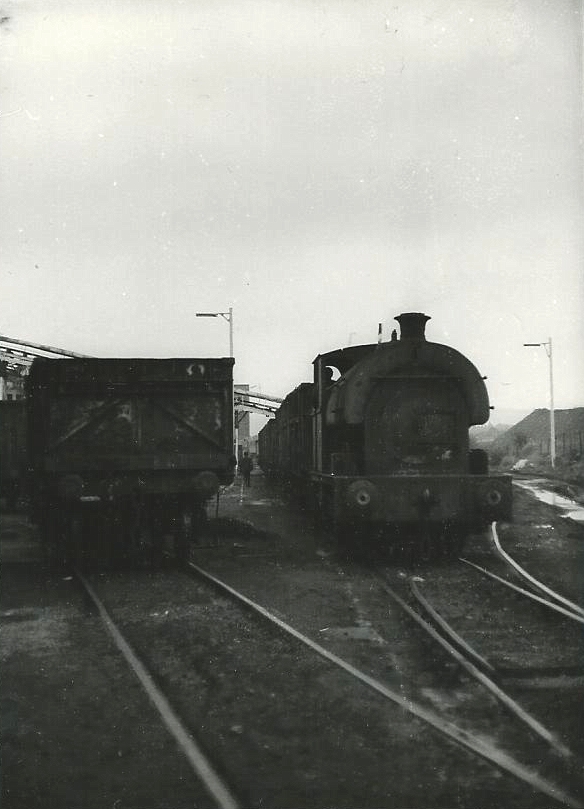
History
Thomas Williams and Sons began sinking the colliery in 1903 and production started in 1905. Shaft one was the downcast, winding men and supplies; shaft two was the upcast and wound coal by skip. It worked the Swansea Four Feet seam at 340 yards, and in 1914 the underlying Five Feet seam was developed. The workforce was 135 in 1918 and 182 in 1923, by then working the Five Feet.
The depression in the coal trade stopped production in 1925 and the colliery was abandoned in 1927 — but the shafts and headgear were retained rather than demolished. A major reopening scheme began on 10 November 1954 under the National Coal Board: the shafts were repaired and deepened by 35 yards, new headgear was erected with skip winding in the upcast, and thousands of yards of roadway were driven for locomotive haulage. The official opening was held on 12 February 1960. The scheme cost £4.8 million, and the colliery went into production on the Six Feet seam by mechanised room-and-pillar methods, showing an annual output of over 300,000 tons by 1968.
On 10 May 1963 four face men were killed by a fall of roof at the S2 face gate end (see Disasters, below).
In 1976 a roadway was driven under the Llwchwr estuary to link Brynlliw with Morlais on the opposite side; the two then formed a single unit, all the coal drawn through the Brynlliw shafts. By the mid-1970s production was concentrated on the Swansea Three Feet and Six Feet seams at the Brynlliw end and the Five Feet at Morlais. The combined colliery closed in 1983.
Geology
The western South Wales coalfield at Grovesend. The Swansea Four Feet seam was reached at 340 yards, with the underlying Five Feet developed from 1914 and the Six Feet worked after the reopening; the Three Feet was also worked in the final years.
Workings
Two shafts: No. 1 the downcast, for men and supplies, and No. 2 the upcast, winding coal by skip. Both were deepened by 35 yards in the reopening scheme of the 1950s, new headgear was erected, and thousands of yards of roadway were driven for locomotive haulage. Coal was got by mechanised room-and-pillar working. From 1976 the workings ran under the Llwchwr estuary to meet Morlais, whose shaft thereafter carried only men and materials.
Closure
Production ceased in 1925 in the depression and the colliery was abandoned in 1927, though the shafts and headgear were kept. After the 1954-60 reopening it worked on as the Brynlliw-Morlais unit and closed in 1983.
What remains
No structure is known to survive.
Related mines
- Grovesend Colliery — Grovesend had an air shaft connection to the upcast at Brynlliw, and the two share a 1925 abandonment plan.
- Morlais Colliery — One company and then one mine: both were sunk by Thomas Williams and Sons of Llangennech, and in 1976 a roadway was driven under the Llwchwr estuary to join them, after which all the coal came up through the Brynlliw shafts and Morlais wound only men and materials.
- Talyclyn Colliery — Thomas Williams and Sons (Llangennech) collieries.
Nearby mines
- Grovesend Colliery — 0.3 miles (0.4 km) W
- Mountain Colliery, Gorseinon — 1.1 miles (1.7 km) S
- Bolgoed Colliery — 1.3 miles (2.1 km) N
- Morlais Colliery — 1.7 miles (2.8 km) NW, Carmarthenshire
- Cae Duke Colliery — 2.1 miles (3.3 km) S
Straight-line distance, within 9 miles (15 km). Show on the map.
Disasters & major incidents
-
Brynlliw Colliery roof fall, 1963
10 May 1963 · Collapse / Roof Fall · 4 fatalities
At the end of the day shift on Friday 10 May 1963 the roof came in over twenty feet at the gate end of the S2 face at Brynlliw Colliery near Gorseinon, after a week of squeezing. Four colliers were killed. The undermanager, buried with them, survived by building a pack wall of stones around himself while rescuers dug in from both sides. The Minister of Power promised inquiries in the Commons the following Monday.
Recorded claims
Individual factual claims, each attached to the source(s) that support it below. Where sources disagree, both are kept.
- Thomas Williams and Sons began sinking the colliery in 1903 and production started in 1905. It worked the Swansea Four Feet seam at 340 yards, and in 1914 the underlying Five Feet seam was developed. 1
- Shaft one was the downcast, for men and supplies; shaft two was the upcast and wound coal by skip. 1
- Owing to the depression in the coal trade the colliery ceased production in 1925 and was abandoned in 1927, although the shafts and headgear were retained. 1
- A major reopening scheme began on 10 November 1954 under the National Coal Board, including repairing and deepening the shafts by 35 yards, erecting new headgear with skip winding in the upcast shaft, and driving thousands of yards of roadway for locomotive haulage. The official opening ceremony was held on 12 February 1960 and the scheme cost £4.8 million. 1
- The colliery went into production working the Six Feet seam by mechanised room-and-pillar methods, and by 1968 was showing an annual output of over 300,000 tons. 1
- In 1976 a roadway was driven under the Llwchwr estuary to link Brynlliw with Morlais; the two then formed a single unit with all coal brought to the surface through the Brynlliw shafts. The combined colliery closed in 1983. 1
- The BGS mine-plans catalogue holds a Mining Remediation Authority abandonment plan titled 'Brynlliw' (catalogue SWT2866, Spoil Tips Nos.52 And 850, dated 1983). 2
Photographs & further reading
The colliery record: the 1903 sinking and the seams, the abandonment of 1927 with the headgear left standing, the £4.8 million reopening of 1954-60, and the 1963 fatal fall.
View sourceSources
- (secondary) Brynlliw Colliery — Welsh Coal Mines
- (primary) BGS / Mining Remediation Authority mine plans: BRYNLLIW — British Geological Survey / Mining Remediation Authority
- (primary) Brynlliw Colliery, Grovesend: National Coal Board files, 1954-1987 — The National Archives
Record created: 8 September 2026 · Last researched: 8 September 2026