 MineArchive
Mountain Colliery, Gorseinon
| Location | Gorseinon, north-west of Swansea — 51.6752, -4.0384 (exact) |
|---|---|
| Commodity | Coal |
| Type | Coal |
| Worked | 1846–1969 |
| Maximum depth | Unknown. |
| Operators | Sterry Brothers (1850–1879), Swansea Navigation Collieries Ltd (1913–1947), National Coal Board (1947–1969), Mountain Colliery Company |
Overview
A Gorseinon colliery opened as a drift in 1846, given a shaft in 1900, which employed over 900 men under Swansea Navigation Collieries, was known for its purple-hued coal and was closed by the National Coal Board in 1969.
History
Mountain Colliery at Gorseinon began as a drift in 1846 and was taken over by the Sterry brothers in 1850. After Alfred Sterry's death in 1879 his executors held it until Thomas James and Company became the owners, and in 1896 it employed 59 men on manufacturing and steam coal. A shaft was added in 1900. By 1908 the Mountain Colliery Company had it, with 312 men; in 1906 a hitcher, Thomas Roberts, was killed by a stone falling from an upper landing as he steadied a bowk.
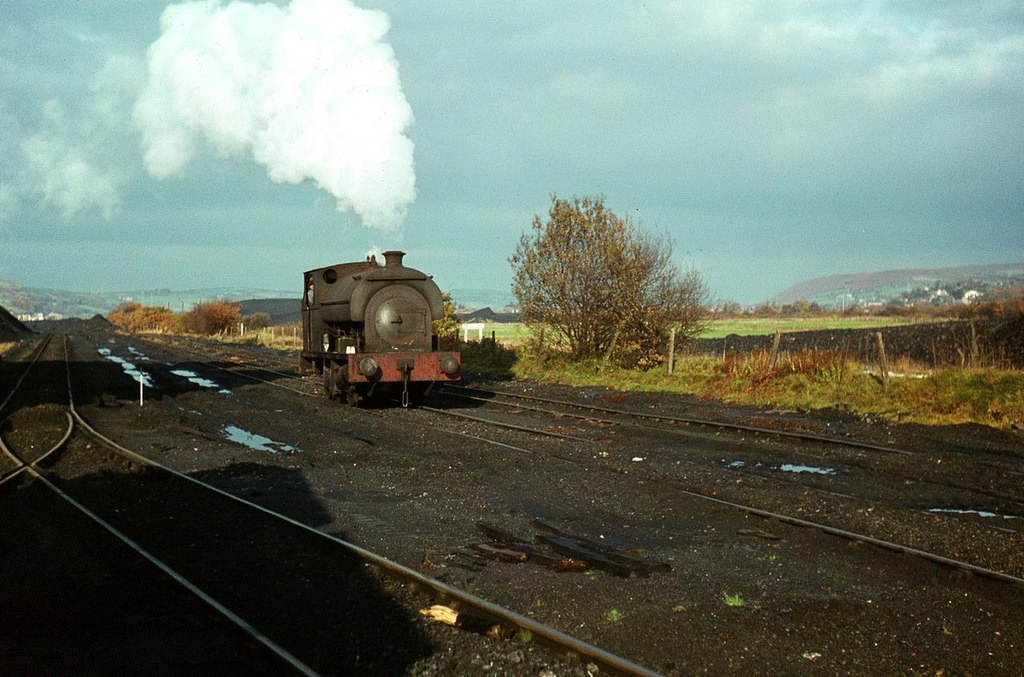
In April 1910 the colliers struck over the cutting price, and on 31 May an explosion, thought to have come from a misfired shot, killed Edward Moore and Samuel Morse and injured four more (see Disasters, below). Swansea Navigation Collieries are given as owners in 1910 by one record and from 1913 by another; by 1918 they employed 933 men there, and in 1923 869 worked the Four and Five Feet seams. A serious fall stopped work for a week in September 1916, and in February 1919 a runaway journey of loaded trams killed a young lad, Tommy Roberts, as the colliers were leaving work. At its peak the colliery raised over 220,000 tons a year from the Four, Five and Six Feet seams, some of its coal recognisable by a purple hue. It was later worked with Cae Duke, the two employing 578 in 1945, and the National Coal Board closed it in 1969, when steam locomotives were still shunting its sidings.
Geology
South Wales Coalfield: the Four, Five and Six Feet seams.
Workings
A drift from 1846 and a shaft from 1900; later worked with Cae Duke.
Closure
Closed by the National Coal Board in 1969.
What remains
Unknown.
Redevelopment
Unknown.
Related mines
- Cae Duke Colliery — Gorseinon neighbours, worked together by 1945.
Nearby mines
- Cae Duke Colliery — 1.0 miles (1.6 km) SW
- Brynlliw Colliery — 1.1 miles (1.7 km) N
- Grovesend Colliery — 1.1 miles (1.7 km) N
- Beili Glas Colliery — 1.4 miles (2.3 km) SW
- Broad Oak Colliery, Loughor — 1.4 miles (2.3 km) SW
Straight-line distance, within 9 miles (15 km). Show on the map.
Disasters & major incidents
-
Mountain Colliery explosion, 1910
31 May 1910 · Explosion · 2 fatalities
A charge that had misfired in an earlier volley went off in the drift at Mountain Colliery, Gorseinon, on the morning of 31 May 1910, killing two men filling a tram and injuring four.
What's uncertain
Points where sources disagree or the record could not be settled; both accounts are kept. All open questions in the archive.
- Swansea Navigation Collieries took it over in 1913. (disputed) 1
- Swansea Navigation Collieries owned it in December 1910. (disputed) 3
Recorded claims
Individual factual claims, each attached to the source(s) that support it below. Where sources disagree, both are kept.
- Mountain Colliery opened as a drift in 1846 and was taken over by the Sterry brothers in 1850; the shaft was added in 1900. 1
- It employed 59 men in 1896, 312 in 1908, 933 in 1918 and 869 in 1923. 1
- In April 1910 the colliers struck over the cutting price. 2
- Swansea Navigation Collieries took it over in 1913. (disputed) 1
- Swansea Navigation Collieries owned it in December 1910. (disputed) 3
- In February 1919 a runaway journey of loaded trams killed Tommy Roberts as the colliers left work. 4
- A serious fall underground stopped work for the colliers for a week in September 1916. 5
- In 1906 the hitcher Thomas Roberts was killed by a stone falling from an upper landing, under the Mountain Colliery Company. 6
- The National Coal Board closed Mountain Colliery in 1969. 1
- In 1969 a National Coal Board steam locomotive was still shunting the sidings serving Mountain Colliery. 7
Sources
- (secondary) Mountain Colliery, Gorseinon — Welsh Coal Mines
- (primary) The Merthyr Express, 9 April 1910: Colliers at Mountain Colliery on strike — The Merthyr Express (Welsh Newspapers Online, National Library of Wales)
- (primary) NMRS Coal Mining Accidents and Deaths: George Thomas, Mountain, Gorseinon, 1910 — Northern Mine Research Society
- (primary) The Cambria Daily Leader, 6 February 1919: Runaway trams — The Cambria Daily Leader (Welsh Newspapers Online, National Library of Wales)
- (primary) The Cambria Daily Leader, 14 September 1916: Gorseinon: serious fall underground — The Cambria Daily Leader (Welsh Newspapers Online, National Library of Wales)
- (primary) NMRS Coal Mining Accidents and Deaths: Thomas Roberts, Mountain, Gorseinon, 1906 — Northern Mine Research Society
- (observational) Steam at Gorseinon, 1969 — Geograph
- (primary) Weekly Mail, 4 June 1910: Serious colliery mishap in West Wales: Mountain Colliery, Gorseinon — Weekly Mail (Welsh Newspapers Online, National Library of Wales)
Record created: 18 October 2026 · Last researched: 18 October 2026