 MineArchive
Big Pit
| Location | Blaenavon, Torfaen — 51.7724, -3.1050 (exact) |
|---|---|
| Commodities | Coal, Iron |
| Type | Coal |
| Worked | 1880–1980 |
| Maximum depth | 293ft (Old Coal seam) |
| Operators | National Coal Board (1947–1980) |
Overview
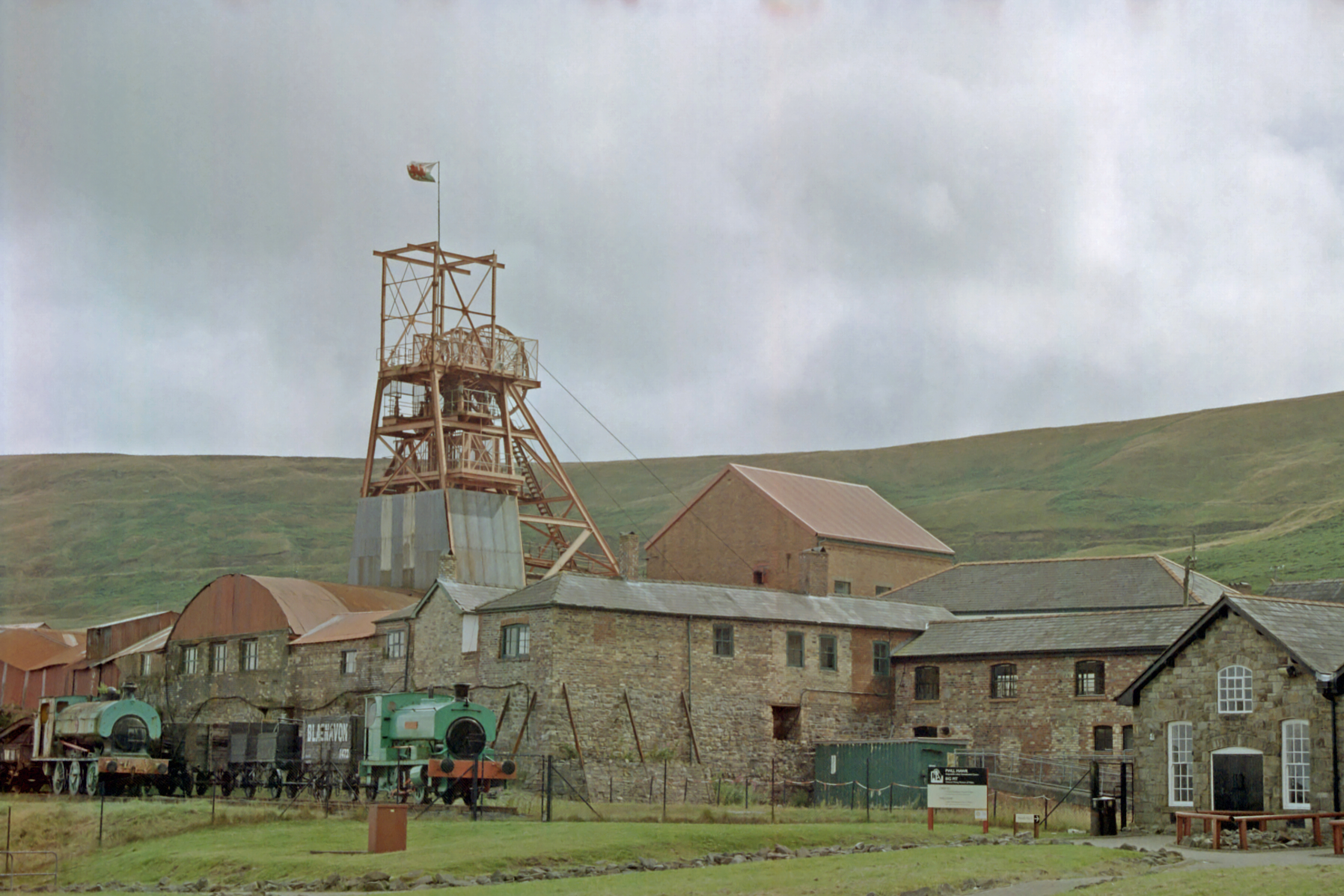
Big Pit, at Blaenavon in the South Wales coalfield, was a working coal mine for a century before closing in 1980 — and reopening in 1983 as Wales's National Coal Museum, now part of the Blaenavon Industrial Landscape World Heritage Site.
History
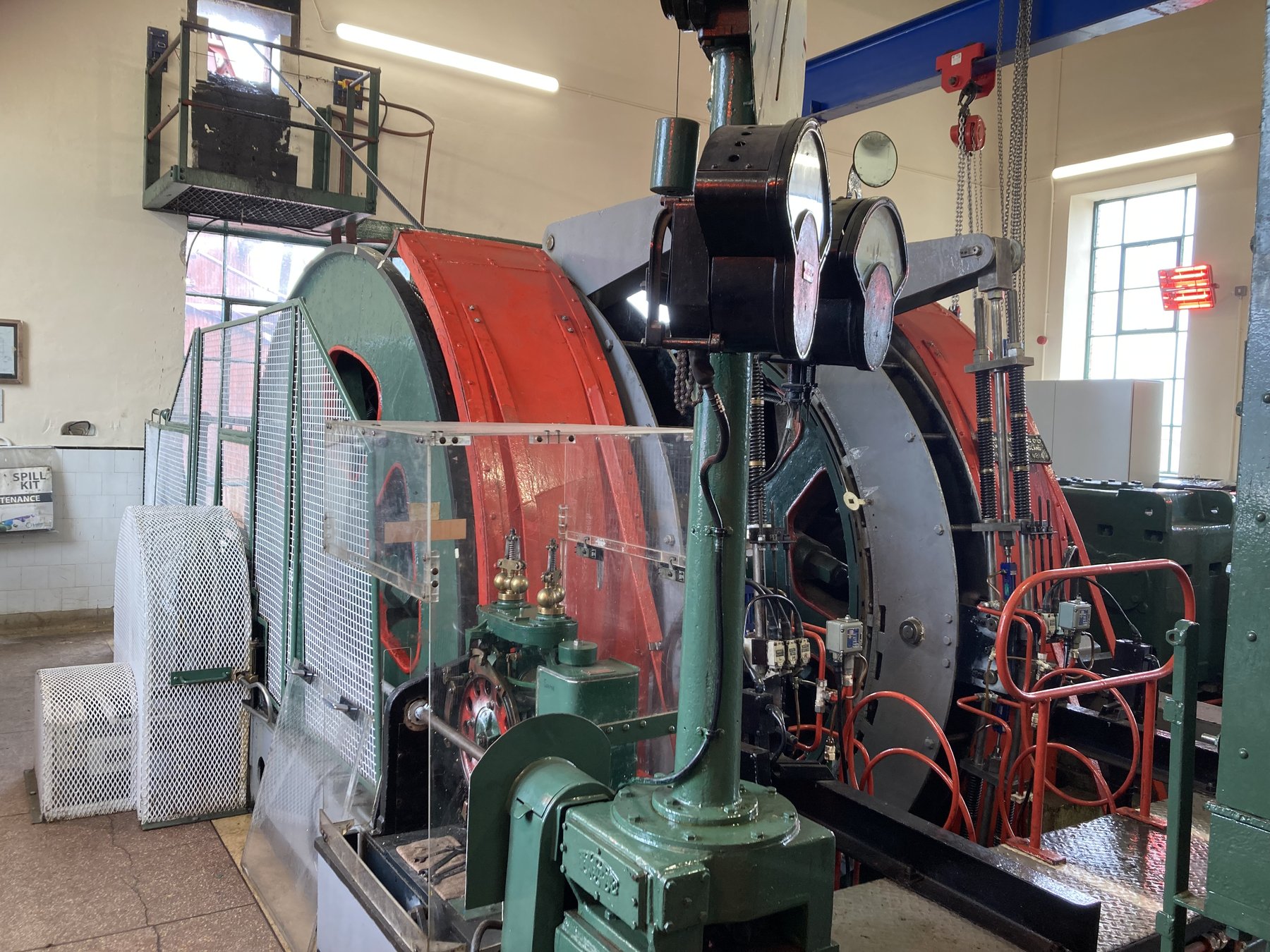
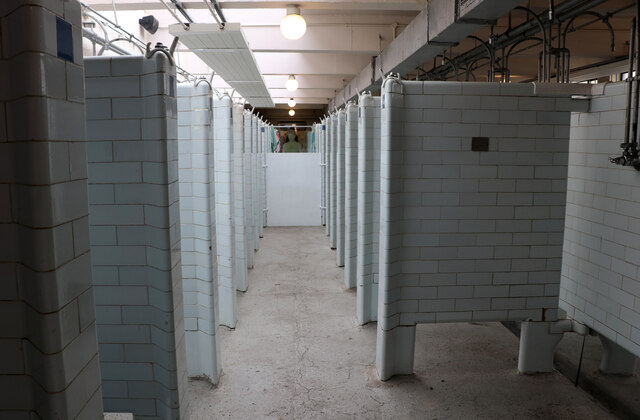
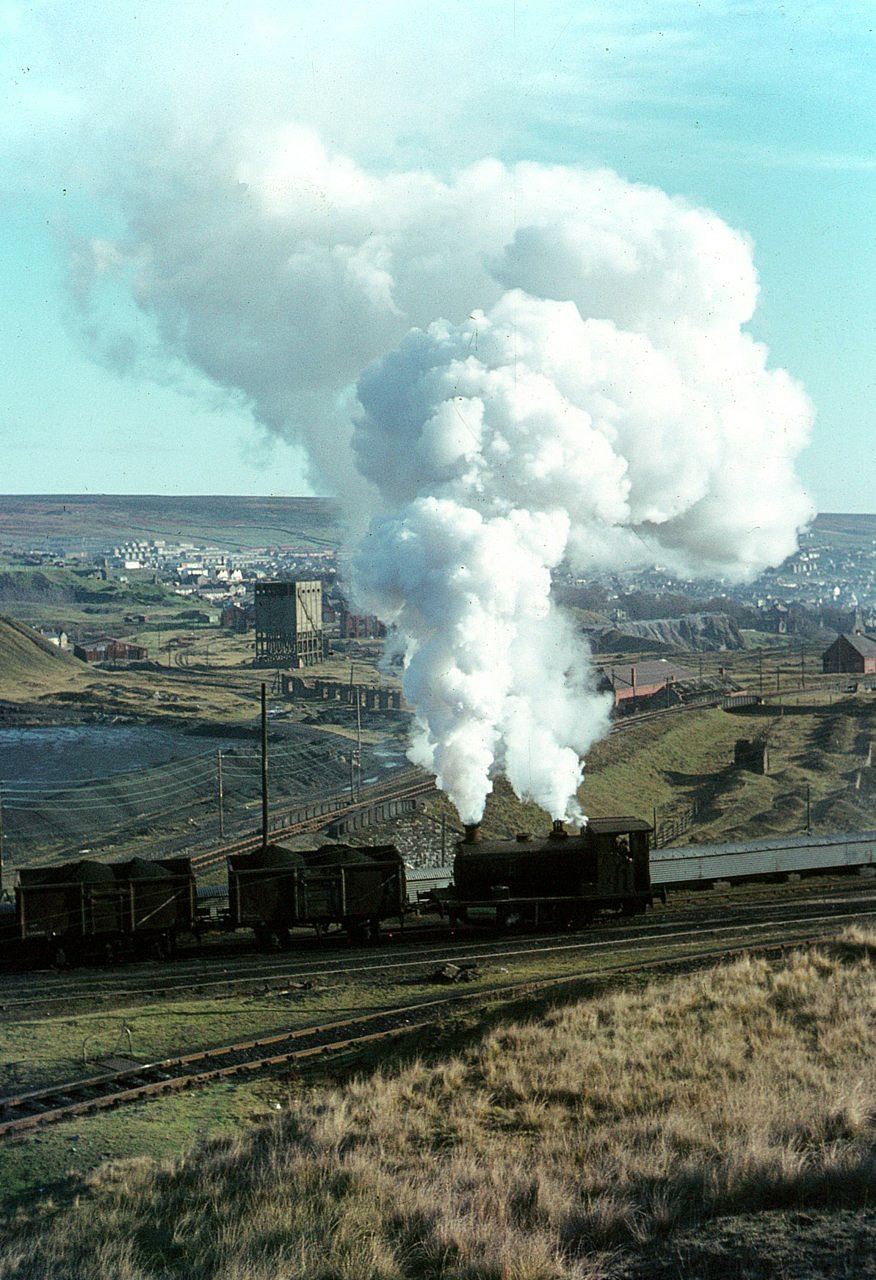
The site's mining origins predate coal: around 1810 the Engine Pit Level was driven by hand to reach shallow iron deposits, and later served as an emergency exit once coal working began. Big Pit itself grew from the amalgamation of several older workings — Coity Pits, Dodd's Slope, Coity Level, Blaenavon New Mine, Elled Drift, Forge Pit, Forge Slope and Forge Level, the earliest of which was sunk in 1812 to work ironstone for the adjoining Blaenavon Ironworks. Sources disagree on the detail of the shaft's own early history — whether the elliptical shaft that gave the pit its name was itself the former Kearsley's Pit, sunk in 1860, or a separate, later shaft from Kearsley's Pit — but the first mines inspector's report describing a pit under the name 'Big Pit' dates from 1881, noting its distinctively elliptical shaft, 18 feet by 13 feet, the first in Wales large enough to take two tramways. The shaft was deepened, by 1880, to reach the Old Coal seam at 293 feet. Employment grew through the early 20th century, reaching 1,122 workers by 1908 and peaking at around 1,400 men in 1923, when the mine produced over 250,000 tons of coal a year, some of it exported as far as South America; conveyor systems were added in 1908, electric fans, haulage and pumps in 1910, and pithead baths, designed by architect A.J. Saise, opened in January 1939. Two multi-fatality accidents mark the mine's working life: a localised explosion on 11 December 1908 and an underground fire on 7 April 1913, each killing three men (see Disasters, below); more widely, 52 deaths were recorded at Big Pit up to nationalisation in 1947, chiefly from roof falls and haulage accidents. The colliery was nationalised under the National Coal Board in 1947 and integrated into a single 'super-pit' with the neighbouring Garn Slope, Kay's Slope and Viponds collieries. Employment fell steadily thereafter — to 1,064 by 1956 and 494 men by 1970 — and winding operations ceased in 1973 as the pit was converted to drift working; Big Pit finally closed on 2 February 1980, with the loss of more than 250 jobs.
Geology
Coal and iron of the South Wales field at Blaenavon, where the shaft was deepened by 1880 to reach the Old Coal seam at 293 feet; the pit grew from the amalgamation of older workings on the same ground.
Geological setting: Sedimentary Beds and Seams (well documented example)
Workings
Grown from the amalgamation of older workings — Coity Pits, Dodd's Slope, Coity Level, Blaenavon New Mine, Elled Drift, Forge Pit, Forge Slope and Forge Level. The Engine Pit Level, driven by hand around 1810 to reach shallow iron, later served as an emergency exit.
Closure
Closed in 1980 and bought by Torfaen Borough Council for £1; the Big Pit (Blaenavon) Trust reopened it as a museum in April 1983.
What remains
Torfaen Borough Council bought the site for £1 after closure, and the Big Pit (Blaenavon) Trust reopened it as a museum in April 1983 following a development programme. Management passed to the National Museums and Galleries of Wales in 1999, formally incorporated as the National Mining Museum of Wales on 1 February 2001; a further £1.5 million surface redevelopment, funded by the Heritage Lottery Fund, the Welsh Assembly Government and the Welsh Tourist Board, was completed in 2004. Now Big Pit: National Coal Museum, it remains formally classed as a working pit under HM Inspectorate of Mines regulations. Its underground tour, led by former miners, descends 90 metres and covers around 700 metres of roadway in roughly an hour; visitors are issued a helmet, cap lamp, belt and self-rescuer, and must leave phones, lighters and other battery-powered items above ground. Big Pit forms part of the Blaenavon Industrial Landscape UNESCO World Heritage Site, inscribed in 2000, and won the Gulbenkian Prize (now Art Fund Museum of the Year) in 2005; over three million visitors had been welcomed to the site by 2015. The pit head building, headframe and tram circuit and the miners' baths and canteen are Grade II* listed, and the powder house Grade II listed, all designated by Cadw in 1995. From April 2025 Big Pit became the only one of Amgueddfa Cymru's seven national museums to charge for part of the visitor experience, introducing an £8 advance-booking charge for the underground tour amid wider funding pressure on Welsh museums — a decision the Senedd's Culture Committee has since called on the Welsh Government to reverse by funding the tour directly; entry to the museum itself, and its surface exhibitions, has remained free throughout.
Related mines
- Blaenavon Ironworks — Big Pit's earliest shaft was sunk in 1812 specifically to work ironstone for the adjoining Blaenavon Ironworks.
- Forge Slope Colliery — Forge Slope's workforce was returned as included in Big Pit from 1933, two years after it closed; Big Pit absorbed the older Blaenavon levels and slopes as it grew.
- Garn Colliery, Blaenavon — Garn was merged with Big Pit on 1 January 1961; both belonged to the Blaenavon Company before nationalisation.
- Kay's Slope — Part of the NCB's Blaenavon super-pit with Big Pit.
Nearby mines
- Forge Slope Colliery — 0.1 miles (0.2 km) E
- Kay's Slope — 0.6 miles (0.9 km) NW
- Blaenavon Ironworks — 0.7 miles (1.2 km) NE
- Cinder Pits — 0.8 miles (1.3 km) E
- East Blaina Red Ash Colliery — 1.2 miles (1.9 km) NW, Blaenau Gwent
Straight-line distance, within 9 miles (15 km). Show on the map.
Disasters & major incidents
-
Big Pit explosion (1908)
11 December 1908 · Explosion · 3 fatalities
A localised underground explosion killed three men. -
Big Pit fire (1913)
7 April 1913 · Fire · 3 fatalities
Three men died in a fire near the underground stables while trying to rescue the pit ponies stabled there; the horses survived.
What's uncertain
Points where sources disagree or the record could not be settled; both accounts are kept. All open questions in the archive.
- Sources disagree on some detail of the shaft's early history. The Blaenavon World Heritage Site's own account and welshcoalmines.co.uk both describe the elliptical shaft itself as the former Kearsley's Pit, sunk in 1860 and later deepened to reach the Old Coal seam at 293 feet (dated 1878 by welshcoalmines.co.uk, 1880 by the Blaenavon World Heritage Site and by Coflein, the Royal Commission's monuments record for Wales). The Northern Mine Research Society's more technical listing instead treats Kearsley's Pit — sunk c.1800, 5 feet in diameter — as a separate, older shaft from the elliptical Nos.1 and 2 Pits sunk 1860–1863, of which No.1 was the 18 by 13 foot shaft that became known as Big Pit. (disputed) 3,4,2,5
Recorded claims
Individual factual claims, each attached to the source(s) that support it below. Where sources disagree, both are kept.
- The 1881 mines inspector's report describing Big Pit noted its distinctively elliptical shaft, 18 feet by 13 feet — the first shaft in Wales large enough to take two tramways. 1
- Employment at Big Pit peaked at around 1,400 men in 1923, when the mine produced over 250,000 tons of coal a year, some of it exported as far as South America. 1
- Big Pit finally closed on 2 February 1980, with the loss of more than 250 jobs; the site was bought by Torfaen Borough Council for £1 and reopened as a museum in 1983. 1
- Big Pit is formally classed as a working pit under HM Inspectorate of Mines regulations, and its underground tour — led by former miners — descends 90 metres below the surface. 1
- Big Pit was formed through the amalgamation of several older workings at the site — Coity Pits, Dodd's Slope, Coity Level, Blaenavon New Mine, Elled Drift, Forge Pit, Forge Slope and Forge Level — the earliest of which, Forge Level, was sunk in 1812 to work ironstone for the adjoining Blaenavon Ironworks before coal became the dominant product. 2
- Sources disagree on some detail of the shaft's early history. The Blaenavon World Heritage Site's own account and welshcoalmines.co.uk both describe the elliptical shaft itself as the former Kearsley's Pit, sunk in 1860 and later deepened to reach the Old Coal seam at 293 feet (dated 1878 by welshcoalmines.co.uk, 1880 by the Blaenavon World Heritage Site and by Coflein, the Royal Commission's monuments record for Wales). The Northern Mine Research Society's more technical listing instead treats Kearsley's Pit — sunk c.1800, 5 feet in diameter — as a separate, older shaft from the elliptical Nos.1 and 2 Pits sunk 1860–1863, of which No.1 was the 18 by 13 foot shaft that became known as Big Pit. (disputed) 3,4,2,5
- Fuller employment and output figures survive across the mine's operating life: 528 men in 1896, 1,122 in 1908, 956 in 1918, around 1,500 underground and 700 surface workers in 1935 (when combined output with the adjoining Garn and Kay's collieries reached roughly 600,000 tons a year), 789 employed at nationalisation in 1947, 1,064 in 1956 (producing 255,654 tons that year) and 494 by 1970; the colliery's last full year of production, 1974, produced 72,728 tonnes. 3,4
- After nationalisation in 1947 Big Pit was integrated into a single National Coal Board ‘super-pit’ consolidating it with the neighbouring Garn Slope, Kay's Slope and Viponds collieries. 4
- Beyond the two multi-fatality incidents recorded separately (see Disasters, below), Big Pit recorded 52 deaths in total up to nationalisation in 1947, most caused by roof falls (28 deaths) and haulage accidents (11 deaths); individual fatal accidents are separately documented back to the 1840s, including Thomas Oliver Jones, crushed by a roof fall in 1891, and further fatal accidents in 1894 and 1896. 4
- The pit head building, headframe and tram circuit, and the miners' baths and canteen, are Grade II* listed, and the powder house Grade II listed, all designated by Cadw on 9 February 1995. The current steel headframe was built in 1921, replacing an earlier wooden head frame, and was altered in 1952 by the National Coal Board's 'Blaenavon Gang' when a new winder was installed; the shaft it serves was used for winding coal until 1973 and as a means of access for miners until 1976. 5,6
- Management of the museum passed to the National Museums and Galleries of Wales in 1999, formally incorporated as the National Mining Museum of Wales on 1 February 2001. A further £1.5 million redevelopment of the surface displays and exhibitions, funded by the Heritage Lottery Fund, the Welsh Assembly Government and the Welsh Tourist Board, was completed in 2004 and contributed to the museum's 2005 Gulbenkian Prize win. Over three million visitors had been welcomed to the site by 2015. 2
- The underground tour covers around 700 metres of roadway and takes approximately an hour; visitors are issued a helmet, cap lamp and belt (fitted by staff) and must leave all phones, lighters, battery-operated watches, calculators, radios, personal music players and photographic equipment above ground, since a spark from a battery could be dangerous in the pit — items are collected, secured on the surface and returned afterwards. The tour has a minimum height requirement of one metre and a minimum group size of two. 7,8
- From April 2025 Big Pit became the only one of Amgueddfa Cymru – National Museum Wales's seven national museums to charge for any part of the visitor experience, introducing an £8 advance-booking (or £5 same-day) charge for the underground tour, which the museum attributed to funding pressure. The Senedd's Culture Committee criticised the charge and called on the Welsh Government to fund Amgueddfa Cymru sufficiently for the tour to be free again; the museum offered a free underground-tour window over the 2026 summer holidays (18 July – 1 September) while the trial continued. Entry to the museum and its surface exhibitions, including the Pithead Baths, has remained free throughout. 9,10
- The BGS/Mining Remediation Authority mine plans catalogue holds an abandonment plan (reference SWA1000) covering the combined Blaenavon Mine workings — including Kear's Slope, Milfraen Pit, New Pit, Balance Pit, Hill Pit, Garn Slope, Forge Pit, Big Pit, Coity Pit, Garn Pits and Kay's Slope — for the Lower Nine Feet and Upper Bute (Black Vein) seams. 11
Photographs & further reading
Amgueddfa Cymru – National Museum Wales's own site for the museum, with current opening times, admission and underground tour booking.
View sourceSources
- (secondary) Big Pit National Coal Museum — Wikipedia
- (secondary) Big Pit: A Brief History — Blaenavon World Heritage Site
- (secondary) Big Pit Blaenavon — Welsh Coal Mines
- (secondary) Big Pit, Blaenavon — Northern Mine Research Society
- (primary) Pit Head Building, Headframe and Tram Circuit, Big Pit Coal Mine, Blaenavon (NPRN 223676) — Royal Commission on the Ancient and Historical Monuments of Wales (Coflein)
- (primary) Pit Head Building, Headframe and Tram Circuit, Blaenavon (Grade II* listing) — Cadw (statutory list, via British Listed Buildings)
- (primary) The Underground Tour — Amgueddfa Cymru – National Museum Wales
- (primary) Plan Your Visit to Big Pit National Coal Museum — Amgueddfa Cymru – National Museum Wales
- (secondary) End charges to access Wales’ coalmining heritage — Senedd Cymru / Welsh Parliament
- (observational) Big Pit’s Underground Tour available for free this summer — Nation.Cymru
- (primary) BLAENAVON MINE ... BIG PIT ... (mine plan catalogue entry SWA1000) — BGS / Mining Remediation Authority mine plans catalogue
Record created: 20 August 2026 · Last researched: 29 August 2026