 MineArchive
Bedlinog Colliery
| Location | Bedlinog, Taff Bargoed valley, Merthyr Tydfil — 51.7059, -3.3068 (exact) |
|---|---|
| Commodity | Coal |
| Type | Coal |
| Worked | 1878 (sinking)–1956 |
| Maximum depth | Unknown. |
| Operators | Dowlais Iron Company (1878–?), National Coal Board (1947–1956), Guest, Keen and Nettlefolds Limited, Dowlais Collieries Ltd |
Overview
The Dowlais Iron Company sank Bedlinog Colliery in 1878 in the Taff Bargoed valley five miles south-east of Merthyr Tydfil, and raised its first coal in 1881 from the Rhas Las, Bottom Rhas Las and Upper Four Feet seams. It was a large pit for its valley: 1,402 people in 1896, 2,585 by 1910. In 1884 a hundred and sixty-one miners were trapped underground for twenty-four hours. It passed with the rest of the Dowlais concern to Guest, Keen and Nettlefolds, stopped producing in 1924, and was kept on for pumping under the Taff Merthyr Steam Coal Company before closing in 1956. The village it built is still there; the colliery is not.
History
Bedlinog was a Dowlais colliery from the start. The Dowlais Iron Company sank it in 1878 and the first coal came up in 1881, from the Rhas Las, Bottom Rhas Las and Upper Four Feet seams. Three years later, in 1884, a hundred and sixty-one miners were trapped underground for twenty-four hours (see Disasters, below). By the Inspector of Mines list of 1896 the two pits employed 1,402 people between them, raising house and manufacturing coal, and the colliery had built the terraced village that climbs the hillside above it. Ownership passed to Guest, Keen and Nettlefolds Ltd, and later to Dowlais Collieries Ltd. Employment peaked at 2,585 in 1910 and was 1,716 in 1915; in 1908 the No. 1 pit had 1,346 people and the No. 2 pit 898, and by 1918 the combined workforce was 1,614. A report of 1923 records 1,084 at the No. 1 pit and 703 at the No. 2, working the Little Vein. Production ceased the following year. The colliery was not abandoned, though: it was still returned in 1940 and 1947, when 488 people raised 130,000 tons of coking and household coal under the National Coal Board.
Geology
Bedlinog worked the steam-coal seams of the northern outcrop of the South Wales coalfield in the Taff Bargoed valley — the Rhas Las and Bottom Rhas Las at the sinking, the Upper Four Feet, and later the Little Vein, which was the seam still being worked when production stopped in 1924.
Geological setting: Sedimentary Beds and Seams (well documented example)
Workings
Two shafts, the No. 1 and No. 2 pits, returned separately in the Inspector's lists and employing between them well over two thousand people at the colliery's height. Coal left the valley by the Dowlais company's own railway down the Taff Bargoed to Trelewis.
Closure
Production ceased in 1924. By 1945 the colliery belonged to the Taff Merthyr Steam Coal Co. Ltd and was retained for pumping only, though the Lists of Mines still return a workforce and an output under the National Coal Board in 1947. It closed in 1956.
What remains
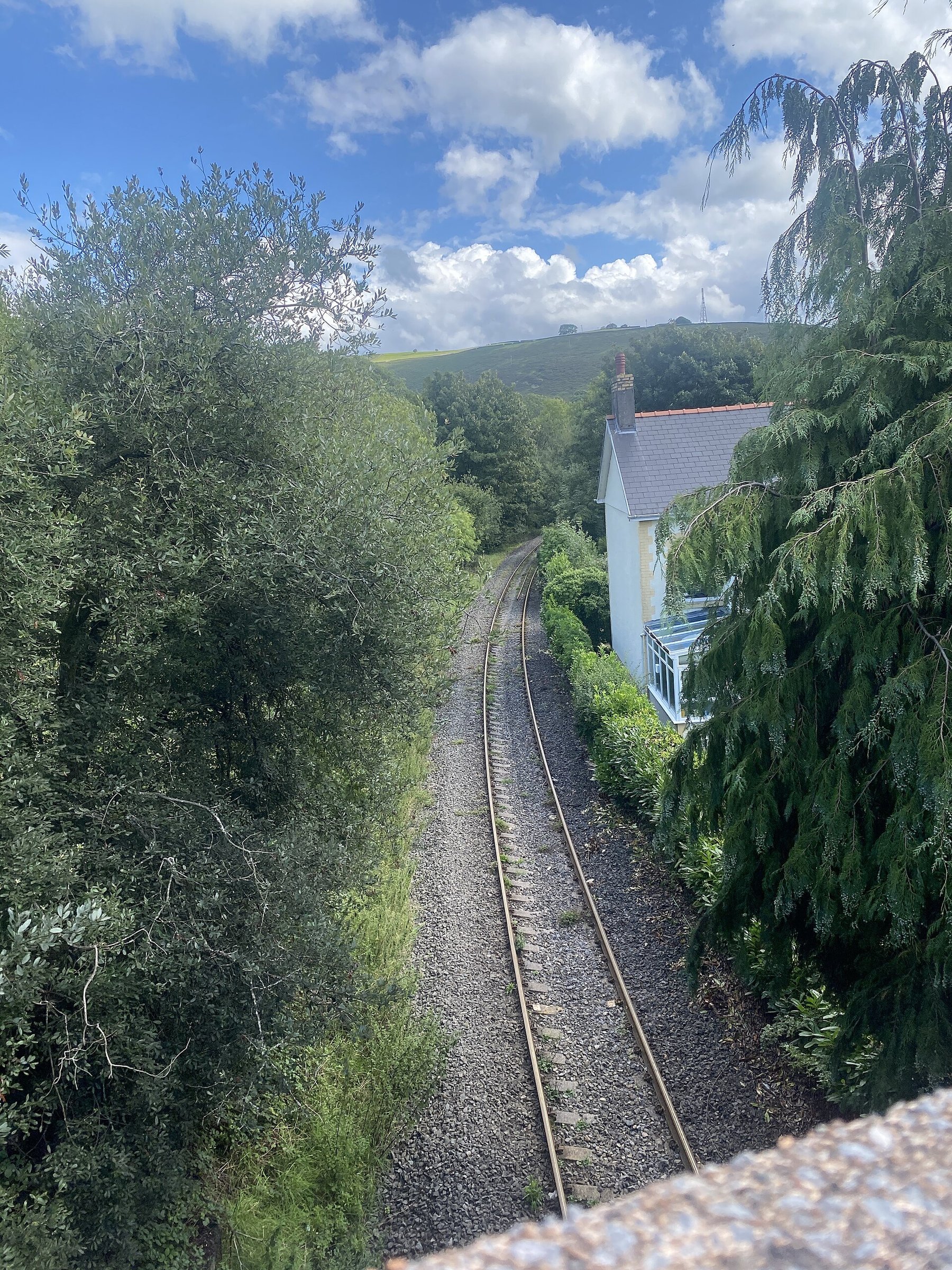
Nothing of the colliery survives. The village of Bedlinog remains, its terraces stepping up the hillside, and the single-track railway east of the High Street still runs down the valley towards Trelewis; the ground where the pit stood has been taken into the Taff Bargoed regeneration scheme.
Nothing of the colliery survives.
Related mines
- Bedlinog Drift — Same owner, Dowlais Collieries Limited, and listed with Bedlinog's pumping station as one NCB unit in 1947.
- Fochriw Colliery — Both were sunk and worked by the Dowlais Iron Company and passed with the rest of the Dowlais concern to Guest, Keen and Nettlefolds.
- Taff Merthyr Colliery — Bedlinog belonged to the Taff Merthyr Steam Coal Co. Ltd by 1945, which kept it for pumping; the two pits worked the same Taff Bargoed valley.
Nearby mines
- Bedlinog Drift — 0.3 miles (0.4 km) NE
- Nantwen Colliery — 0.7 miles (1.1 km) S
- Nantyffin Colliery — 1.0 miles (1.6 km) SE
- Coly Colliery — 1.2 miles (2.0 km) SE
- Taff Merthyr Colliery — 1.3 miles (2.1 km) S
Straight-line distance, within 9 miles (15 km). Show on the map.
Disasters & major incidents
-
Bedlinog Colliery roof fall, 1890
29 November 1890 · Collapse / Roof Fall · 2 fatalities
On the morning of Saturday 29 November 1890 a heavy fall of stone and debris in No. 2 pit at the Dowlais company's Bedlinog Colliery killed two young colliers, David Francis of Penydarren and David James Rees of Bedlinog, as they worked in their stall. -
Bedlinog Colliery roof fall, 1898
19 September 1898 · Collapse / Roof Fall · 2 fatalities
Two repairers were killed on 19 September 1898 when 25 feet of rock roof came down on a Nottinghamshire face at Bedlinog No. 2 Colliery. -
Bedlinog Colliery roof fall, 1916
17 March 1916 · Collapse / Roof Fall · 2 fatalities
Two Dowlais repairers were buried under about 30 tons of roof while strengthening timber on a double parting in Bedlinog's No. 1 pit on 17 March 1916.
Recorded claims
Individual factual claims, each attached to the source(s) that support it below. Where sources disagree, both are kept.
- The Dowlais Iron Co. sank the colliery in 1878 and the first coal was raised in 1881 from the Rhas Las, Bottom Rhas Las and Upper Four Feet seams. 1
- In 1884, 161 miners were trapped underground for twenty-four hours. 1
- The two pits employed 1,402 people in 1896 and 2,585 in 1910; a report of 1923 gives 1,084 at the No. 1 pit and 703 at the No. 2, working the Little Vein. 1,2
- The colliery passed from the Dowlais Iron Co. to Guest, Keen and Nettlefolds Ltd and to Dowlais Collieries Ltd, and by 1945 belonged to the Taff Merthyr Steam Coal Co. Ltd, which retained it for pumping only. 1,2
- Production ceased in 1924, but 488 people were still returned in 1947 raising 130,000 tons of coking and household coal; the colliery closed in 1956. 1,2
- The BGS mine-plans catalogue holds a Mining Remediation Authority abandonment plan titled 'Bedlinog Drift' (catalogue SWR1219, Brithdir, dated 1956). 3
Photographs & further reading
The sinking and first coal, the 1884 entrapment, the Inspector of Mines returns and the ownership chain from Dowlais through GKN to the Taff Merthyr Steam Coal Company.
View sourceOwners, output, employment and seams pit by pit for each Lists of Mines year, with the names and circumstances of the people killed at the colliery.
View sourceSources
- (primary) Bedlinog Colliery — Welsh Coal Mines, from the Inspector of Mines lists
- (primary) Durham Mining Museum: Bedlinog Colliery — Durham Mining Museum, from the Mines Inspectors Reports and the Lists of Mines
- (primary) BGS / Mining Remediation Authority mine plans: BEDLINOG DRIFT — British Geological Survey / Mining Remediation Authority
- (observational) Bedlinog to Trelewis railway (photographed 2023) — Geograph Britain and Ireland, Alan Hughes
Record created: 10 September 2026 · Last researched: 10 September 2026