 MineArchive
Fochriw Colliery
| Location | Fochriw, Rhymney Valley, Caerphilly — 51.7683, -3.3175 (approximate) |
|---|---|
| Commodity | Coal |
| Type | Coal |
| Worked | 1823 (drift)–1924 |
| Maximum depth | 443 yards (No. 1 pit) |
| Operators | Dowlais Iron Company (1853–1901), Guest and Company (1901–1902), Guest, Keen and Nettlefolds Limited (1902–1924) |
Overview
A Dowlais Iron Company colliery in the upper Rhymney Valley, sunk from 1853 to supply coal to the company's blast furnaces at Dowlais, eventually growing to three shafts and nearly 2,000 workers before its sudden closure in 1924 — a working life marked by at least two serious explosions and two fatal winding-shaft accidents.
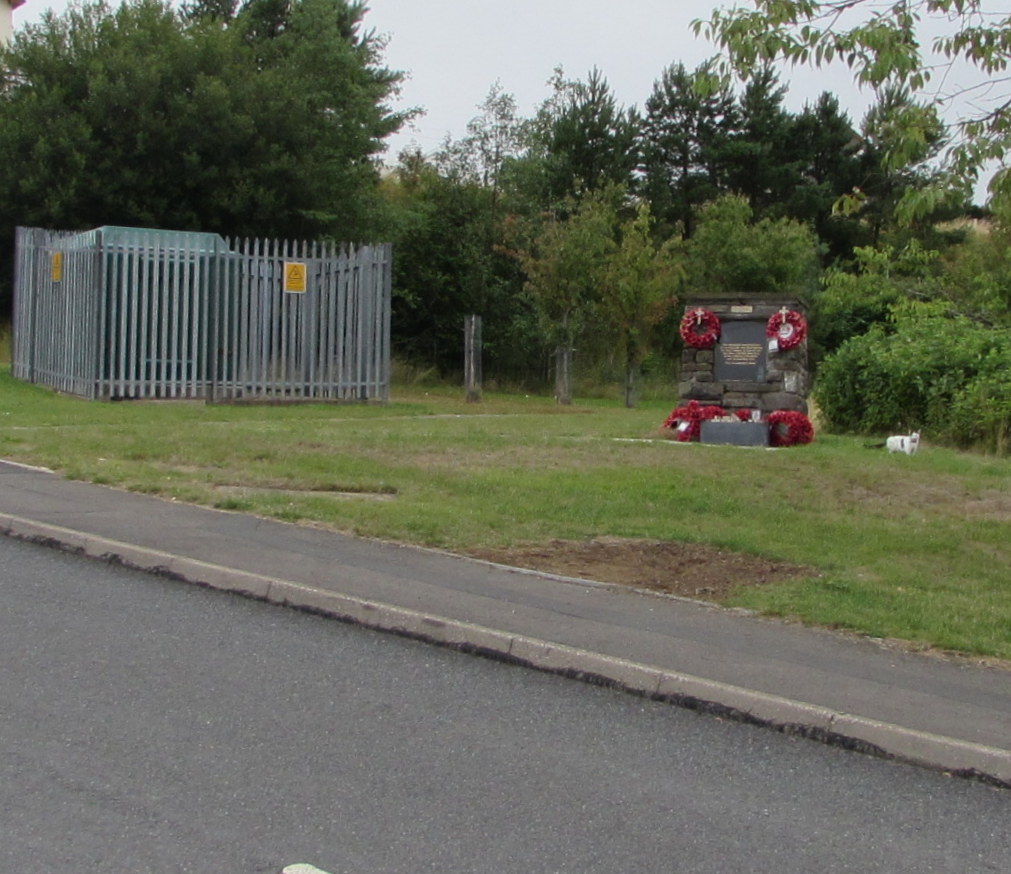
History
Coal had already been worked at Fochriw by drift mining on the Ras Las seam from 1823, but the colliery's industrial-scale history began when the Dowlais Iron Company sank a shaft there in 1853 to a depth of 390 yards, reaching the Four Feet seam, at a cost of £83,000, specifically to supply coal to its own blast furnaces at Dowlais. Parliamentary safety legislation passed in 1862, requiring separate ventilation shafts, prompted the company to develop the colliery further from 1857: a new No. 1 (North, upcast) pit reached 443 yards by 1863, and a No. 2 (South, downcast) pit reached 433 yards by 1866, the two shafts positioned 44 yards apart. The colliery went on to work several seams — the Rhas Las, Upper Four Feet, Big Veins, Two Feet Nine, Red Vein and Lower Six Feet among them — producing a low-volatile coking steam coal. Employment grew from around 1,422 in 1896 to a peak of over 2,000 by the early 1920s. Ownership passed from the Dowlais Iron Company to Guest and Company in 1901 and then to the newly formed Guest, Keen and Nettlefolds Limited the following year. The colliery's working life was marked by repeated serious accidents: an explosion on 10 May 1865 burned fourteen men (see Disasters, below); two separate winding-shaft accidents killed two men on 6 December 1869 and five men on 8 January 1870, and an explosion at the No. 2 pit stables on 30 April 1870 killed two men and fifteen horses (see Disasters, below); and an explosion on 4 June 1902 killed eight miners (see Disasters, below). Despite an expansion announced as recently as January 1923, Guest, Keen and Nettlefolds closed both Fochriw pits and the neighbouring South Tunnel Pits suddenly on 3 May 1924, citing purely economic reasons and putting some 2,300 men out of work across the group; an appeal by miners' representatives to the Ministry of Mines failed to reverse the decision.
Geology
Coal of the South Wales field: the Rhas Las seam, drift-worked from 1823, and later the Upper Four Feet, Big Veins, Two Feet Nine, Red Vein and Lower Six Feet among others, yielding a low-volatile steam coal.
Geological setting: Coal Formation and Rank (historical documentary reference)
Workings
Three shafts in total: the original 1853 pit to 390 yards, a No. 1 (North, upcast) pit to 443 yards from 1863, and a No. 2 (South, downcast) pit to 433 yards from 1866, the two later shafts 44 yards apart and elliptical in section (22 feet by 12 feet).
Closure
Closed suddenly on 3 May 1924 for purely economic reasons, alongside the neighbouring South Tunnel Pits, putting around 2,300 Guest, Keen and Nettlefolds employees out of work despite an expansion having been announced as recently as January 1923.
What remains
Unknown.
Related mines
- Bedlinog Colliery — Both were sunk and worked by the Dowlais Iron Company and passed with the rest of the Dowlais concern to Guest, Keen and Nettlefolds.
- Cwmbargoed Colliery — Neighbouring Dowlais Iron Company pits in the Taff Bargoed valley; Cwmbargoed men routed strikers at Fochriw in 1893.
Nearby mines
- Blaen Rhas Colliery — 0.1 miles (0.2 km) NW, Merthyr Tydfil
- Meredith's Colliery — 0.1 miles (0.2 km) NE, Merthyr Tydfil
- Pant-y-Waun Colliery — 0.2 miles (0.3 km) S, Merthyr Tydfil
- Tommo Colliery — 0.2 miles (0.4 km) N, Merthyr Tydfil
- Wagstaff Colliery — 0.3 miles (0.4 km) E, Merthyr Tydfil
Straight-line distance, within 9 miles (15 km). Show on the map.
Disasters & major incidents
-
Fochriw Colliery explosion, 1865
1865 · Explosion · 1 fatality
On Wednesday morning, 10 May 1865, firedamp exploded in the stall of James Jones at the Dowlais Iron Company's new pit at Fochriw, one of the deepest in the district. Fourteen men and boys were burned, some so badly they were carried home on planks; a boy of fifteen died. -
Fochriw Colliery cage accident, 1869
6 December 1869 · Winding / Shaft Accident · 2 fatalities
On the afternoon of 6 December 1869 the cage carrying two men down No. 1 Pit at Fochriw broke away about 250 yards from the bottom, killing both; five more died in a similar accident at the colliery six weeks later. -
Fochriw Colliery Winding Accident, 1870
8 January 1870 · Winding / Shaft Accident · 5 fatalities
The winding rope detached from its drum at Fochriw Colliery's No. 1 shaft, sending the cages and everyone in them plunging to the bottom and killing five men — the second such accident at the colliery within two months. -
Fochriw Colliery explosion, 1870
30 April 1870 · Explosion · 2 fatalities
Late on Saturday 30 April 1870 firedamp exploded at the stables of the Dowlais Iron Company's No. 2 Vochriw pit, killing the two horse-keepers, Robert Hughes and Thomas Jones, and fifteen horses. Only the two men were in the pit; the inquest found that doors left open by the ostlers had let gas collect and then carried it to the stable light. -
Fochriw Colliery runaway trams, 1900
5 April 1900 · Haulage / Transport · 2 fatalities
Two workers on their way out of Fochriw Colliery's No. 2 pit were killed on 5 April 1900 when trams ran away on a double parting after a hitching plate broke. -
Fochriw Colliery runaway journey, 1901
12 January 1901 · Haulage / Transport · 2 fatalities
Nine trams broke loose from a journey on a Fochriw Colliery drift on 12 January 1901 and ran back into the men behind, killing two men and three horses. -
Fochriw Colliery Explosion, 1902
4 June 1902 · Explosion · 8 fatalities
A fall of roof released a body of firedamp at Fochriw Colliery, which was ignited by a naked light, killing eight miners.
Recorded claims
Individual factual claims, each attached to the source(s) that support it below. Where sources disagree, both are kept.
- The Dowlais Iron Company sank the colliery's original shaft in 1853 to 390 yards at a cost of £83,000, and developed further shafts to 443 and 433 yards by 1863 and 1866 respectively, following 1862 safety legislation requiring separate ventilation shafts. 1
- Employment grew from around 1,422 in 1896 to over 2,000 by the early 1920s. 1,2
- Guest, Keen and Nettlefolds closed both Fochriw pits and the neighbouring South Tunnel Pits suddenly on 3 May 1924 for economic reasons, putting around 2,300 men out of work despite an expansion having been announced in January 1923. 2
Photographs & further reading
Detailed history including the colliery's recorded accidents and closure.
View sourceSources
- (primary) Fochriw Colliery 1853-1924 — Northern Mine Research Society
- (secondary) Fochrhiw colliery — welshcoalmines.co.uk
Record created: 2 September 2026 · Last researched: 2 September 2026