 MineArchive
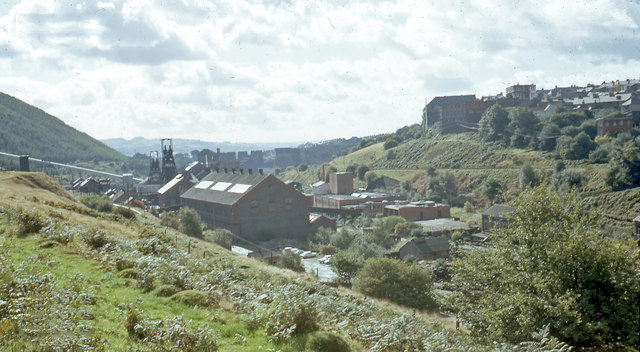
Bargoed Colliery
| Also known as | Bargoed Steam Coal Colliery |
|---|---|
| Location | Bargoed, in the Rhymney valley, Caerphilly — 51.6905, -3.2267 (exact) |
| Commodity | Coal |
| Type | Coal |
| Worked | 1901–4 June 1977 |
| Maximum depth | 705 yards at the North shaft; the South was 625 yards. |
| Operators | Powell Duffryn Steam Coal Company (1897–1947) |
Overview
A Powell Duffryn steam-coal colliery in the Rhymney valley, begun in April 1897 and producing from 1901. It worked three shafts — the North and South to steam coal at 705 and 625 yards, and the Brithdir to house coal from 1903 — over a take of 2,400 acres leased from some twelve different owners. On 23 April 1909 it wound 4,020 tons in a single day, a world record, having broken the record for a ten-hour shift four months earlier. It employed over 2,100 men by the outbreak of the First World War and closed on 4 June 1977.
History
The Powell Duffryn Steam Coal Company began sinking at Bargoed in April 1897. The Ras Las or Nine Feet seam was struck at 1,875 feet in November 1901, recorded there as 3 ft 8 in thick, and the first coal was produced that year; the North and South shafts were completed in November 1903, and a third shaft to the Brithdir house coal was sunk the same year. The measures dip southwards at about one in twelve with few faults of any size, and the colliery’s take ran to 2,400 acres leased from some twelve different owners. By September 1911 it was raising about 775,000 tons a year. Its own engineers thought the site unfortunately narrow, which forced the surface layout. On 10 December 1908 Bargoed broke the world record for output in a ten-hour shift with 3,562 tons, and on 23 April 1909 it took the record for a single day with 4,020 tons wound. Over 2,100 men were working there at the outbreak of the First World War; by 1918 there were 2,033 at the steam-coal pits and 567 at the house-coal pit, and a report of 1923 gives 2,438 men working the Rhas Las, Red Vein and Big Vein seams. Numbers fell after the Second World War — 1,146 at the North and South pits and 366 at the Brithdir in 1945. Coal production at the Brithdir ceased in 1949, after which it served for many years as a training centre. Bargoed Colliery closed on 4 June 1977; the site has since been cleared and landscaped and the tip turned into a nature park.
Geology
The South Wales coalfield in the Rhymney valley. The Ras Las or Nine Feet seam, reached at 1,875 feet, was the colliery’s foundation, recorded as 3 ft 8 in thick at the sinking; the Red Vein and Big Vein were also being worked by 1923, and the Brithdir house coal was taken from its own shaft. The measures dip southwards at roughly one in twelve and are cut by few faults of any considerable size — an unusually kind structure for the coalfield, and part of why the output records were possible.
Workings
Three shafts: the North to steam coal at 705 yards, the South at 625 yards, and the Brithdir house-coal shaft of 1903. The surface site was narrow, which the colliery’s own account of 1911 records as having forced the layout of the works. The Brithdir shaft stopped producing coal in 1949 and was used for many years afterwards as a training centre.
Closure
Bargoed Colliery closed on 4 June 1977, having been reduced from more than 2,400 men in the 1920s to about 1,500 at the end of the Second World War and steadily further after that.
What remains
The colliery site has been cleared and landscaped, and the spoil tip developed into a nature park — Parc Coetir Bargod — with the Rhymney valley’s regeneration built over the ground the pit stood on.
None identified; the site is landscaped parkland.
Related mines
- Britannia Colliery, Pengam — Connected underground: in 1915 men walked out through the Bargoed shafts; Bargoed's gas engines powered Britannia.
- Groesfaen Colliery — Neighbouring Rhymney valley pits: both were worked by Powell Duffryn from 1925, and 350 of Groesfaen's men were transferred to Bargoed and six other collieries when Groesfaen closed in 1968.
- Ogilvie Colliery — Ogilvie was worked on electricity and compressed air piped from Bargoed, two miles down the valley, and both were Powell Duffryn pits.
Nearby mines
- Gwaelod-y-Waun Colliery — 0.5 miles (0.8 km) SE
- Darran Colliery — 0.8 miles (1.2 km) W
- Gilfach Colliery — 0.8 miles (1.3 km) S
- Cefn Brithdir Colliery — 1.1 miles (1.8 km) N
- Britannia Colliery, Pengam — 1.2 miles (1.9 km) S
Straight-line distance, within 9 miles (15 km). Show on the map.
Disasters & major incidents
-
Bargoed Colliery roof fall, 1903
3 December 1903 · Collapse / Roof Fall · 2 fatalities
A heavy fall of roof at the Powell Duffryn Company's Bargoed New Pits on the morning of Thursday 3 December 1903 killed one collier outright and fatally injured his partner, John Thomas, nineteen, captain of the Bargoed Lilies football team.
Culture
- Bargoed (L. S. Lowry) (Art)
Lowry's 1965 painting 'Bargoed' centres on the town's colliery tip.
Recorded claims
Individual factual claims, each attached to the source(s) that support it below. Where sources disagree, both are kept.
- Sinking began in April 1897 under the Powell Duffryn Steam Coal Company; the Ras Las or Nine Feet seam was reached at 1,875 feet in November 1901, recorded there as 3 ft 8 in thick, and the first coal was produced in 1901. 1
- The colliery had three shafts: the North and South to steam coal at 705 and 625 yards, and the Brithdir house-coal shaft sunk in 1903. 1
- Bargoed broke the world record for output in a ten-hour shift on 10 December 1908 with 3,562 tons, and on 23 April 1909 wound 4,020 tons in a single day — a world production record. 1
- The take amounted to 2,400 acres leased from some twelve different owners and the colliery was raising about 775,000 tons a year by September 1911; over 2,100 men were working there at the outbreak of the First World War and 2,438 by a report of 1923. 1
- Coal production at the Brithdir ceased in 1949, after which it was used for many years as a training centre; Bargoed Colliery closed on 4 June 1977. 1
- The BGS mine-plans catalogue holds a Mining Remediation Authority abandonment plan titled 'Bargoed' (catalogue SWA1854, Seven Feet & Yard (Seven Feet), dated 1977). 2
Photographs & further reading
The national monuments record for the site, with its grid reference and what the Royal Commission holds on it.
View sourceThe colliery’s shafts, seams, employment figures decade by decade and its world output records, with a contemporary engineer’s notes from September 1911.
View sourceSources
- (secondary) Bargoed Colliery — Welsh Coal Mines
- (primary) BGS / Mining Remediation Authority mine plans: BARGOED — British Geological Survey / Mining Remediation Authority
- (primary) Bargoed Colliery (NPRN 417676) — Royal Commission on the Ancient and Historical Monuments of Wales
Record created: 7 September 2026 · Last researched: 7 September 2026