 MineArchive
Amberley Chalk Pits
| Also known as | Amberley Museum, Amberley Working Museum, Pepper's Limeworks |
|---|---|
| Location | Amberley, in the Arun gap through the South Downs, West Sussex — 50.8965, -0.5382 (approximate) |
| Commodities | Chalk, Limestone |
| Type | Quarry |
| Worked | 1840s–1960s |
| Operators | Pepper and Sons (1876–1960) |
Overview
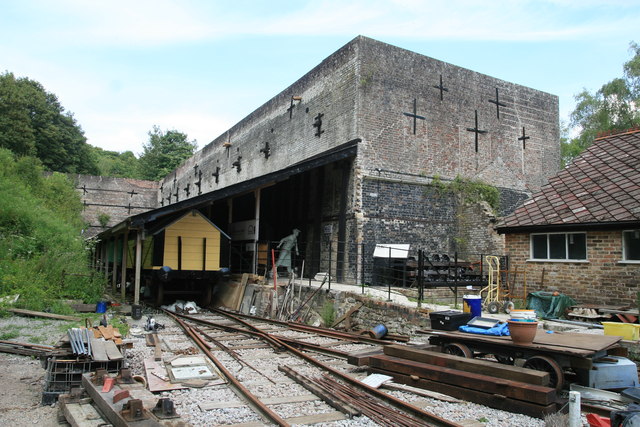
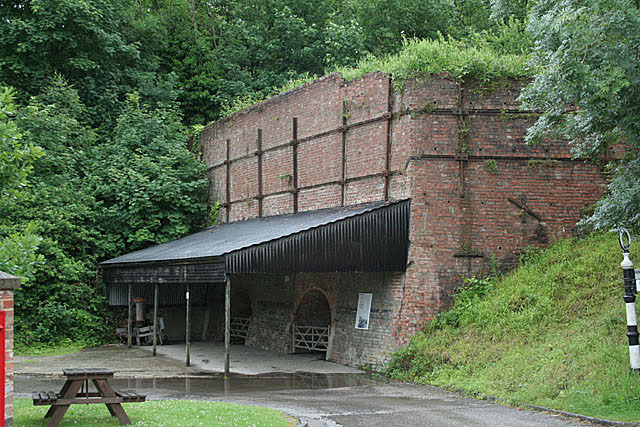
A chalk quarry and limeworks in the gap where the Arun cuts the South Downs, chosen because road, railway and river all met there — and now a museum built around the bank of eighteen-chamber kilns that burnt its lime.
History
Chalk was quarried and burnt at Amberley from the 1840s. Several small producers worked the site at first; in 1876 John Pepper and his son Thomas Cunningham Pepper took over from them, and by the turn of the century Pepper and Sons were the only producers there, employing over eighty people. The location was the point: the works sat where road, railway and the navigable Arun all came together, so lime could go out in any direction. The firm diversified into building materials generally and ran depots across Sussex until it closed in the 1960s. The site was taken on in the 1970s by a group who wanted a working industrial-history centre for the south-east, and the museum opened at the end of that decade.
Geology
The works cut the Chalk of the South Downs where the Arun has breached the escarpment. Two distinct quarries were opened, one in grey chalk and one in white — a distinction that mattered commercially, since the purity of the chalk governs the quality of the lime burnt from it. Chalk is a very pure limestone, which is exactly why it burns to good lime: heated hard enough it gives off carbon dioxide and leaves quicklime behind.
Geological setting: Sedimentary Beds and Seams (well documented example)
Workings
Open quarrying of the chalk faces, with the stone taken to kilns on site. Chalk was burnt with coal to make quicklime, which was then hydrated — water added in a vigorous reaction — to give the hydrated lime that was bagged and sold. Several kiln designs were used over the years; the largest are the de Witt kilns of 1905, with eighteen firing chambers and rail tracks running directly to them, and lime pits alongside holding the water for slaking. Around them stood a station goods yard, bagging sheds, offices, a barn, a smithy and a locomotive shed.
Closure
Lime production at Amberley ended in the 1960s with the closure of Pepper and Sons.
What remains
Preserved as Amberley Museum, an open-air working museum of southern industrial history occupying the whole quarry site. The lime kilns are listed structures.
Exceptional: the quarry faces, the de Witt kiln bank and other kilns, and the ancillary buildings. A concrete-lined tunnel of 1948 connecting to an adjoining quarry survives and was used as a film location, standing in for a Californian mine in the 1985 Bond film A View to a Kill; the museum's locomotives still carry the colours the film-makers applied.
Redevelopment
An industrial museum, with a narrow-gauge railway running restored quarry and mine locomotives around the site.
Nearby mines
- Harrow Hill Flint Mines — 3.5 miles (5.6 km) E
- Blackpatch Flint Mines — 4.4 miles (7.1 km) SE
- Church Hill Flint Mines — 5.7 miles (9.2 km) SE
- Cissbury Flint Mines — 7.2 miles (11.7 km) E
Straight-line distance, within 9 miles (15 km). Show on the map.
Recorded claims
Individual factual claims, each attached to the source(s) that support it below. Where sources disagree, both are kept.
- Chalk was quarried and burnt for lime at Amberley from the 1840s until the 1960s. 1,2
- John Pepper and his son Thomas Cunningham Pepper took over from several small producers in 1876 and by the turn of the century were the only producers on the site, employing over 80 people. 1,2
- Two quarries were worked, one in grey chalk and one in white; chalk was burnt with coal to quicklime and then hydrated with water to give hydrated lime for bagging. 1
- The largest kilns are the de Witt kilns built in 1905, with eighteen firing chambers served by rail tracks running directly to them. 1
- The site was chosen for its road, railway and river connections, and the firm ran depots in a number of Sussex towns. 2
- The site is now Amberley Museum, an open-air industrial museum; the lime kilns are listed structures. 3
- A concrete-lined tunnel of 1948 on the site was used as a filming location for the 1985 James Bond film A View to a Kill, standing in for a Californian mine; the museum's locomotives still carry the colours the film-makers applied. 3
Sources
- (primary) Chalk Pits — Amberley Museum — Amberley Museum
- (primary) Our History — Amberley Museum — Amberley Museum
- (secondary) Amberley Museum — Subterranea Britannica
Record created: 24 August 2026 · Last researched: 24 August 2026