 MineArchive
Alvecote Colliery
| Location | Alvecote, near Tamworth, Warwickshire — 52.6372, -1.6342 (exact) |
|---|---|
| Commodity | Coal |
| Type | Coal |
| Worked | 1875–1942 |
| Maximum depth | Unknown. |
| Operators | National Coal Board (1947–?), Tamworth Colliery Co. Ltd, Alvecote Colliery Co. Ltd |
Overview
Alvecote Colliery, also worked under the name Tamworth Colliery, was sunk in 1875 on the Warwickshire side of the Staffordshire border north-east of Tamworth, and worked the Seven Feet, Double and Bench seams of the Warwickshire Coalfield for some sixty-seven years. Its workforce stood apart from the rest of the coalfield: no Alvecote men appear in the magistrates' records that catch miners from the Nuneaton and Bedworth pits for trivial breaches of colliery rule, and the pit worked on through the 1912 national strike. Coal winding ended in 1942 when the Ministry of Fuel and Power made Alvecote part of Pooley Hall Colliery, and the shafts were finally abandoned in 1965. The subsidence its workings left behind flooded the fields beside the River Anker and is now the Alvecote Pools nature reserve.
History
Charles Brownslow Marshall sank Alvecote Colliery in 1875, and it was worked in turn by the Tamworth Colliery Co., the Tamworth Colliery Co. Ltd and the Alvecote Colliery Co. Ltd before nationalisation. In its early decades it was a small pit: 243 people in 1894, 213 in 1900, raising household and steam coal from the Seven Feet seam. The Double seam was added by 1905 and the Bench seam by 1915, and the workforce grew with them, passing 571 in 1915 and 868 in 1923. The colliery is unusual in the Warwickshire coalfield for what its record does not contain. Miners from the pits around Nuneaton and Bedworth were regularly taken before the magistrates for absence without leave or the slightest breach of the mining rules; no such cases are recorded for Alvecote men. Whether discipline was genuinely more relaxed there, or whether the explanation is that the Alvecote miners would not join the Warwickshire Miners' Association, is not settled — but the same detachment kept them at work through the 1912 miners' strike while the rest of the coalfield went without. The Ministry of Fuel and Power took the colliery over during the First World War and spent money bringing it up to the standard of the day. In 1919 a cage ran out of control during its descent, killing one man and seriously injuring eighteen others; H.M. Inspector of Mines put the accident down to managerial neglect of machinery maintenance (see Disasters, below). New screens and a new cage system followed, and a new engine in 1928 — the last investment the colliery ever received. Ponies went on hauling at the face and the roadways stayed narrow and low to the end.
Geology
Alvecote worked the productive Coal Measures of the Warwickshire Coalfield, where the thick Seven Feet seam was the mainstay and the Double and Bench seams were taken later as the Seven Feet was worked out. Systematically working several seams under the same ground is what produced the subsidence north of the colliery.
Geological setting: Sedimentary Beds and Seams (well documented example)
Workings
Two shafts, worked with pony haulage at the face throughout; the roadways remained narrow and low even after the Ministry's investment of the First World War. The Seven Feet seam was worked from the opening, the Double from about 1905 and the Bench seam from about 1915. Output was 110,000 tons in 1947, when 430 people were employed, 330 of them below ground.
Closure
By 1942 Alvecote employed a thousand men and was heavily subsidised, and the Ministry of Fuel and Power decided to close it. Closing a colliery in wartime was questioned in the House of Commons, and the compromise reached was to make Alvecote part of Pooley Hall Colliery instead: the surface plant shut, but the shafts stayed in use for manriding. In 1951 Alvecote and Pooley Hall merged with Amington Colliery to form North Warwick Colliery. North Warwick closed in 1965 and the Alvecote shafts were formally recorded as abandoned that year, ending deep mining at Polesworth.
What remains
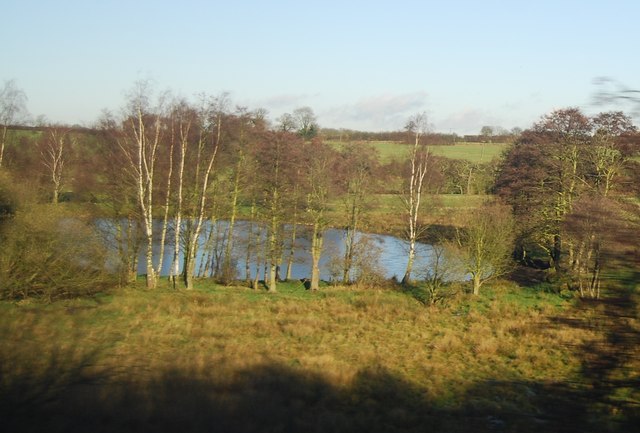
Nothing of the colliery buildings survives. The ground north of the site subsided as the seams beneath it were worked out, lowering the banks of the River Anker and flooding what had been farmland; the pools that resulted were made a nature reserve in 1957 and are now the Alvecote Pools Site of Special Scientific Interest, the largest SSSI in Warwickshire at 128 hectares, owned by the Warwickshire Wildlife Trust since 1997.
Nothing of the colliery buildings; the subsidence pools north of the site are the Alvecote Pools nature reserve.
Redevelopment
The subsidence flashes are managed as the Alvecote Pools nature reserve, in two parts, Pooley Fields and Alvecote Meadows, alongside the River Anker and the Coventry Canal.
Related mines
- Amington Colliery — The two Tamworth pits merged with Pooley Hall in 1951 to form North Warwick Colliery, and both had their shafts recorded as abandoned in 1965 when North Warwick closed.
- Pooley Hall Colliery — Alvecote was made part of Pooley Hall Colliery in 1942 when its own surface plant closed, and the two merged with Amington in 1951 to form North Warwick Colliery.
Nearby mines
- Amington Colliery — 0.7 miles (1.1 km) SW, Staffordshire
- Pooley Hall Colliery — 0.7 miles (1.1 km) SE
- Glascote Colliery — 1.4 miles (2.2 km) SW, Staffordshire
- Birchmoor Colliery — 1.8 miles (2.9 km) S
- Dexter Colliery — 4.6 miles (7.4 km) S
Straight-line distance, within 9 miles (15 km). Show on the map.
Disasters & major incidents
-
Alvecote Colliery Cage Accident
1919 · Winding / Shaft Accident · 1 fatality
A cage ran out of control during its descent at Alvecote Colliery in 1919, killing one man and seriously injuring eighteen others; the Inspector of Mines put the cause down to management's neglect of machinery maintenance, and new screens and a new cage system followed.
What's uncertain
Points where sources disagree or the record could not be settled; both accounts are kept. All open questions in the archive.
- No magistrates' cases are recorded against Alvecote mineworkers, unlike the pits around Nuneaton and Bedworth; the colliery's men are thought either to have been more loosely disciplined or to have refused to join the Warwickshire Miners' Association, and they worked through the 1912 strike. (uncertain) 1
Recorded claims
Individual factual claims, each attached to the source(s) that support it below. Where sources disagree, both are kept.
- Alvecote Colliery, also known as Tamworth Colliery, was sunk in 1875 by Charles Brownslow Marshall. 1
- No magistrates' cases are recorded against Alvecote mineworkers, unlike the pits around Nuneaton and Bedworth; the colliery's men are thought either to have been more loosely disciplined or to have refused to join the Warwickshire Miners' Association, and they worked through the 1912 strike. (uncertain) 1
- A cage ran out of control during its descent in 1919, killing one man and seriously injuring eighteen; H.M. Inspector of Mines attributed it to managerial neglect in the form of a lack of machinery maintenance. 1
- Employment rose from 243 in 1894 to 868 in 1923, and stood at 430 in 1947, when output was 110,000 tons. 2
- The Seven Feet seam was worked from the opening, the Double seam by 1905 and the Bench seam by 1915. 2
- Alvecote merged with Pooley Hall and Amington collieries in 1951 to form North Warwick Colliery; North Warwick closed in 1965 and the Alvecote shafts were recorded as abandoned that year. 1,3
Photographs & further reading
Warwickshire County Council’s local history site on the colliery: the sinking, the miners’ distance from the union, the 1919 cage accident and the merger into North Warwick.
View sourceOwners, output, employment and seams worked for each Lists of Mines year, with the names and circumstances of thirteen people killed at the colliery.
View sourceSources
- (secondary) Alvecote Colliery — Our Warwickshire (Warwickshire County Council), by Laura Orriss
- (primary) Durham Mining Museum: Alvecote Colliery — Durham Mining Museum, from the Mines Inspectors Reports, the Lists of Mines and the Colliery Year Book
- (secondary) Warwickshire coalfield — Wikipedia
- (observational) Alvecote Pools (photographed 2011) — Geograph Britain and Ireland, N Chadwick
Record created: 9 September 2026 · Last researched: 9 September 2026