 MineArchive
Winstanley Colliery
| Location | Winstanley, south-west of Wigan, Greater Manchester — 53.5229, -2.6772 (approximate) |
|---|---|
| Commodity | Coal |
| Type | Coal |
| Worked | By 1562–1900 |
| Maximum depth | 140 yards (Orrell Five Feet seam, 1860) |
| Operators | Meyrick Bankes (1827–1885), Winstanley Collieries Co. Ltd (1885–1900) |
Overview
The Bankes family's collieries on the Winstanley estate near Wigan, recorded from the sixteenth century and rebuilt by Meyrick Bankes from the 1830s with a railway to the canal tip that became Wigan Pier. Thirteen died in an explosion in 1860; the pits closed in 1900.
History
Coal has been got at Winstanley, south-west of Wigan, since about 1507. When Sir Thomas Winstanley died in 1562 his will disposed of the profits of "the Winstanley Colliery", twenty pounds, and when the estate was sold in 1595 to the goldsmith and banker James Bankes its tenants included "William Barton of the coal pits". The Bankes family held hall and pits from then on. The accounts for October 1776 show five colliers at the Moorley Pit, four at the Lime Piece, one at the Salterley and three sinkers on a new pit; the pits raised between 3,500 and 5,000 tons in 1766 and 8,030 tons in 1799, and the men were hired at Michaelmas, when they worked a week without wages to get their own fire coal. From 1792 some of the seams were let to John Clarke of Orrell.
The old pits were worked out in the 1840s. Meyrick Bankes, who inherited in 1827, had by then sunk four new pits east of the Croppers House Fault, and to get their coal away he took over Thomas Claughton's tramroad of 1822-3 from Stone House Colliery to the Leeds and Liverpool Canal and in the mid-1840s carried it three and a half miles south to Winstanley, on wrought-iron rails and stone blocks. Its canal tip at Wallgate basin was "Bankes's Pier", the coal tippler later famous as Wigan Pier. Horses worked the line until a locomotive came in 1882.
On 3 August 1860 an explosion in the Orrell Five Feet seam, 140 yards down, killed thirteen men and boys. The inspector, Joseph Dickinson, had found little gas but thought the ventilation rude and primitive, with a small furnace underground. The collieries stayed old-fashioned; in 1880 they were still returned under Meyrick Bankes, and in 1885 they were leased to Tomlinson, Rogers and Simpson, who formed the Winstanley Collieries Co. Ltd and converted the railway to standard gauge in 1886-7.
The Winstanley pits closed in 1900, largely worked out. The company opened a new colliery at Leyland Green about 1899, which kept the railway busy until it was abandoned in 1927.
Geology
Coal Measures of the Wigan coalfield, the estate's seams cut by the Croppers House Fault. The Orrell Five Feet seam was worked at 140 yards in 1860 and seemed to the inspector the easiest seam to ventilate that he knew.
Geological setting: Sedimentary Beds and Seams (well documented example)
Workings
Eighteenth-century pits named Moorley or Moorhey, Lime Piece and Salterley, with a sough; from the 1830s four pits sunk by Meyrick Bankes east of the Croppers House Fault, ventilated in 1860 by a small underground furnace. Coal left by a 4-foot gauge railway to the Leeds and Liverpool Canal at Wigan, horse-worked until 1882 and standard gauge from 1886-7.
Closure
The Winstanley pits closed in 1900, the estate's coal largely worked out; the company's Leyland Green colliery, opened about 1899, worked until 1927.
What remains
The colliery railway survives in part as a low broad embankment.
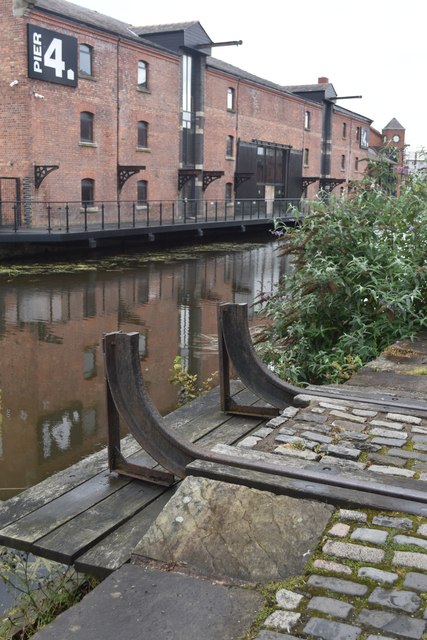
A replica of the coal tippler at which the colliery railway ended stands on the canal at Wigan Pier.
Nearby mines
- Pemberton Colliery — 0.8 miles (1.2 km) NE
- Orrell Colliery — 2.0 miles (3.3 km) N
- Bryn Hall Colliery — 2.2 miles (3.5 km) SE
- Ince Moss Colliery — 2.6 miles (4.1 km) E
- Garswood Park Colliery — 2.6 miles (4.2 km) S, Merseyside
Straight-line distance, within 9 miles (15 km). Show on the map.
Disasters & major incidents
-
Winstanley Colliery explosion, 1843
20 November 1843 · Explosion · 5 fatalities
On Monday 20 November 1843 Winstanley Colliery, near Wigan, exploded as work resumed after the pit had stood over the weekend, killing five and injuring others. -
Winstanley Colliery explosion, 1860
August 1860 · Explosion · 13 fatalities
In early August 1860 firedamp released by roof falls in pillar workings exploded in the Orrell Five Feet seam at Meyrick Bankes's Winstanley Colliery, near Wigan, killing thirteen men and boys. The inspector had condemned the ventilation as primitive, and the improvements he had asked for were unfinished.
Recorded claims
Individual factual claims, each attached to the source(s) that support it below. Where sources disagree, both are kept.
- The earliest recorded coal mine at Winstanley dates from about 1507, and Sir Thomas Winstanley's will of 1562 disposed of the profits of the Winstanley Colliery. 1
- James Bankes bought the Winstanley estate, with its coal mines, in 1595. 2,1,3
- The Winstanley pits raised between 3,500 and 5,000 tons in 1766 and 8,030 tons in 1799. 1
- Meyrick Bankes sank four new pits from the 1830s; the old pits were exhausted in the 1840s. 2,1
- The colliery railway was extended three and a half miles south to Winstanley in the mid-1840s, was horse-drawn until 1882 and was converted to standard gauge in 1886-7. 1,4
- The railway ended on the Leeds and Liverpool Canal at the coal tip known as Wigan Pier. 2,4,5
- An explosion in the Orrell Five Feet seam, worked at 140 yards, killed thirteen men and boys on 3 August 1860. 6
- In 1880 the Winstanley colliery was returned under Meyrick Bankes. 7
- In 1885 the collieries were leased to Tomlinson, Rogers and Simpson, who formed Winstanley Collieries Co. Ltd. 2
- The Winstanley pits closed in 1900; Leyland Green colliery, opened about 1899, worked until 1927. 2,4
- A plan of the shafts and adits in the Orrell Five Feet seam at Winstanley and Pemberton is held in the mine plans catalogue. 8
Photographs & further reading
The estate's coal from 1507, the colliery accounts of 1766-99 and Meyrick Bankes's railway to the canal.
View sourceThe landowners and colliery firms of the district, with the Bankes pits and the Winstanley Collieries company.
View sourceA 2024 photograph of the replica tippler on the canal where the colliery railway ended.
View sourceSources
- (secondary) A short history of Winstanley Hall and estate — Billinge History
- (secondary) Orrell, Winstanley & Pemberton — Northern Mine Research Society
- (secondary) Townships: Winstanley (Victoria County History of Lancaster, vol. 4) — British History Online
- (secondary) A49 Goose Green to Westwood Park Link Road, Wigan: archaeological report — Oxford Archaeology North
- (observational) Replica of the original coal tippler at Wigan Pier (David Martin, 2024) — Geograph Britain and Ireland
- (secondary) Winstanley Colliery Explosion - Wigan - 1860 — Northern Mine Research Society
- (secondary) List of coal mines UK 1880 — Coalmining History Resource Centre
- (primary) Mine plan: WINSTANLEY AND PEMBERTON, Orrell Five Feet, shafts and adits (feature 21868439) — British Geological Survey / Mining Remediation Authority mine plans catalogue
Record created: 3 October 2026 · Last researched: 3 October 2026