 MineArchive
Wharncliffe Woodmoor Colliery
| Also known as | Wharncliffe Woodmoor 1, 2 and 3 Colliery, Old Carlton |
|---|---|
| Location | Carlton, about two miles north-east of Barnsley, South Yorkshire — 53.5820, -1.4600 (approximate) |
| Commodity | Coal |
| Type | Coal |
| Worked | 1871–1965 or 1966 |
| Maximum depth | The Haigh Moor seam at 280 yards, with the Lidgett seam reached by drifts below it; the Lidgett was about 350 yards down in 1936. |
| Operators | Wharncliffe Woodmoor Colliery Company (1873–1947), National Coal Board (1947–1966) |
Overview
A Carlton colliery north-east of Barnsley, sunk in 1871 by a Hoyland wine merchant, where the 1936 explosion in the thin Lidgett seam killed 58 men — South Yorkshire's worst mining disaster of modern times.
History
The colliery was sunk in 1871 by Joshua Willey, a Hoyland wine and spirit merchant, on land leased from the Earl of Wharncliffe, and its two shafts reached the Woodmoor seam that November. Known at first as 'Old Carlton', it took its lasting name from the landowner and the seam. Willey sold it in 1873 to the new Wharncliffe Woodmoor Coal Company, but in the slump of the mid-1870s it came up for sale again and was bought at auction by Joseph Willey for £18,000. Howard Allport became owner in 1881 and turned it into the Wharncliffe Woodmoor Colliery Company Limited in 1883. It grew into a large site between Carlton Lane and Laithes Lane, with coke ovens, an engine shed and a brickworks making 50,000 bricks a week, and worked the Haigh Moor, Barnsley, Kent's Thick, Winter, Lidgett and Beamshaw seams; in the 1930s William Sutherland and Lady Sutherland, who also had interests in North Gawber and Woolley collieries, were its principal owners. At about 3.20 a.m. on 6 August 1936, near the end of the night shift, an explosion tore through the North East section of the Lidgett seam, reached by drifts from the Haigh Moor seam 280 yards down, and killed 58 men (see Disasters, below). The Chief Inspector, Sir Henry Walker, thought a spark from the switch or commutator of a loader motor the likely cause, though there was no absolute proof. At nationalisation in 1947 the colliery employed 1,069 underground. It was listed for closure in the National Coal Board's accelerated programme of 1965, closed in 1965 or 1966 and served as a pumping station until 1988.
Geology
The Woodmoor, Haigh Moor, Barnsley, Kent's Thick, Winter, Lidgett and Beamshaw seams of the Yorkshire coalfield; the Lidgett, just over two feet thick, lay 34 yards below the Haigh Moor and dipped at about 1 in 11 in the North East section.
Workings
The Nos. 1, 2 and 3 shafts at Carlton (No. 3 about 288 yards deep), later four shafts in all, with drifts from the Haigh Moor to the Lidgett seam; coke ovens and a brickworks on the surface. The separate Wharncliffe Woodmoor Nos. 4 and 5 colliery nearby was reached by a surface drift from 1957.
Closure
Listed as likely to close in the NCB's accelerated closure programme of November 1965; it closed in 1965 or 1966 and No. 3 shaft served as a pumping station until 1988. Wharncliffe Woodmoor Nos. 4 and 5 closed in July 1970.
What remains
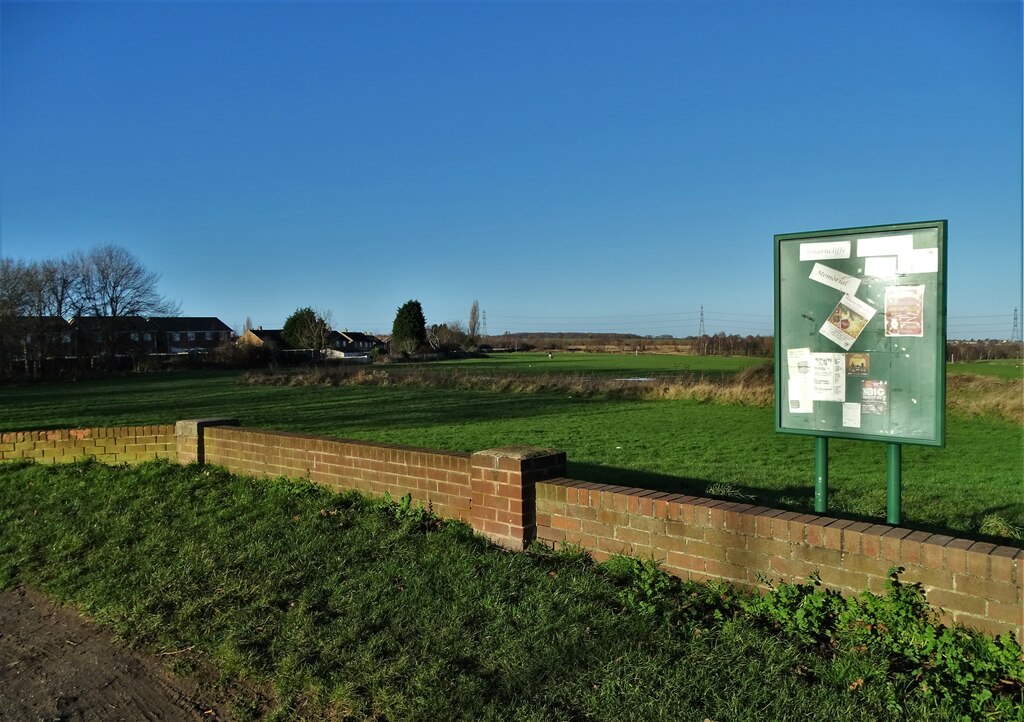
The site was reclaimed in the late 1970s; part of it is a recreation ground, and the Wharncliffe Business Park stands at its entrance.
A half pulley wheel memorial to the 58 men killed in 1936, first unveiled in 1979 by Arthur Scargill and moved in 2008 to the entrance of the Wharncliffe Business Park.
Related mines
- North Gawber Colliery — Joined underground and under the same control in the 1930s; both worked the Lidgett seam, which exploded at North Gawber in 1935 and at Wharncliffe Woodmoor in 1936.
Nearby mines
- Carlton Main Colliery — 1.7 km E
- East Gawber Colliery — 1.7 km SW
- North Gawber Colliery — 2.7 km W
- Barnsley Main Colliery — 3.3 km S
- Oaks Colliery — 4.1 km S
Straight-line distance, within 15 km. Show on the map.
People
- Howard Allport · owner, 1881–1883 — Owner from 1881; formed the Wharncliffe Woodmoor Colliery Company Limited in 1883.
- William Sutherland · owner, 1930–1939 — Listed with Lady Sutherland of Braithwaite Hall, Darton, as principal owner and director in the 1930s.
- Joshua Willey · founder, 1871–1873 — Hoyland wine and spirit merchant who leased the land and sank the colliery in 1871, selling it in 1873.
Recorded claims
Individual factual claims, each attached to the source(s) that support it below. Where sources disagree, both are kept.
- Joshua Willey, a Hoyland wine and spirit merchant, sank the colliery in 1871 on land leased from the Earl of Wharncliffe, reaching the Woodmoor seam in November 1871. 1
- Howard Allport became owner in 1881 and formed the Wharncliffe Woodmoor Colliery Company Limited in 1883. 1
- An explosion in the Lidgett seam at about 3.20 to 3.30 a.m. on 6 August 1936 killed 58 men; the one man brought out alive died in hospital five days later. 1,2,3,4
- The Chief Inspector thought the explosion most likely caused by a spark from the switch or commutator of a loader motor, but found no absolute proof. 1,2,3
- The colliery was joined to North Gawber (Lidgett) Colliery, under the same control, where an explosion in the Lidgett seam in September 1935 killed 19. 2,4
- The colliery closed in 1965 or 1966 and served as a pumping station until 1988. 1
- A half pulley wheel memorial unveiled by Arthur Scargill in 1979 was moved in 2008 to the entrance of the Wharncliffe Business Park. 1
- A 2022 photograph of the Wharncliffe Woodmoor recreation grounds notes that in 1888 the colliery sprawled across the spot. 5
- The national catalogue holds a Wharncliffe Woodmoor surface plan among its abandonment plans for the colliery. 6
Photographs & further reading
The colliery's owners, seams, closure, the 1936 disaster and its memorials.
View sourceThe Chief Inspector's findings on the 1936 explosion and the names of the dead.
View sourceSources
- (secondary) Wharncliffe Woodmoor 1, 2 & 3 Colliery — Wikipedia
- (secondary) Wharncliffe Woodmore Colliery Explosion – Barnsley – 1936 — Northern Mine Research Society
- (secondary) Wharncliffe Woodmoor Colliery (Durham Mining Museum) — Durham Mining Museum
- (secondary) The Wharncliffe Woodmoor Disaster (15 August 1936) (Durham Mining Museum) — Durham Mining Museum
- (observational) Wharncliffe Woodmoor Recreation Grounds (Geograph photo 7061041, 2022) — Geograph Britain and Ireland
- (primary) BGS / Mining Remediation Authority mine plans catalogue: Wharncliffe Woodmoor (surface plan) — British Geological Survey
Record created: 17 September 2026 · Last researched: 17 September 2026