 MineArchive
Wearmouth Colliery
| Also known as | Monkwearmouth Colliery |
|---|---|
| Location | Monkwearmouth, Sunderland, Tyne and Wear — 54.9153, -1.3831 (exact) |
| Commodity | Coal |
| Type | Coal |
| Worked | 1826-1834 (sinking)–1993 |
| Maximum depth | 1,720 feet |
Overview
The deepest mine in the world when it began producing coal in 1835, worked for 158 years until 1993, its site now home to Sunderland AFC's Stadium of Light.
History
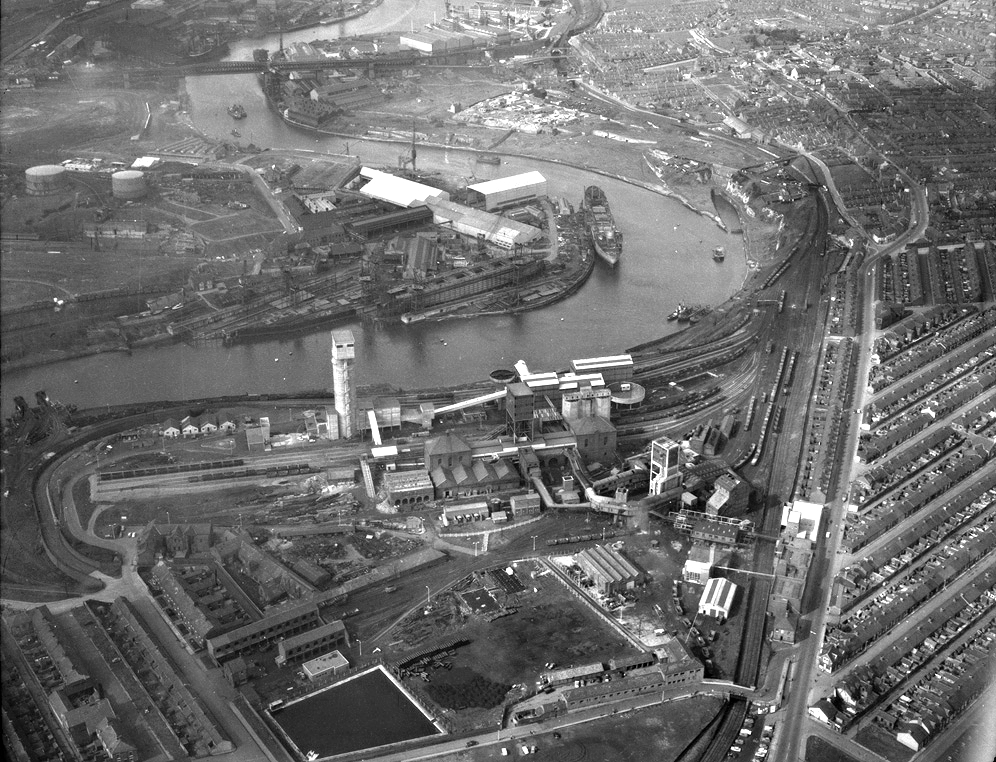
Wearmouth Colliery, on the north bank of the River Wear at Monkwearmouth, was sunk between 1826 and 1834; when production began in 1835 its shaft, at 1,578 feet, made it the deepest mine anywhere in the world. A further seam discovered in 1846 at 1,720 feet kept it the deepest colliery in the country. Over its 158-year working life, at least 300 men are recorded to have died at the colliery, including three boys killed in an 1837 shaft fall and five sinkers and a mason killed in an 1862 shaft accident, when two chains supporting their working cradle broke and sent the men to their deaths in the shaft. Wearmouth was the last working mine in the County Durham Coalfield when it closed in December 1993, with the final shift on 10 December. The site was subsequently cleared and redeveloped as the Stadium of Light, home of Sunderland AFC, which opened in July 1997; a colliery winding wheel and a statue of miners stand outside the stadium as a memorial to those who worked there.
Geology
Wearmouth worked coal seams of the County Durham Coalfield at exceptional depth for its era, reaching 1,720 feet by 1846.
Geological setting: Sedimentary Beds and Seams (well documented example)
Workings
Coal was raised via shafts that made Wearmouth the deepest mine in the world on opening in 1835, later joined by extensive underground workings developed over more than 150 years.
Closure
Wearmouth closed in December 1993, the last working mine in the County Durham Coalfield, with the final shift on 10 December.
What remains
The colliery site was cleared and redeveloped as the Stadium of Light, home of Sunderland AFC, which opened in 1997.
A colliery winding wheel and a statue of miners stand outside the stadium as a memorial; little else of the mine survives above ground.
Nearby mines
- Hylton Colliery — 1.9 miles (3.0 km) W
- Ryhope Colliery — 2.8 miles (4.5 km) S
- Silksworth Colliery — 3.0 miles (4.9 km) S
- Marsden Quarry — 3.8 miles (6.1 km) N
- Boldon Colliery — 4.0 miles (6.5 km) NW
Straight-line distance, within 9 miles (15 km). Show on the map.
Culture
- Wearmouth Colliery and the Stadium of Light (Sports)
The ground occupies the cleared colliery site and takes its name from the Davy lamps the colliery's own men carried; the colliery winding wheel and the miners' memorial stand outside it.
What's uncertain
Points where sources disagree or the record could not be settled; both accounts are kept. All open questions in the archive.
- At least 300 men are recorded to have died at Wearmouth Colliery over its 158-year working life. (uncertain) 3
- Three boys were killed in a shaft fall at Wearmouth in 1837. (uncertain) 3
Recorded claims
Individual factual claims, each attached to the source(s) that support it below. Where sources disagree, both are kept.
- Wearmouth Colliery was sunk between 1826 and 1834; on beginning production in 1835 its 1,578-foot shaft made it the deepest mine in the world, and a further seam found at 1,720 feet in 1846 kept it the deepest colliery in the country. 1,2
- At least 300 men are recorded to have died at Wearmouth Colliery over its 158-year working life. (uncertain) 3
- Five sinkers and a mason were killed on 7 September 1862 when two chains supporting their working cradle broke, sending them to their deaths in the shaft. 4
- Three boys were killed in a shaft fall at Wearmouth in 1837. (uncertain) 3
- Wearmouth closed in December 1993 as the last working mine in the County Durham Coalfield; the site was redeveloped as Sunderland AFC's Stadium of Light, which opened in 1997. 1,2
Sources
- (secondary) Monkwearmouth Colliery — Wikipedia
- (secondary) Sunderland Coal Mining — Wearside Online
- (primary) Fatal Accidents at Wearmouth Colliery — Durham Mining Museum
- (secondary) Monkwearmouth Colliery Shaft Accident - Monkwearmouth - 1862 — Northern Mine Research Society
Record created: 21 August 2026 · Last researched: 21 August 2026