 MineArchive
Wearmouth Colliery and the Stadium of Light
| Category | Sports |
|---|---|
| Dates | Colliery sunk 1826-34, last shift 10 December 1993; ground approved 13 November 1995, named 30 July 1997, opened July 1997 |
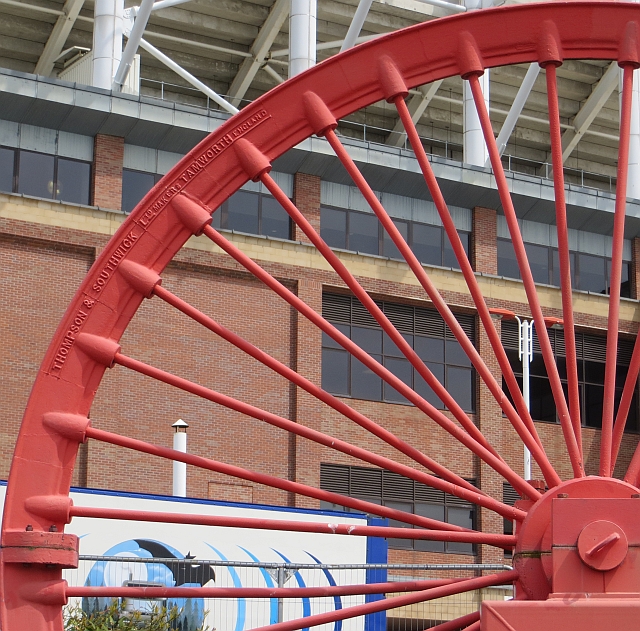
When Sunderland left Roker Park in 1997 the club moved onto the cleared site of Wearmouth Colliery, the last deep mine of the Durham coalfield, and named the new ground after the lamps the pit's men had carried. A colliery winding wheel and a miners' memorial stand outside it, and a Davy lamp monument by the ticket office.
The mining history in this record
Wearmouth Colliery was sunk between 1826 and 1834 on the north bank of the Wear, and when it began winding coal in 1835 its shaft was the deepest in the world. It outlasted every other deep mine in the County Durham coalfield; the last shift came up on 10 December 1993 and the site was cleared soon afterwards.
Sunderland had been looking for a new ground since the Taylor Report of 1990 made Roker Park untenable. A site beside the Nissan plant was abandoned after the company objected, and by 1995 the club had settled on the colliery. On 13 November 1995 the chairman Bob Murray announced that the Tyne and Wear Development Corporation had approved a 34,000-seat ground on the Monkwearmouth site, a few hundred yards from Roker Park.
The ground had no name through construction, going by 'Wearside Stadium' and 'New Roker Park'. It was named at a ceremony on 30 July 1997, hours before the opening match against Ajax. Murray said the name came from the Davy lamp that Wearmouth's miners had carried through their working lives, so that the image of that light would, in his words, "shine forever".
People
Bob Murray, chairman of Sunderland A.F.C., chose both the site and the name, and has given the account of why on more than one occasion since.
Legacy today
A statue of a miner's Davy lamp stands in front of the ticket office. The colliery winding wheel and a statue of miners stand outside the ground as a memorial to the men who worked there.
The name drew mixed reactions at first, many supporters objecting that it was already Benfica's. Murray has since said the Lisbon ground is named for the Luz district rather than for light, and that Sunderland's is the only one that carries the meaning. In a 2017 interview he also said that shortly after the ground opened a representative of the Labour government asked whether he would rename it after Diana, Princess of Wales, and that he refused, because it should honour the people of the region who had worked in darkness.
Recorded claims
Individual factual claims, each tagged with how solidly it's grounded and attached to the source(s) that support it. Where sources disagree, both are kept.
- The Stadium of Light stands on the cleared site of Wearmouth Colliery, which closed on 10 December 1993 as the last deep mine of the County Durham coalfield. The ground opened in July 1997, replacing Roker Park. (documented fact)
- The ground was named at a ceremony on 30 July 1997. Bob Murray, the club's chairman, said the name came from the Davy lamp that the miners of Wearmouth Colliery carried as part of their working lives. (documented fact)
- A colliery winding wheel and a statue of miners stand outside the ground as a memorial to the colliery and its workers, and a statue of a miner's Davy lamp stands in front of the ticket office. (documented fact)
- Murray said in a 2017 interview that shortly after the ground opened he was asked by a representative of the Labour government whether he would rename it after Diana, Princess of Wales, and that he refused because it should honour those in the region who had worked in darkness. (later recollection)
- The name is often assumed to be taken from Benfica's Estadio da Luz. Murray has said the Lisbon ground is named after the Luz district it stands in, and that Sunderland's is the only ground named for the meaning. (documented fact)
Mines
- Wearmouth Colliery — Tyne and Wear
The ground occupies the cleared colliery site and takes its name from the Davy lamps the colliery's own men carried; the colliery winding wheel and the miners' memorial stand outside it.
Sources
- (secondary) Monkwearmouth Colliery — Wikipedia
- (secondary) Stadium of Light — Wikipedia
- (secondary) Wearmouth Colliery Staithes In Sunderland — The Fabulous North
Record created: 23 September 2026 · Last researched: 23 September 2026