 MineArchive
Stepends Colliery
| Location | Plains, near Airdrie, North Lanarkshire |
|---|---|
| Commodity | Coal |
| Type | Coal |
| Worked | from 19th century (ironstone and coal) |
| Maximum depth | Unknown. |
| Operators | Ardenrigg Coal Company (1915–1947), Summerlee Iron Company, Coltness Iron Company |
Overview
A pit beside the railway at Plains, near Airdrie: first a Summerlee Iron Company working of coal and ironstone in the nineteenth century, then from 1915 the Ardenrigg Coal Company's pit and washer, linked by aerial ropeway to Ardenrigg and from 1937 to a brickworks that stamped its bricks 'Stepends'.
History
Stepends lies at the eastern end of Plains, near Airdrie. In the nineteenth century the New Monkland line of the Monkland Railways ran to Stepends Junction, east of Plains station, and on by a separate line to the Summerlee Iron Works' Stepends Colliery; both a Stepends coal pit and a Stepends ironstone pit stood on it. Plans survive of the ironstone workings, among them No. 1 pit's blackband ironstone and No. 5 pit's slatyband. A mid-century siding with zig-zag reversals ran south from Stepends past Annies Hill to a small colliery and two opencast ironstone pits, probably worked out by the 1880s.
In 1915 the Ardenrigg Coal Company opened a pit at Stepends. By 1938 it was working the Upper and Lower Drumgray coals in an anthracite condition, and it had been re-equipped with a long aerial ropeway that brought down the coal of the company's Ardenrigg mine in the hills toward Salsburgh. Stepends had a coal washer that served both mines.
In 1937 a new brickworks costing about £15,000 was built at the colliery to use the coal dust and dross from the washer, with an output of 25,000 bricks a day; its bricks were stamped 'Stepends'. The Coltness Iron Company, which held 95 per cent of the Ardenrigg company, kept the brickworks after the coal was nationalised in 1947, and it worked until about 1964.
Geology
The Upper and Lower Drumgray coals, worked here as anthracite, with blackband and slatyband ironstone; the pit lay on the far side of a whin intrusion from the Ardenrigg workings.
Workings
In the nineteenth century coal and ironstone pits, including Stepends No. 1 and No. 5, served by railway sidings. From 1915 a pit with a coal washer, linked by a long aerial ropeway to Ardenrigg No. 6 and by siding to Stepends Junction, with a brickworks from 1937.
Closure
Unknown.
What remains
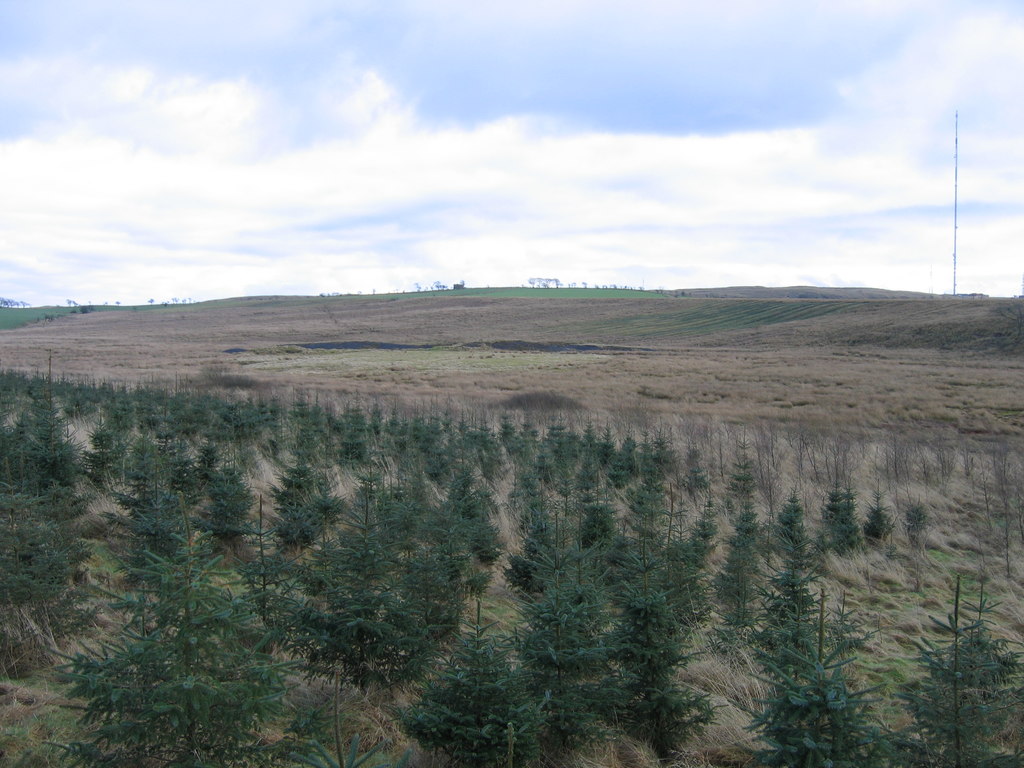
The flooded opencast ironstone pits at the end of the old siding survive as low dark mounds on moorland south of Stepends, with a young conifer plantation in front of them.
The course of the nineteenth-century siding past Annies Hill can still be traced almost entirely.
Redevelopment
Unknown.
Related mines
- Ardenrigg Colliery — Ardenrigg's coal came down to Stepends by aerial ropeway to be washed and railed; both Ardenrigg Coal Company pits.
What's uncertain
Points where sources disagree or the record could not be settled; both accounts are kept. All open questions in the archive.
- A mid-nineteenth-century siding ran south from Stepends to a small colliery and two opencast ironstone pits, probably worked out by the 1880s. (uncertain) 5
Recorded claims
Individual factual claims, each attached to the source(s) that support it below. Where sources disagree, both are kept.
- In the nineteenth century a line ran from Stepends Junction to the Summerlee Iron Works' Stepends Colliery. 1
- Plans survive of the blackband ironstone workings of Stepends No. 1 pit and the slatyband ironstone of No. 5 pit. 2,3
- The Ardenrigg Coal Company's pit at Stepends was opened in 1915. 4
- In 1938 the pit was working the Upper and Lower Drumgray seams in an anthracite condition. 4
- Stepends had a coal washer that served both Stepends and Ardenrigg, whose coal came down by aerial ropeway. 4,1
- A brickworks costing about £15,000 was built at Stepends Colliery in 1937 to use the washer's dust and dross. 4
- A mid-nineteenth-century siding ran south from Stepends to a small colliery and two opencast ironstone pits, probably worked out by the 1880s. (uncertain) 5
Photographs & further reading
The brickworks at Stepends Colliery, with newspaper extracts on the pit, washer and aerial ropeway.
View sourceThe railway junction and sidings serving Stepends Colliery and brickworks.
View sourceSources
- (secondary) Stepends Junction (RAILSCOT) — RAILSCOT
- (primary) NO. 1 PIT STEPENDS, black band ironstone workings: mine plan catalogue entry — British Geological Survey / Mining Remediation Authority
- (primary) STEPENDS NO. 5 PIT, slatyband ironstone workings: mine plan catalogue entry — British Geological Survey / Mining Remediation Authority
- (secondary) Stepends Brickworks, Nr Plains, Airdrie, North Lanarkshire — Scotland's Brick and Tile Manufacturing Industry
- (observational) Any old ironstone? (photograph and description) — Geograph
Record created: 4 October 2026 · Last researched: 8 October 2026