 MineArchive
Sisters Pit, Garforth
| Location | Moor Garforth, West Yorkshire — 53.7983, -1.3836 (approximate) |
|---|---|
| Commodity | Coal |
| Type | Coal |
| Worked | 1843–1922 |
| Maximum depth | Unknown. |
| Operators | Richard Oliver Gascoigne, Colonel F. R. T. T. Gascoigne (?–1920), Garforth Collieries Ltd (1920–1922) |
Overview
The Gascoigne family's second Garforth pit, sunk in 1843 and named for the two Gascoigne sisters, which employed 240 men, twice had serious flooding through its shaft tubbing, in 1873 and 1883, and was worked out in 1922; Moor Garforth grew up around it.
History
Sisters Pit was sunk in 1843 just off Barwick Road behind Townend, in Moor Garforth, and named for the two Gascoigne sisters. The pit stood to the north of the railway line, across Aberford Road from the station, and the cottages built for it were called Sisters Villas. The manager's house was there too, and the pit's slag heap, known as Pit Hills, was a playground for children after the pit closed. It employed 240 men.
The shaft was sunk through water-bearing sandstone, from which water was released in such quantity that until tubbing could be put in it had to be pumped at 1,500 gallons a minute; cast-iron tubbing then secured the shaft for 85 yards from a depth of 38 yards. About ten years before 1883 a segment of the tubbing gave way and the mine was flooded; men and engines pumped for six months. The engineer James Wormald devised the scheme that stopped a serious inflow of water into the pit, and the inhabitants and working men of Garforth presented him with a silver tray dated 19 March 1873. On Thursday 8 March 1883, while seventy men and boys were at work, the hangers-on at the bottom of the shaft were suddenly deluged and the men left tools and corves and stampeded through the rising water; the Leeds Mercury of 23 March reported that an extensive colliery at Garforth had been temporarily destroyed by flooding, with the workings filling faster than 1,000 gallons a minute could be pumped. The pit went on working after the flood.
The Gascoigne colliery passed in 1920 to Garforth Collieries Ltd. Sisters Pit was virtually worked out by 1921, and closed in 1922, three years before the Isabella.
Geology
Sunk through sandstone that released large quantities of water, needing cast-iron tubbing over 85 yards from a depth of 38 yards; worked the Beeston Park seam as a section of the Garforth Colliery.
Workings
Coal of the Beeston Park seam; the shaft tubbing failed and flooded the workings in 1873 and again on 8 March 1883. Coal left by the Fly Line.
Closure
Virtually worked out by 1921 and closed in 1922, three years before the Isabella Pit.
What remains
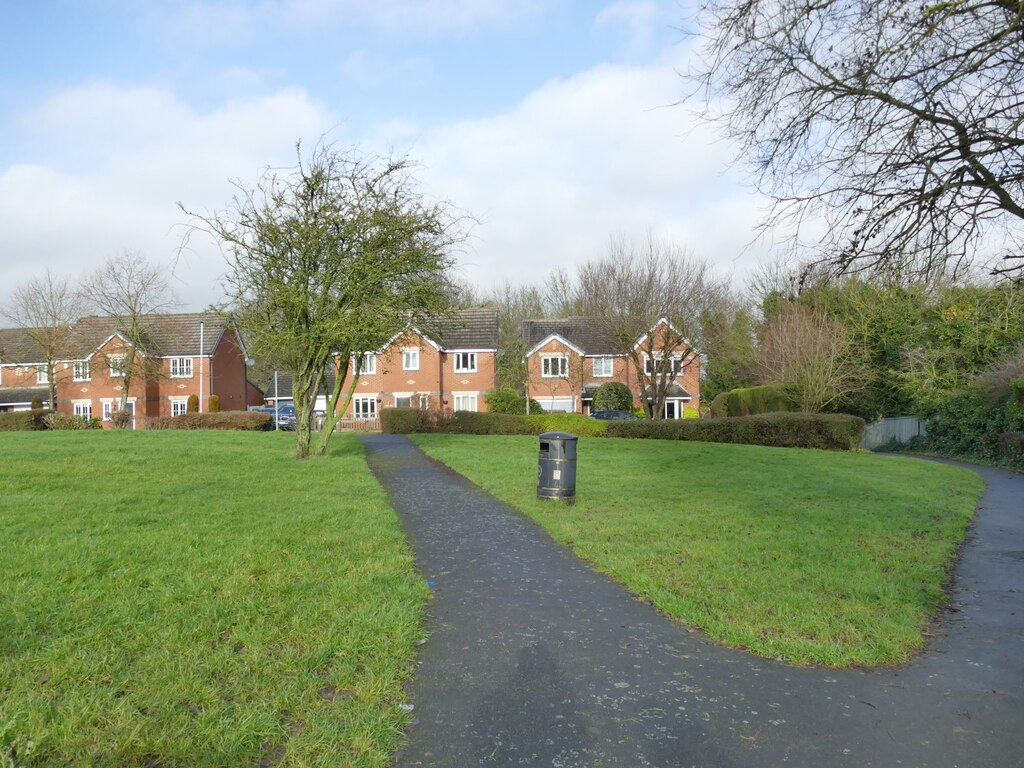
Houses in Hanbury Gardens occupy the site of the shaft and colliery buildings; Sisters Villas and the remnants of the spoil heap under trees survive off Barwick Road.
Sisters Villas, the cottages built for the pit, and remnants of its spoil heap survive.
Redevelopment
Houses in Hanbury Gardens now occupy the site of the shaft and colliery buildings.
Related mines
- Barnbow Pit — Garforth Collieries Ltd, which held the Sisters Pit until it closed in 1922, sank Barnbow Pit in 1924.
- Isabella Pit, Garforth — The Sisters and Isabella pits were sections of the one Garforth Colliery, served by the same Fly Line, and the Isabella outlived the Sisters by three years.
- Trench Pit, Garforth — The Trench, Sisters and Isabella pits were the three Gascoigne pits at Garforth, and the Trench outlived both.
Nearby mines
- Isabella Pit, Garforth — 0.4 miles (0.7 km) NE
- Trench Pit, Garforth — 0.8 miles (1.3 km) SE
- Barnbow Pit — 1.4 miles (2.3 km) NW
- Peckfield Colliery — 2.0 miles (3.3 km) E
- Ledston Luck Colliery — 2.3 miles (3.7 km) SE
Straight-line distance, within 9 miles (15 km). Show on the map.
Recorded claims
Individual factual claims, each attached to the source(s) that support it below. Where sources disagree, both are kept.
- Sisters Pit was sunk in 1843 just off Barwick Road behind Townend, in Moor Garforth, and was named for the two Gascoigne sisters. 1,2,3
- Sisters Pit was worked out by 1922 and had employed 240 men. 1,2,3,4
- The shaft was secured by cast-iron tubbing over 85 yards from a depth of 38 yards after water had to be pumped off at 1,500 gallons a minute during sinking. 5
- In March 1873 the engineer James Wormald devised a scheme that stopped a serious inflow of water into Sisters Pit, and the inhabitants and working men of Garforth presented him with a silver tray. 5
- On 8 March 1883 the hangers-on at the bottom of the Sisters shaft were suddenly deluged while seventy men and boys were at work, and the Leeds Mercury reported the colliery temporarily destroyed by flooding. 5
- The cottages built for the pit were called Sisters Villas; the pit's slag heap was known as Pit Hills. 1,3
- Sisters Pit is listed at Garforth, Leeds, in a 1896 return of Yorkshire coal mines. 6
- Parlington Hall counts 61 men and boys killed in the Sisters, Isabella and Trench pits between 1849 and the closures. 7
Photographs & further reading
The Leeds Mercury report of the March 1883 flooding of Sisters Pit, the 1873 flood and James Wormald's silver tray.
View sourceA local-history account with a section on the Sisters Pit and Sisters Villas.
View sourceA database entry giving the pit's working dates, grid reference and owners.
View sourceSources
- (secondary) History of Mining (The Story of Garforth) — The Story of Garforth
- (secondary) Garforth Pits Old Photos (Ian Atkinson) — Ian Atkinson
- (secondary) History of Garforth (Garforth Neighbourhood Plan archive) — Garforth Neighbourhood Plan working group
- (secondary) Garforth, Sisters Pit (Buddlepit Mine Database) — Buddlepit Mine Database
- (secondary) The Gascoigne Mines in Garforth: Serious Flood in 1883 (Parlington Hall) — Parlington Hall (parlington.co.uk)
- (secondary) Mines of coal and stratified deposits in Yorkshire from 1854: G (NMRS) — Northern Mine Research Society
- (secondary) The Gascoigne Mines in Garforth: casualty list (Parlington Hall) — Parlington Hall (parlington.co.uk)
Record created: 30 September 2026 · Last researched: 30 September 2026