 MineArchive
Sherburn Hill Colliery
| Location | Sherburn Hill, near Durham, County Durham — 54.7769, -1.4781 (approximate) |
|---|---|
| Commodity | Coal |
| Type | Coal |
| Worked | 1835–7 August 1965 |
| Maximum depth | 97 fathoms to the Hutton seam (1894) |
| Operators | Earl of Durham (1835–1946), National Coal Board (1947–1965) |
Overview
A colliery north of Durham opened in 1835 and worked by the Earl of Durham, with East and West pits at Sherburn Hill and the Lady Durham pit sunk later near the railway station. Whellan's directory of 1894 found the Hutton seam at 97 fathoms, four shafts, 400 tons a day and 300 men and boys at work. By 1937 it was entirely machine-mined, winning 1,500 tons a day from the Five Quarter, Main and Busty seams, washing its smalls in a Luhrig washer and carrying over a hundred miles of roadway on steel arches. It closed on 7 August 1965.
History
Sherburn Hill Colliery was opened in 1835, with East and West pits; the Lady Durham pit was sunk some years later near the railway station at Sherburn and worked the Low Main seam. Whellan's Directory of County Durham described the township's coal in 1894 as worked by the Earl of Durham at the Sherburn Hill and Lady Durham pits, the seam then being got at Sherburn Hill the Hutton, found at 97 fathoms and averaging four feet nine inches; there were four shafts, a daily output of 400 tons and 300 men and boys employed. By the time the Iron and Coal Trades Review described it in 1937 the colliery was wholly mechanised: 100 per cent machine-mined, winning 1,500 tons a day from the Five Quarter, Main and Busty seams, with all coal passing two-inch screens washed in a Luhrig washer. Across the company's collieries the roadways were carried on steel arches -- upwards of 4,000 tons of arches installed in the previous year alone, and over a hundred miles of road so supported. The National Coal Board took the colliery over in 1947 and closed it on 7 August 1965. The Durham Mining Museum names 100 men and boys killed at Sherburn Hill and records no disaster of five or more.
Geology
Durham coalfield seams worked in succession: the Hutton at 97 fathoms and averaging four feet nine inches in 1894, the Low Main at the Lady Durham pit, and the Five Quarter, Main and Busty seams by the 1930s.
Geological setting: Sedimentary Beds and Seams (well documented example)
Workings
Four shafts by 1894 -- the East and West pits at Sherburn Hill and the Lady Durham pit near the station among them. By 1937 the colliery was entirely machine-mined, its roads carried on steel arches and its smalls washed in a Luhrig washer.
Closure
The National Coal Board closed Sherburn Hill Colliery on 7 August 1965, after 130 years.
What remains
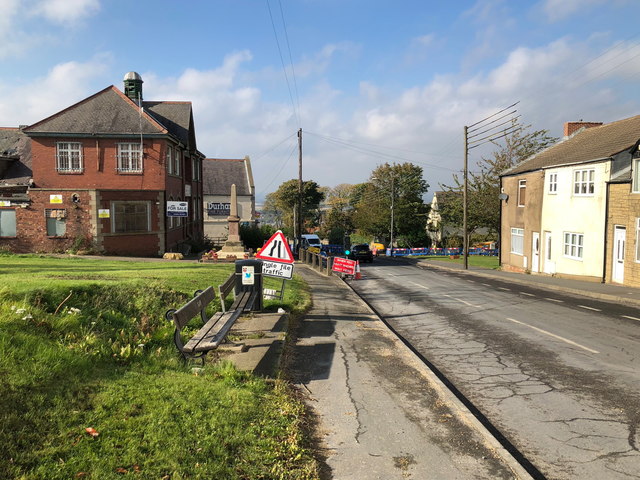
Sherburn Hill remains a former colliery village on its hillside east of Durham, with views across to the cathedral; nothing of the colliery survives in the village street.
Unknown; the village keeps a war memorial and its terraces, but no colliery structure was found recorded.
Redevelopment
Unknown.
Nearby mines
- Elemore Colliery — 3.6 km NE
- Haswell Colliery — 3.8 km E
- Thornley Colliery — 4.9 km SE
- Bowburn Colliery — 5.7 km SW
- East Hetton Colliery — 5.7 km S
Straight-line distance, within 15 km. Show on the map.
Recorded claims
Individual factual claims, each attached to the source(s) that support it below. Where sources disagree, both are kept.
- The colliery was opened in 1835 with East and West pits, and the Lady Durham pit was sunk some years later near the railway station at Sherburn, working the Low Main seam. 1
- Whellan's directory of 1894 records the Earl of Durham working the Hutton seam at Sherburn Hill, found at 97 fathoms and averaging four feet nine inches, from four shafts, with 400 tons a day and 300 men and boys employed. 1
- By 1937 the colliery was entirely machine-mined, winning 1,500 tons a day from the Five Quarter, Main and Busty seams, with all coal through two-inch screens washed in a Luhrig washer. 1
- Across the company's collieries the roads were carried on steel arches, upwards of 4,000 tons of arches having been installed in the year before the 1937 account and over a hundred miles of road so supported. 1
- Sherburn Hill Colliery closed on 7 August 1965; the museum names 100 men and boys killed there and records no disaster of five or more. 1,2
Photographs & further reading
Whellan's 1894 account and the Iron and Coal Trades Review of 1937, the owners and returns by year, and the names of 100 men killed at the colliery.
View sourceSources
- (secondary) Sherburn Hill Colliery — Durham Mining Museum
- (secondary) Sherburn Hill Colliery (1835 - 1965) — Co-Curate, Newcastle University
Record created: 20 September 2026 · Last researched: 20 September 2026