 MineArchive
Scremerston Colliery
| Also known as | Jack Tar Pit, Greenwich Colliery, Scremerston Main Colliery |
|---|---|
| Location | Scremerston, south of Berwick-upon-Tweed, Northumberland — 55.7411, -1.9944 (approximate) |
| Commodities | Coal, Fireclay |
| Type | Coal |
| Worked | By 1769–1944 |
| Maximum depth | About 110 fathoms (202 m), Jack Tar Pit, to the Scremerston Main Coal |
| Operators | Hartley Main Collieries Ltd (?–1944), Greenwich Hospital, Johnson and Carr, Scremerston Coal Company Ltd |
Overview
A colliery south of Berwick-upon-Tweed on the Greenwich Hospital estates, worked from the early nineteenth century until September 1944. Its Jack Tar Pit, sunk about 1840, reached the Scremerston Main Coal at some 110 fathoms, and the Hospital's pumping and winding engine houses of 1840 still stand.
History
Scremerston Colliery lay two and a half miles south-south-east of Berwick-upon-Tweed, on land held by the Commissioners of Greenwich Hospital, to whom the forfeited estates of Northumberland's Jacobites had passed. Plans of old Scremerston workings in the Main or Blackhill seam date from 1769, and deaths are recorded from 1810, when Oswald Elliott was killed as a rope broke on his way down the pit. Robert Johnson worked it in the 1820s, Robert Johnson and Co. in the 1830s and Carr and Co. in the 1840s. In 1840 the Commissioners built a pumping engine house over the Jack Tar Pit, its plaque naming John Grey as receiver, Messrs Johnson and Carrs as colliery lessees, Thomas Forster as viewer and engineer and W. Elliot of Tweedmouth as builder. The Jack Tar Pit, also called the Greenwich Colliery, employed 112 men and 20 boys in 1842; it was sunk through the Woodend limestone to the Scremerston Main Coal, about six feet thick, at 662 feet.
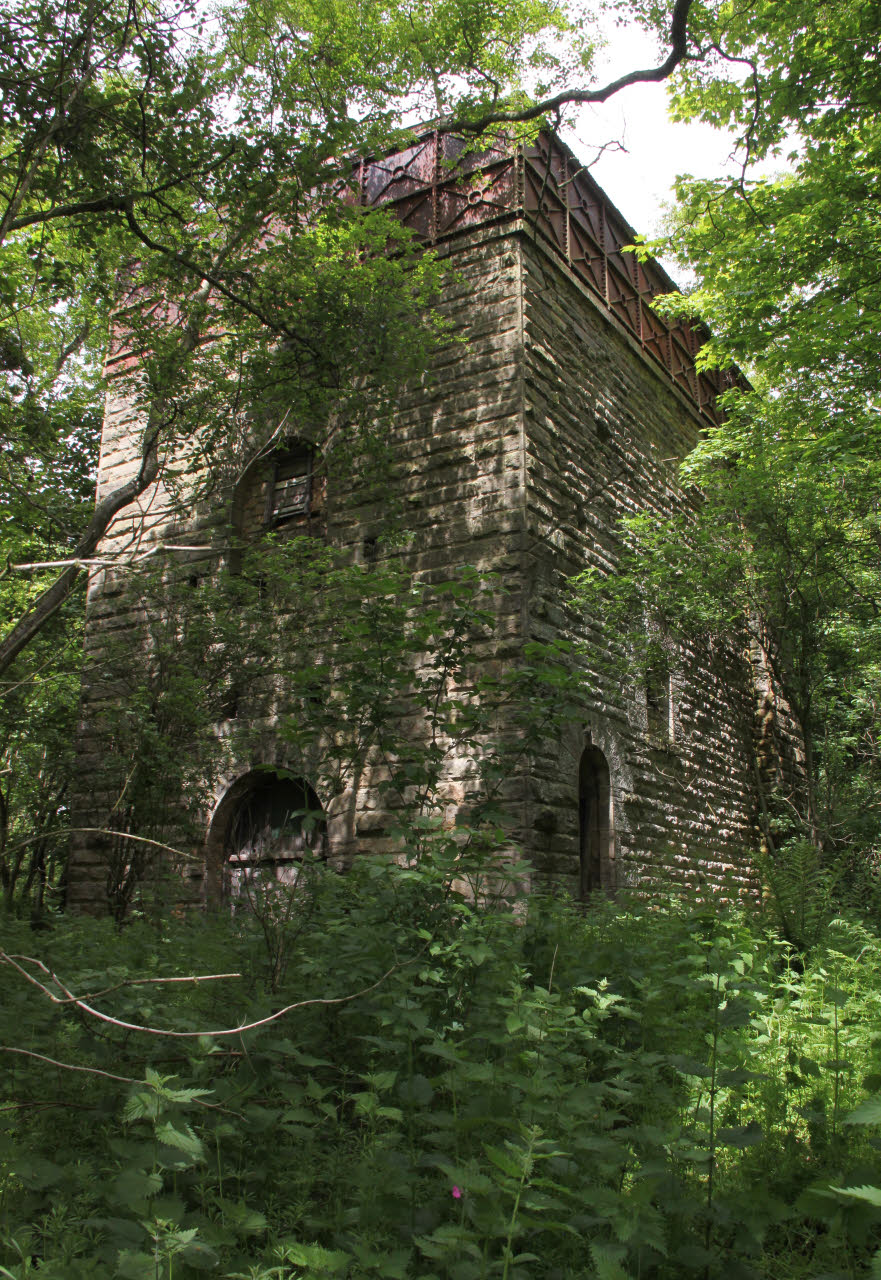
In the 1880s the colliery belonged to the Scremerston and Shoreswood Coal Company and from the 1890s to the Scremerston Coal Company Ltd, which also ran the brick and tile works. It raised household coal from the Cooper Eye seam, with fireclay from 1900, and employed between 150 and 275 people from 1894 to 1935. Two men were drowned in the workings in June 1931. In the mid-1930s the Hartley Main group took it over as Scremerston Main Collieries Ltd and built a new brickworks beside the old one, marking its bricks S.M.C.; in 1940 the colliery raised 100,000 tons. The colliery and brickworks closed in September 1944, when the Cooper Eye seam was abandoned. The pumping engine house and the winding engine house beside it, both listed Grade II, stand roofless and overgrown in woodland.
Geology
The Scremerston Coal Group of the Carboniferous: the Scremerston Main Coal and the Cooper Eye seam, beneath the Woodend limestone; fireclay.
Workings
The Engine Pit and the Jack Tar Pit, with an 1840 pumping engine house and a winding engine house.
Closure
Closed in September 1944, when the Cooper Eye seam was abandoned; the brickworks closed with it.
What remains
The pumping and winding engine houses survive, listed Grade II, overgrown in woodland.
The 1840 pumping engine house, three storeys of dressed sandstone with an iron water tank on top and the Greenwich Hospital plaque, and the winding engine house.
Redevelopment
Unknown.
Recorded claims
Individual factual claims, each attached to the source(s) that support it below. Where sources disagree, both are kept.
- The pumping engine house was erected in 1840 by the Commissioners of Greenwich Hospital; its plaque names Messrs Johnson and Carrs as colliery lessees and Thomas Forster as viewer and engineer. 1,2
- The Jack Tar Pit, also called the Greenwich Colliery, employed 112 men and 20 boys in 1842 and reached 110 fathoms. 2
- The Jack Tar Pit was sunk to the Scremerston Main Coal at 662 feet. 3
- The Hartley Main group acquired the colliery in the mid-1930s and built a new brickworks; production was marked S.M.C., Scremerston Main Colliery, and the colliery and brickworks closed in 1944. 4
- The colliery raised household coal from the Cooper Eye seam, employed 275 people in 1921, raised 100,000 tons in 1940 and was abandoned in September 1944. 5
- The pumping and winding engine houses are listed Grade II. 1,2
- Plans of Scremerston workings in the Main or Blackhill seam are dated 1769. 6
Photographs & further reading
The engine house's 1840 plaque transcribed, with its listing and related records.
View sourceSources
- (secondary) Pumping Engine House, Scremerston Colliery — Co-Curate (Newcastle University)
- (observational) Scremerston Pump Engine House — Fabulous North
- (primary) Scremerston Colliery: section of strata sunk through to the Main Coal in the Jack Tar Pit — Durham Mining Museum
- (secondary) Old Bricks: England 20: S — brocross.com (Old Bricks)
- (primary) Scremerston Colliery — Durham Mining Museum
- (primary) BGS mine plan: Scremerston, Main or Blackhill seam, abandoned 1769 — BGS / Mining Remediation Authority mine plans
Record created: 5 October 2026 · Last researched: 5 October 2026