 MineArchive
Scott's Pit
| Also known as | Scot's Pit |
|---|---|
| Location | Llansamlet, Swansea — 51.6683, -3.8853 (approximate) |
| Commodity | Coal |
| Type | Coal |
| Worked | 1770s (1817-19 by another account)–c. 1842 |
| Maximum depth | About 500 feet (150 m) |
| Operators | John Scott (?–1818), Charles Henry Smith (1819–1842) |
Overview
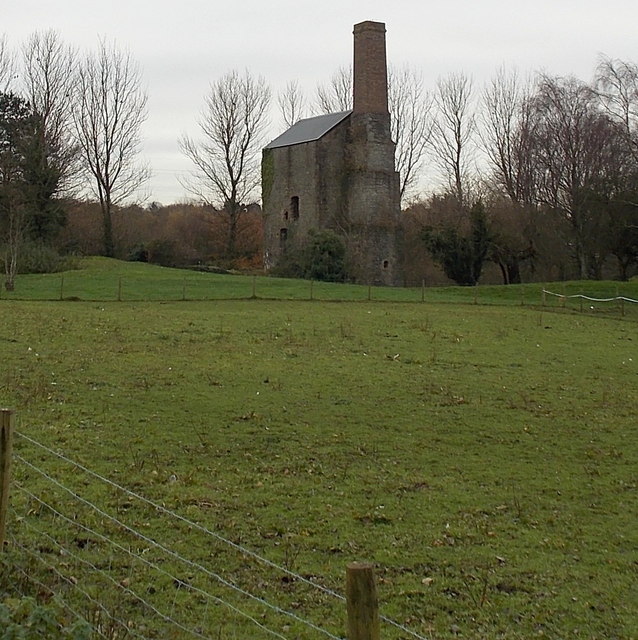
A Llansamlet colliery east of Swansea, begun by John Scott in the 1770s or in 1817-19 by different accounts and worked by C. H. Smith until about 1842. Its Cornish pumping engine house survives, restored in 1976-80; the engine pumped for the Cae Pridd colliery from 1872 to 1930.
History
Scott's Pit at Llansamlet, east of Swansea, is best known for its surviving pumping engine house. The sources disagree about its beginnings. Welsh Coal Mines has it started by Captain John Scott in the 1770s, abandoned after it flooded and left idle for years, then restarted with the help of a Cornish beam pump, and records an explosion caused by naked lights on 14 March 1788 in which thirteen men, among them a father and his two sons, died of afterdamp. The Royal Commission's record instead has the pit sunk in 1817-19 by John Scott, a London solicitor. During the sinking a steam locomotive engine designed by George Stephenson may have been used for pumping, later replaced by a Stephenson winding engine. The venture did not pay, and Scott and his partners sold it to the local landowner Charles Henry Smith, in 1818 by one account, who began production in 1819 and worked it until about 1840-42; Robert Mills is thought to have introduced the Davy safety lamp here in 1827, the first use in South Wales. The shaft was about 500 feet deep, the pit was ventilated by a furnace, and a tramroad ran from it to a shipping place at White Rock. In 1872 the engine house was brought back into use to pump water for the newly developed Cae Pridd colliery, which it did intermittently under a succession of owners until 1930.
Geology
Coal Measures of the Swansea district of the South Wales coalfield; which seams Scott's Pit worked is not stated in the sources.
Geological setting: Sedimentary Beds and Seams (historical documentary reference)
Workings
A shaft about 500 feet (150 m) deep, now capped in concrete; a Cornish beam pumping engine in a stone engine house, a haystack boiler (c.1820) and later a Cornish boiler (c.1872); furnace ventilation; a tramroad to a shipping place at White Rock.
Closure
C. H. Smith worked the pit until about 1842 (Coflein; 'around 1840' in Welsh Coal Mines). The engine house was recommissioned in 1872 only to pump for the Cae Pridd colliery, intermittently until 1930.
What remains
The engine house was restored in 1976-80 and is in the ownership of Swansea's council; the site has been restored.
The stone engine house with its chimney stack, the foundations of a haystack boiler (c.1820), a Cornish boiler (c.1872) and a furnace-ventilation stack, and the site of the shaft, capped in concrete.
Nearby mines
- Felinfran Colliery — 2.0 km N
- Cwmclydach Graigola Colliery — 3.5 km N, Neath Port Talbot
- Tynywain Colliery — 3.8 km N, Neath Port Talbot
- Goitre Colliery — 4.2 km N, Neath Port Talbot
- New Wernddu Colliery — 4.3 km NE, Neath Port Talbot
Straight-line distance, within 15 km. Show on the map.
People
- Robert Mills · worker, 1827 — Thought to have introduced the Davy safety lamp here in 1827, the first in South Wales.
- John Scott · founder, to 1818 — Began Scott's Pit: in the 1770s as 'Captain John Scott' (WCM) or as a London solicitor in 1817-19 (Coflein).
- Charles Henry Smith · owner, 1819–1842 — Local landowner who bought the pit and worked it until about 1840-42.
What's uncertain
Points where sources disagree or the record could not be settled; both accounts are kept. All open questions in the archive.
- Scott's Pit was started by Captain John Scott in the 1770s, abandoned because of water inundation and later restarted with a Cornish beam pump; an explosion on 14 March 1788 killed thirteen by afterdamp. (disputed) 1
- Scott's Pit was sunk in 1817-19 by a London solicitor, John Scott; it proved unremunerative and was sold to the local landowner C. H. Smith, who worked it until about 1842. (disputed) 2
- A Stephenson-designed steam engine may have been used for pumping during sinking, later replaced by a Stephenson winding engine; Robert Mills is thought to have introduced the Davy safety lamp here in 1827, the first in South Wales. (uncertain) 1
Recorded claims
Individual factual claims, each attached to the source(s) that support it below. Where sources disagree, both are kept.
- Scott's Pit was started by Captain John Scott in the 1770s, abandoned because of water inundation and later restarted with a Cornish beam pump; an explosion on 14 March 1788 killed thirteen by afterdamp. (disputed) 1
- Scott's Pit was sunk in 1817-19 by a London solicitor, John Scott; it proved unremunerative and was sold to the local landowner C. H. Smith, who worked it until about 1842. (disputed) 2
- A Stephenson-designed steam engine may have been used for pumping during sinking, later replaced by a Stephenson winding engine; Robert Mills is thought to have introduced the Davy safety lamp here in 1827, the first in South Wales. (uncertain) 1
- In 1872 the engine house was recommissioned to pump and drain the new Cae Pridd colliery, and remained in use intermittently until 1930; it was restored in 1976-80. 2
Photographs & further reading
The pit's origins, the 1788 explosion with the names of the dead, the Stephenson engines and the nearby Charles and Emily pits.
View sourceThe national monuments record: sinking, owners, the 1872-1930 pumping for Cae Pridd and the surviving remains.
View sourceSources
- (secondary) Scot's pit and Charles pit — Welsh Coal Mines
- (secondary) Scott's Pit, Llansamlet, Swansea (NPRN 33527) — Coflein (RCAHMW)
- (primary) Scotts and Gwern or Caepridd (Mining Remediation Authority abandonment plan, via BGS catalogue item 21841579) — British Geological Survey / Mining Remediation Authority
Record created: 19 September 2026 · Last researched: 19 September 2026