 MineArchive
Quarter Colliery
| Location | Quarter, near Hamilton, South Lanarkshire — 55.7430, -4.0333 (approximate) |
|---|---|
| Commodity | Coal |
| Type | Coal |
| Worked | By 1841, possibly earlier–1930 |
| Maximum depth | Unknown. |
| Operators | Colin, Dunlop & Co |
Overview
Quarter Colliery worked coal in the village of Quarter, three miles south of Hamilton in Lanarkshire. The coal belonged to the Duke of Hamilton, and the pit was operated by Colin, Dunlop & Co, ironmasters. On 16 March 1841 an underground explosion killed the seven workers below at the time, one of them a boy; four more men died trying to reach them (see Disasters, below). The village also had ironworks, established in 1865 and running until 1885 with five blast furnaces by 1880. In his teens Keir Hardie — later the first leader of the Labour Party — worked at Quarter as a pony driver and then as a hewer. Buddlepit records the colliery as worked from 1873 to 1930.
History
The coal at Quarter belonged to the Duke of Hamilton and the colliery was operated by Colin, Dunlop & Co, a firm of ironmasters — a common Lanarkshire arrangement in which a pit's output went to feed its owner's furnaces. Working here certainly predates the explosion of 16 March 1841. Francis Groome, writing in 1884, described Quarter Ironworks and Darngaber as a conjoint village in Hamilton parish with a post office, a chapel of ease, a public school and ironworks of five blast furnaces; the population had risen from 544 in 1871 to 886 in 1881. The ironworks themselves ran from 1865 to 1885. Buddlepit, drawing on the Northern Mine Research Society, records the colliery as worked from 1873 to 1930 — a range that plainly covers one phase rather than the whole history of coal getting at Quarter, since the 1841 explosion happened here. The colliery is cited in the British Geological Survey's Iron Ores: Scotland volume, which fits a district where the coal and the ironstone were worked together for the ironmasters. The village's most famous workman was James Keir Hardie, who as a teenager drove ponies underground here and then worked as a hewer, before going on to found the Independent Labour Party and to lead the parliamentary Labour Party.
Geology
The colliery lies in the Midland Valley of Scotland, in the Lanarkshire coalfield south of Hamilton. Its appearance in the British Geological Survey's Iron Ores: Scotland volume indicates that ironstone as well as coal was of interest in this ground, which is consistent with the colliery being run by ironmasters. No source names the individual seams worked.
Geological setting: Sedimentary Beds and Seams (historical documentary reference)
Workings
No full description of the workings are recorded. A shaft arrangement of three pits is reported, with depths of the order of 60 to 85 metres, but this comes from a search summary of a page that could not be fetched and is not stated here as fact. The 1841 explosion killed everyone underground at the time — seven people — which indicates a small workforce below ground at that date.
Closure
Buddlepit records working as ending in 1930. No source gives a reason.
What remains
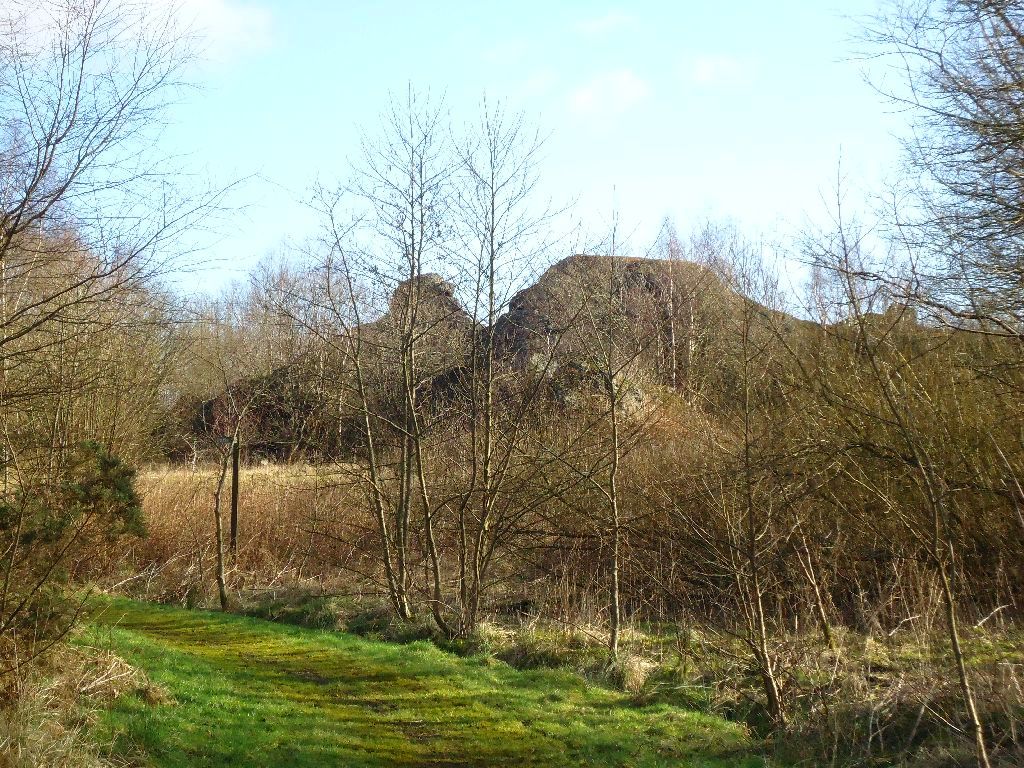
The colliery site lies on private land. A bing and the line of a former colliery track survive on the ground near the village.
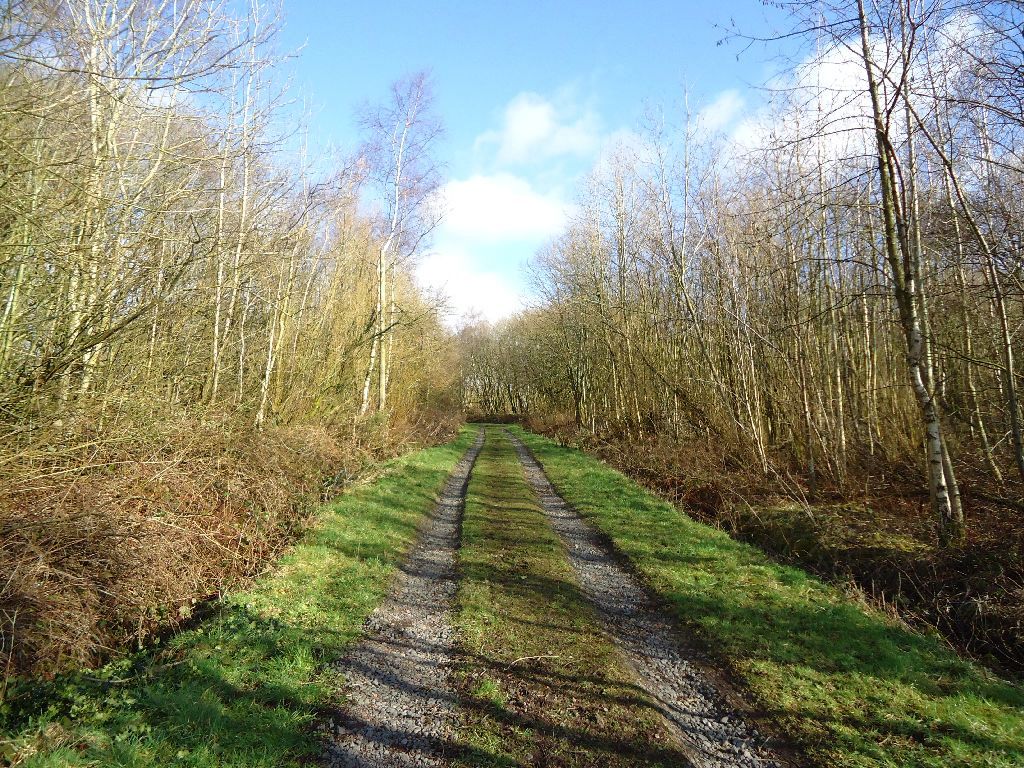
A spoil bing and the trackbed serving the colliery are visible; no buildings are recorded as surviving.
Nearby mines
- Avonbraes Colliery — 1.0 miles (1.7 km) E
- Eddlewood Colliery — 1.4 miles (2.3 km) N
- Neilsland Colliery — 1.4 miles (2.3 km) NW
- Thinacres Mine — 1.4 miles (2.3 km) SE
- Ferniegair Colliery — 2.0 miles (3.2 km) NE
Straight-line distance, within 9 miles (15 km). Show on the map.
Disasters & major incidents
-
Quarter Colliery Explosion
16 March 1841 · Explosion · 11 fatalities
On 16 March 1841 an explosion underground at Quarter Colliery, near Hamilton in Lanarkshire, killed every one of the seven people working below at the time, one of them a boy. Four more men died in the attempt to reach them, so that the rescue cost almost as many lives as the explosion itself. Eleven died in all. The pit belonged to the Duke of Hamilton and was operated by the ironmasters Colin, Dunlop & Co. -
Quarter Colliery shaft accident, 1906
21 December 1906 · Winding / Shaft Accident · 3 fatalities
About two in the afternoon of 21 December 1906 the engineman of United Collieries' pit at Quarter, near Hamilton, felt a snatch on the rope and a piece of the cage slides fell to the bottom. The manager, Robert Gardiner, the oversman, Andrew Maxwell, and an oncostman, James Macginty, went into the shaft to examine it; a mass of debris broke away from the shaft side and crushed them and their cage at the pit bottom.
Culture
- Keir Hardie and Quarter Colliery (Labour)
Hardie worked underground at this colliery in his teens, first as a pony driver and then as a hewer.
What's uncertain
Points where sources disagree or the record could not be settled; both accounts are kept. All open questions in the archive.
- Buddlepit, drawing on the Northern Mine Research Society, records the colliery as worked from 1873 to 1930. This cannot be the whole story, since the fatal explosion here was in 1841 and Groome describes the village and its ironworks in 1884. (disputed) 2,1
- The BGS mine-plans catalogue holds a Mining Remediation Authority abandonment plan titled 'Quarter' (catalogue 5586, Bannockburn Main, dated 1910); the catalogue gives no location and the plan's details do not clearly tie it to this working, so it may belong to another of the same name. (uncertain) 3
Recorded claims
Individual factual claims, each attached to the source(s) that support it below. Where sources disagree, both are kept.
- The coal mine at Quarter belonged to the Duke of Hamilton, and Colin, Dunlop & Co operated the colliery. 1
- In his teens the labour activist Keir Hardie worked at Quarter as a pony driver and then as a hewer. 1
- On 16 March 1841 an underground explosion killed the seven workers who were below at the time, one of them a boy; four other workers died while trying to rescue them. 1
- Buddlepit, drawing on the Northern Mine Research Society, records the colliery as worked from 1873 to 1930. This cannot be the whole story, since the fatal explosion here was in 1841 and Groome describes the village and its ironworks in 1884. (disputed) 2,1
- Quarter Ironworks were established in 1865 and remained open until 1885, having five blast furnaces in 1880. The village population rose from 544 in 1871 to 886 in 1881. 1
- The BGS mine-plans catalogue holds a Mining Remediation Authority abandonment plan titled 'Quarter' (catalogue 5586, Bannockburn Main, dated 1910); the catalogue gives no location and the plan's details do not clearly tie it to this working, so it may belong to another of the same name. (uncertain) 3
Photographs & further reading
Carries Francis Groome's 1884 description of the village and its five blast furnaces, the account of the 1841 explosion and the rescuers who died in it, and the note that Keir Hardie worked here as a pony driver and hewer.
View sourceSources
- (secondary) Quarter, South Lanarkshire — Wikipedia
- (secondary) Quarter — Buddlepit Mine Database
- (primary) BGS / Mining Remediation Authority mine plans: QUARTER — British Geological Survey / Mining Remediation Authority
Record created: 4 September 2026 · Last researched: 4 September 2026