 MineArchive
Purfleet Chalk Pits
| Also known as | Greenlands Quarry, Dolphin Pit, Bluelands Quarry, Botany Pit |
|---|---|
| Location | Purfleet, Thurrock, on the Essex bank of the Thames, Essex — 51.4830, 0.2500 (approximate) |
| Commodity | Chalk |
| Type | Quarry |
| Worked | By 1554–Early 1920s (cement works and quarry) |
| Maximum depth | Surface quarrying into riverside chalk cliffs; no depth figure applies. The early deneholes were shallow bell-pits. |
| Operators | Matthew Featherstonhaugh (1738–1794), Gibbs & Co. (1872–1900), Associated Portland Cement Manufacturers (1900–1920) |
Overview
The chalk workings at Purfleet on the Essex bank of the Thames, where the chalk reaches the river as cliffs and could be cut and loaded straight into ships. Leases of the cliffs and limekilns are recorded from 1554, and by 1848 the pits employed some 400 people. What the quarrying eventually exposed made the place more famous still: an interglacial so well recorded here that geologists named it after the site.
History
Chalk was first got here from deneholes, primitive bell-shaped pits of which numbers survive at Purfleet as at Stifford and Grays. From 1554 many leases of the cliffs and limekilns at Purfleet are recorded; the chalk went for agricultural fertiliser and for making lime and bricks, and in 1669 Samuel Irons of Purfleet issued a trade token depicting a limekiln.
The works expanded greatly in the eighteenth century. In 1738 the chalk-pits, three limekilns and two wharfs were leased for 61 years to Matthew Featherstonhaugh — later a baronet and MP for Portsmouth — whose company traded variously as the Bricklayers Co., the Lime Co. and the Purfleet Co. When the lease ended in 1794 the landlord, Samuel Whitbread, began to mechanise the quarries. In 1807 Arthur Young described the trucks carrying chalk to the kilns and lime from the kilns to the wharf. Meeson and Hinton worked the quarries and kilns through the 1820s and 1830s. By 1839 there were 85 acres of chalk-pits in the parish, and in 1848 they employed about 400 people — but in the 1850s they closed, and the overgrown quarries were turned into pleasure gardens.
Cement revived the trade. In 1872 Gibbs & Co. opened the Thames works west of Mill Lane, drawing chalk from quarries to the south of Millwood House, and it was there that Frederick Ransome's rotary kiln was first used — not entirely successfully, but as the forerunner of the modern rotary kiln. Gibbs & Co. was taken over by Associated Portland Cement Manufacturers in 1900 and both quarry and works closed in the early 1920s. Later chalk and gravel extraction through the 1960s and 1970s opened the faces that made the site scientifically famous.
Geology
The site takes in Greenlands Quarry (sometimes called Dolphin Pit), Bluelands Quarry, Botany Pit and Esso Pit. The chalk here is folded into the Purfleet anticline, an east–west ridge running between Purfleet and Grays, and it is against the northern side of that fold that the important deposits are banked. Above the chalk sit sands and gravels laid down by an earlier course of the Thames, part of the Corbets Tey Formation. The sequence runs from a cold-climate gravel at the base, through warm-climate sediments, to a capping gravel marking a return to cold conditions. The warm phase is the interglacial provisionally named the Purfleet Interglacial after this site, thought to be over 280,000 years old, and the mammal assemblage here is the type for the Purfleet Mammalian Assemblage Zone — deer, bison, monkey, beaver and straight-tusked elephant among them, and a hyena coprolite. The site records three separate periods of early human occupation, which makes it unique in Britain.
Geological setting: Sedimentary Beds and Seams (well documented example)
Workings
Riverside cliff quarrying rather than anything underground, apart from the early deneholes. Purfleet was one of the places where the chalk outcrop reached the water's edge, so hand-quarried chalk could be loaded directly into ships — the reason the industry settled here at all. By 1738 the operation comprised chalk-pits, three limekilns and two wharfs; after 1794 it was mechanised, with trucks running chalk to the kilns and lime from the kilns to the wharf. A tramway served the quarry, recorded on the 25-inch Ordnance Survey.
Closure
The eighteenth- and nineteenth-century lime pits closed in the 1850s and were laid out as pleasure gardens. The cement-era quarry and the Thames works closed in the early 1920s. Chalk and gravel extraction continued in the neighbouring pits into the 1960s and 1970s, and Bluelands Quarry was still being infilled as of 2020.
What remains
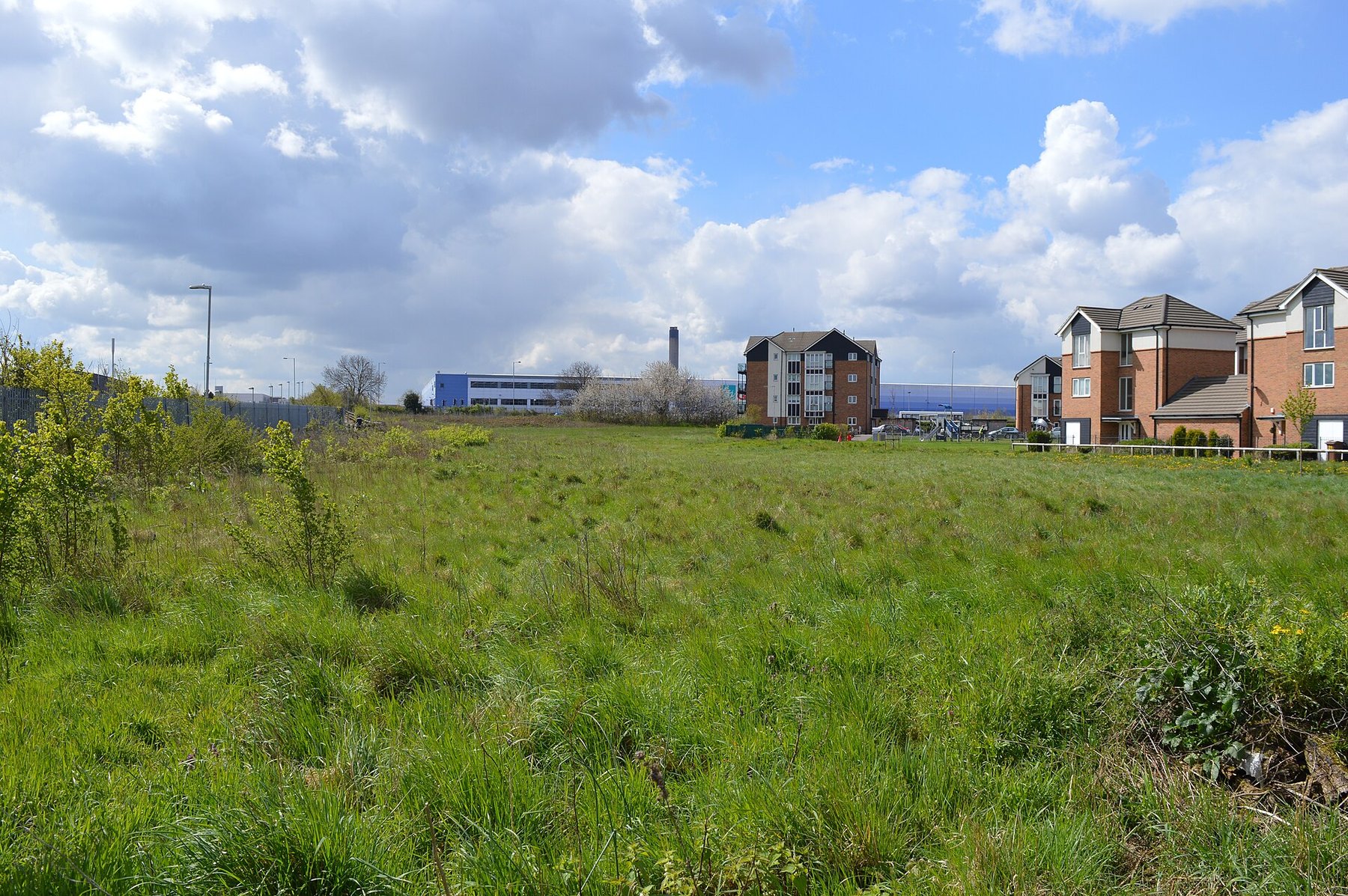
10.7 hectares are notified as a geological Site of Special Scientific Interest (1986) and the site is a Geological Conservation Review site. Much of the ground has been filled in and built over by a housing estate. Greenlands Quarry is not accessible to the public for safety and security reasons, reached only through a locked gate in Armor Road, though visits are periodically arranged for organised groups. Bluelands Quarry was being infilled as of 2020, which has been exposing the gravels, sands and clays above the chalk as the work proceeds.
Quarry faces at Greenlands, Bluelands, Botany and Esso pits, and surviving deneholes in the surrounding area; much of the rest is built over.
Redevelopment
Most of the worked ground has been infilled and covered by housing; what survives is protected for its geology rather than its industry.
Nearby mines
- Grays Thurrock Chalk Pit — 2.8 miles (4.6 km) E
- Eastern Quarry — 3.0 miles (4.8 km) SE, Kent
- Hangman's Wood Deneholes — 4.5 miles (7.2 km) E
Straight-line distance, within 9 miles (15 km). Show on the map.
Recorded claims
Individual factual claims, each attached to the source(s) that support it below. Where sources disagree, both are kept.
- Chalk was originally dug at Purfleet in primitive pits called deneholes, numbers of which survive there as at Stifford and Grays; from 1554 many leases of the cliffs and limekilns are recorded. 1
- Purfleet was one of the places where the chalk outcrop reached the river's edge, so hand-quarried chalk could be loaded directly into ships — the reason for the pre-industrial quarries here. 1,2
- In 1738 the chalk-pits, three limekilns and two wharfs were leased for 61 years to Matthew Featherstonhaugh, whose company traded as the Bricklayers Co., the Lime Co. and the Purfleet Co.; when the lease ended in 1794 the landlord Samuel Whitbread began mechanising the quarries. 1
- In 1839 there were 85 acres of chalk-pits in the parish, and in 1848 the pits employed about 400 people; they closed in the 1850s and the overgrown workings were turned into pleasure gardens. 1
- Gibbs & Co. opened the Thames works west of Mill Lane in 1872, and it was there that Frederick Ransome's rotary kiln was first used — not entirely successfully, but as the forerunner of modern rotary kilns. 1
- Gibbs & Co. was taken over by Associated Portland Cement Manufacturers in 1900, and both quarry and works closed in the early 1920s. 1
- Sediments banked against the northern side of the Purfleet anticline record three separate periods of early human occupation, making the site unique in Britain; the warm-climate beds define the provisionally named Purfleet Interglacial, thought to be over 280,000 years old. 2
- The Pleistocene deposits at Purfleet were revealed only by the chalk and gravel extraction of the 1960s and 1970s. 2
Photographs & further reading
Site-by-site accounts of the Purfleet pits and their neighbours, explaining what each quarry face exposes and what has been found in it.
View sourceThe parish history, whose section on the chalk industry traces Purfleet's quarries and limekilns from the 1554 leases through the Featherstonhaugh lease and Whitbread's mechanisation to the cement works of 1872.
View sourceSources
- (primary) Victoria County History of Essex, vol. 8: West Thurrock parish — British History Online
- (secondary) Thurrock geological sites — GeoEssex
- (secondary) Purfleet Chalk Pits — Wikipedia
Record created: 3 September 2026 · Last researched: 3 September 2026