 MineArchive
Pentland No. 1 and 2 Mines
| Location | Straiton, south of Edinburgh, near Loanhead, Midlothian — 55.8829, -3.1693 (approximate) |
|---|---|
| Commodity | Oil Shale |
| Type | Mineral |
| Worked | About 1882–1897 |
| Maximum depth | Unknown. |
| Operators | Clippens Oil Co. Ltd (1879–1900) |
Overview
The Clippens Oil Company's principal shale mines in the Straiton field south of Edinburgh, opened about 1882 to feed the Pentland Paraffin Oil Works, which employed over 400 in 1884 and stopped in 1897 when the Edinburgh water trustees went to law.
History
The Straiton and Burdiehouse shale-field lies south of Edinburgh, cut off from the rest of the Lothians field by the Pentland Hills. There the Dunnet, or Pentland, Shale outcrops for about two miles and dips steeply, at about 35 degrees, with the Burdiehouse Limestone beside it. The Clippens Oil Company acquired the mineral rights of the Pentland estate in 1879, and about 1882 opened the Pentland mines, the principal workings in the southern part of the field, to supply its Pentland Paraffin Oil Works.
In 1883 Pentland No. 1 worked the seven-foot Straiton main seam by stoop and room, with 268 men underground and 16 on the surface under the manager R. Martin. It was a fiery mine, ventilated by an 18-foot fan. With No. 2 added, the mines employed 387 underground and 38 on the surface in 1884. They dipped at 1 in 2, and 15 people were injured in working them that year. Weak roofs, the steep seams and water made the field costly to mine. After the Clippens company took over the Midlothian Oil Company in 1884, all the Straiton mines were under one owner.
Mining stopped in 1897 because of litigation brought by the Edinburgh and District Water Trustees, which was not settled until 1908. The mines stood idle in the inspectors' returns and were abandoned in 1900.
Geology
The Dunnet (Pentland) Shale of the Straiton and Burdiehouse shale-field, dipping at about 35 degrees beside the Burdiehouse Limestone, with lesser Broxburn and Fells shales to the east.
Workings
Inclined adits following the steep Dunnet Shale, worked by stoop and room; downcast and upcast shafts; an 18 ft fan for a fiery mine.
Closure
Stopped in 1897 by litigation brought by the Edinburgh and District Water Trustees, not settled until 1908; recorded as standing in the 1890s and abandoned in 1900.
What remains
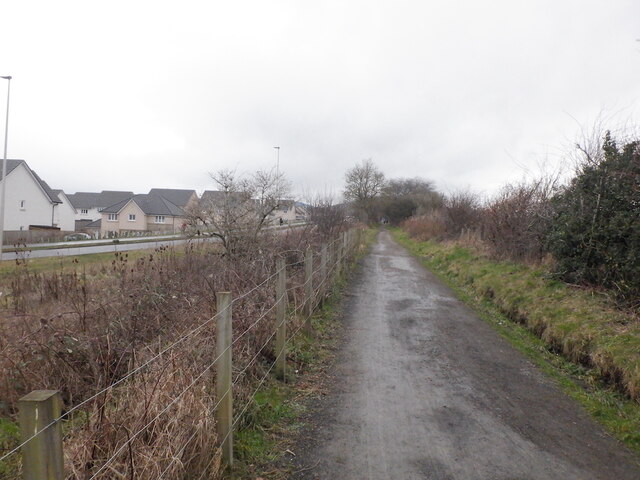
Rough grazing.
Nearby mines
- Bilston Glen Colliery — 0.6 miles (1.0 km) S
- Loanhead (Ramsay) Colliery — 0.9 miles (1.4 km) E
- Burghlee Colliery — 0.9 miles (1.5 km) SE
- Roslin Colliery — 1.7 miles (2.8 km) S
- Gilmerton Colliery — 2.2 miles (3.5 km) NE
Straight-line distance, within 9 miles (15 km). Show on the map.
Recorded claims
Individual factual claims, each attached to the source(s) that support it below. Where sources disagree, both are kept.
- The Pentland mines were opened about 1882 to supply the Clippens Oil Company's Pentland Paraffin Oil Works. 1
- In 1883 Pentland No. 1 employed 268 underground and 16 on the surface, working a seven-foot seam by stoop and room. 1
- In 1884 Nos. 1 and 2 together employed 387 underground and 38 on the surface. 1
- Mining stopped in 1897 because of litigation by the Edinburgh and District Water Trustees; the mines are recorded as standing in 1894-99. 2,1
Photographs & further reading
The Museum of the Scottish Shale Oil Industry's page for this mine, with maps, plans, photographs of the site and newspaper extracts.
View sourceSources
- (secondary) Pentland No.1 & 2 mines (Scottish Shale, Museum of the Scottish Shale Oil Industry) — Almond Valley Heritage Trust
- (primary) Pentland (Oil Shale) (Durham Mining Museum) — Durham Mining Museum
Record created: 25 October 2026 · Last researched: 25 October 2026