 MineArchive
Penhalls Mine
| Also known as | Penhall's Mine, Kitty and Penhalls United Mine |
|---|---|
| Location | St Agnes, Cornwall — 50.3159, -5.2001 (approximate) |
| Commodities | Copper, Tin |
| Type | Metal |
| Worked | By 1834–1884 (independent working) |
| Maximum depth | No overall depth figure located; the engine shaft was deepened in 1910 for the Perran Foundry engine installed then |
| Operators | Wheal Kitty and Penhall's United Ltd (1907–1930) |
Overview
A tin mine on the cliffs at St Agnes, formed by the amalgamation of several smaller setts and worked on its own account until 1884. It came back into production in partnership with its neighbour Wheal Kitty in the 1900s, the two working together as Wheal Kitty and Penhalls United until the group closed in 1930. Its engine shaft carried a pumping engine built by the Perran Foundry in 1852 and installed here in 1910 when the shaft was deepened.
History
Penhalls was not a single original sett but the product of several. The smaller workings around it — Goonlaze, Wheal Pink and Wheal Vottle among them — were amalgamated into the larger Penhalls Mine, which then worked independently until 1884. Its neighbour Wheal Kitty had been a successful tin mine from at least 1830, and by the 1890s the district's fortunes were turning: in 1896 the pumps were stopped and work was concentrated in the ground above adit.
The two came back together in the new century. Wheal Kitty and Penhalls joined forces in 1904, and in 1907 Wheal Kitty reopened alongside Penhalls as Wheal Kitty and Penhall's United Ltd, together with the Gooninis mine. The combined undertaking worked from 1834 to 1930 and over that life produced 13,121 tons of tin and 2,024 tons of copper, with smaller quantities of iron pyrites. In 1910 the Penhalls engine shaft was deepened and an engine built by the Perran Foundry in 1852 was installed on it — second-hand plant of an earlier generation put to work on a twentieth-century sinking, which was normal practice in Cornwall by then.
Geology
St Agnes sits at the north-west end of the Cornubian orefield, where tin and copper lodes cut killas and the margin of the St Agnes granite. The lodes here run out towards the cliffs and under the sea, which is why the district's mines are strung along the coast and why pumping decided their economics: when the pumps stopped at Wheal Kitty in 1896, working simply retreated to the ground that drained itself above adit level.
Geological setting: Veins and Lodes (well documented example)
Workings
Penhalls worked through a group of shafts, the principal ones being the Penhalls engine shaft and Sara's Shaft. The engine shaft was deepened in 1910 and given a pumping engine the Perran Foundry had built in 1852. From 1904 the workings were run in common with Wheal Kitty's, and from 1907 with Gooninis as well, so that after that date the three setts are best understood as one undertaking rather than three mines.
Closure
Penhalls stopped working on its own account in 1884. The combined Wheal Kitty and Penhalls United undertaking closed in 1930, at the end of the long collapse in the tin price that took most of what was left of Cornish mining with it.
What remains
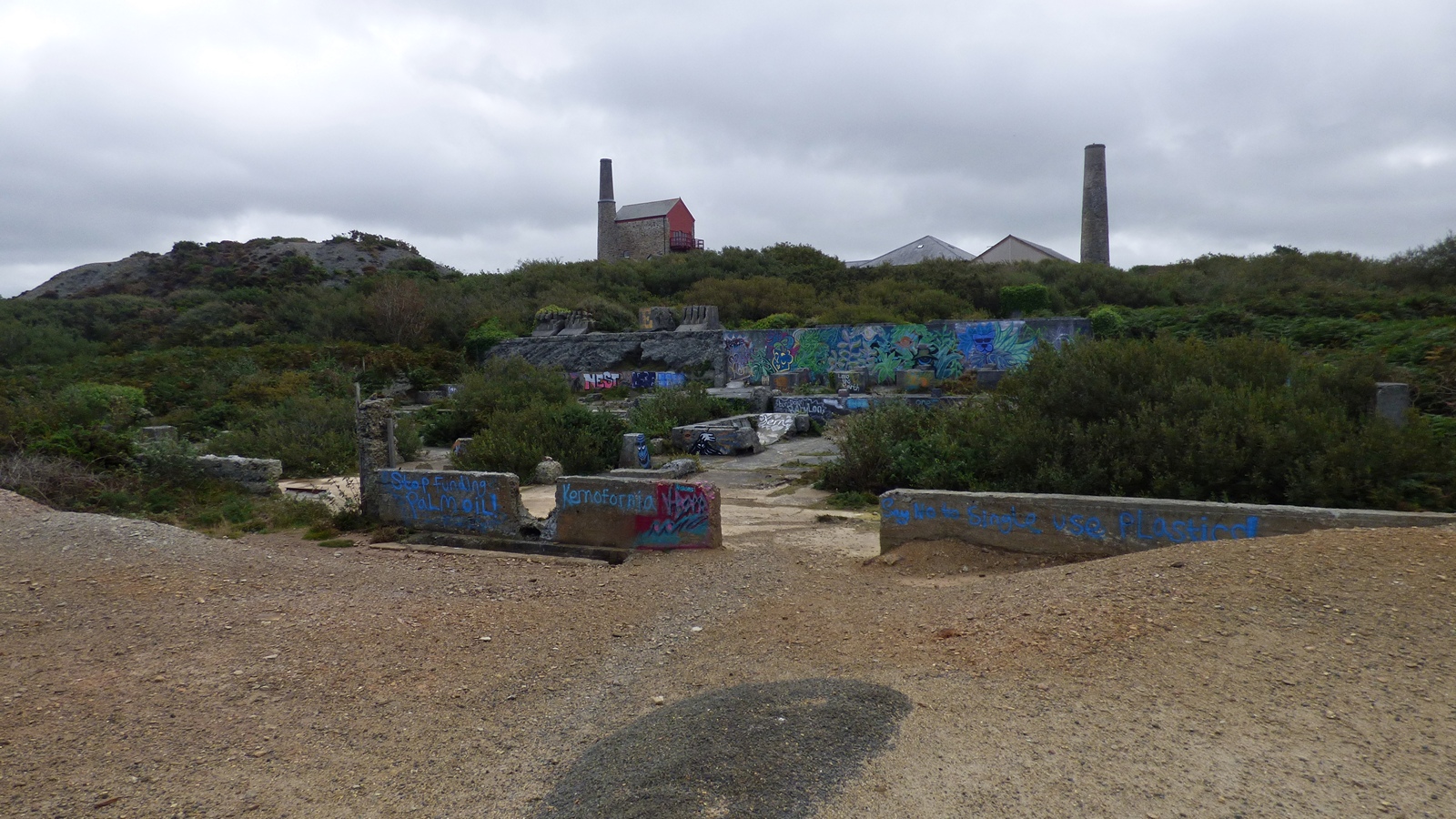
The surface remains at St Agnes are among the better preserved in Cornwall and lie within the Cornish Mining World Heritage Site. Wheal Kitty's twentieth-century tin processing works, the plant that served the united mine in its final phase, is a scheduled monument. Penhalls' own engine house stands on the cliff ground above the village.
Penhalls' engine house stands on the cliff ground above St Agnes; the united mine's Wheal Kitty processing works nearby is a scheduled monument.
Related mines
- Blue Hills Mine — Neighbours connected underground and worked together from 1879.
- Wheal Kitty — The two mines amalgamated in 1904 and reopened together in 1907 as Wheal Kitty and Penhall's United Ltd, working as one undertaking until 1930.
Nearby mines
- Wheal Kine — 0.0 miles (0.1 km) SW
- Turnavore Mine — 0.1 miles (0.2 km) SW
- Wheal Friendly — 0.2 miles (0.3 km) W
- Blue Hills Mine — 0.3 miles (0.4 km) NE
- Wheal Kitty — 0.4 miles (0.7 km) S
Straight-line distance, within 9 miles (15 km). Show on the map.
What's uncertain
Points where sources disagree or the record could not be settled; both accounts are kept. All open questions in the archive.
- The BGS mine-plans catalogue holds a Mining Remediation Authority abandonment plan titled 'Penhalls' (catalogue OMR118C, Tin And Copper Ores, dated 1880); the catalogue gives no location and the plan's details do not clearly tie it to this working, so it may belong to another of the same name. (uncertain) 2
Recorded claims
Individual factual claims, each attached to the source(s) that support it below. Where sources disagree, both are kept.
- Penhalls was formed by amalgamating several smaller workings around it, including Goonlaze, Wheal Pink and Wheal Vottle, and worked on its own account until 1884. 1
- Wheal Kitty and Penhalls joined forces in 1904, and in 1907 reopened together, with Gooninis, as Wheal Kitty and Penhall's United Ltd. 1
- The combined undertaking worked from 1834 to 1930 and produced 13,121 tons of tin and 2,024 tons of copper, with smaller quantities of iron pyrites. 1
- An engine built by the Perran Foundry in 1852 was installed on the Penhalls engine shaft in 1910, when that shaft was deepened. 1
- The BGS mine-plans catalogue holds a Mining Remediation Authority abandonment plan titled 'Penhalls' (catalogue OMR118C, Tin And Copper Ores, dated 1880); the catalogue gives no location and the plan's details do not clearly tie it to this working, so it may belong to another of the same name. (uncertain) 2
Photographs & further reading
The company history of the united mine, with the amalgamation dates, the production totals and the Perran Foundry engine.
View sourceSources
- (secondary) Wheal Kitty (St. Agnes) — Grace's Guide
- (primary) BGS / Mining Remediation Authority mine plans: PENHALLS — British Geological Survey / Mining Remediation Authority
- (observational) Penhall's Mine — Geograph Britain and Ireland
- (primary) Wheal Kitty 20th century tin processing works, St. Agnes — Historic England (Scheduled Monument record)
Record created: 9 September 2026 · Last researched: 9 September 2026