 MineArchive
Parc Colliery
| Also known as | Park Colliery, Parc and Dare Colliery |
|---|---|
| Location | Cwmparc, Treorchy, Rhondda Fawr, Rhondda Cynon Taf — 51.6495, -3.5274 (exact) |
| Commodity | Coal |
| Type | Coal |
| Worked | 1864 (first coal)–1966 |
| Maximum depth | 1,584 ft 7 in (483 m), New Pit |
| Operators | Ocean Coal Company (1887–?), National Coal Board (1947–1966) |
Overview
David Davies's steam-coal colliery at Cwmparc in the Rhondda, opened in the 1860s and worked by the Ocean Coal Company; merged with its neighbour the Dare in the 1950s as Parc and Dare, the largest colliery in South Wales, it closed in February 1966.
History
Parc, or Park, Colliery gave its name to Cwmparc, the side valley above Treorchy that grew up around it. David Davies of Llandinam, with Thomas Webb, Morgan Joseph, John Osborne Riches, Abraham Howell and E. Roberts, leased the mineral rights of 8,000 acres in Cwmparc and Ton Pentre and sank the Maindy and Park pits, at a cost of £68,000 for the first three years. The sources differ on the date: first coal in August 1864, a start in 1865, sinking begun in August 1866 with coal raised by the end of that year, or a sinking in 1870 after the neighbouring Dare pit of 1865. The partners became David Davies and Company in 1867 and, in 1887, the Ocean Coal Company, which advertised its Ocean (Merthyr) steam coal as supplied to the Admiralty and used by Cunard's Atlantic liners.
No. 1 Pit reached the Red Vein at 566 feet 8 inches; No. 2 was deepened 485 feet below the Six Feet; and the New upcast pit went down to 1,584 feet 7 inches, below the Five Feet. Ventilation was first by a furnace at the foot of the upcast. On 21 February 1882 the wall of the ventilation shaft being sunk collapsed on the six sinkers at the bottom, killing four. The colliery employed about 1,200 in 1896, and on 30 April 1909 it raised a record 4,020 tons in ten hours. Pithead baths opened by Lord Chelmsford on 28 February 1929 were the first in the Rhondda and only the third opened by the Miners' Welfare Committee in Britain.
At nationalisation in 1947 the pit employed 1,888 men. The National Coal Board merged it with the Dare in 1954 or 1955, Dare becoming Park No. 3 Pit and its coal raised up Park No. 2, and Parc and Dare became the largest colliery in the South Wales coalfield, its lodge the largest in the South Wales Area of the NUM. On 10 April 1959 four men died under a single fall of roof. Losses mounted in the 1960s, run-down began in September 1965, and coal winding stopped on 4 February 1966; most of the men transferred to Lady Windsor, Tymawr and Lewis Merthyr. Both colliery sites have since been landscaped.
Geology
South Wales Coalfield, between the Dinas fault to the east and the Glyncorrwg fault to the west: the Two Feet Nine, Four Feet, Six Feet, Red Vein, Bute, Yard, Five Feet and Gellideg seams.
Workings
No. 1 Pit to the Red Vein at 566 ft 8 in, No. 2 Pit deepened to 485 ft below the Six Feet, the New upcast pit to 1,584 ft 7 in, and from the 1950s the Dare shaft as Park No. 3; furnace ventilation at first.
Closure
Run down from September 1965 and closed by the National Coal Board in February 1966 after mounting losses.
What remains
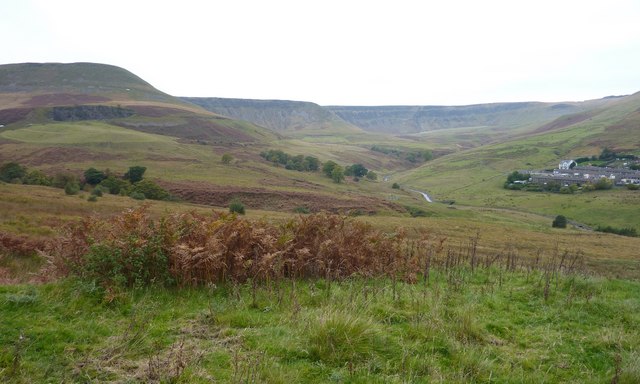
The colliery sites have been landscaped and their spoil heaps reshaped.
Redevelopment
The Park and Dare sites were landscaped; housing and a community hall stand on the Dare site.
Related mines
- Maindy Colliery — Sunk together by David Davies's partnership on its Cwmparc and Ton Pentre lease.
Nearby mines
- Tylecoch Colliery — 0.9 miles (1.5 km) NE
- Abergorki Colliery — 1.2 miles (1.9 km) NE
- Ynysfeio Colliery — 1.4 miles (2.2 km) N
- Maindy Colliery — 1.5 miles (2.3 km) E
- Lady Margaret Colliery — 1.5 miles (2.4 km) N
Straight-line distance, within 9 miles (15 km). Show on the map.
What's uncertain
Points where sources disagree or the record could not be settled; both accounts are kept. All open questions in the archive.
- The first coal was raised in August 1864. (disputed) 1
- Sinking began in August 1866 and Parc Pit produced its first coal by the end of that year. (disputed) 2,3
- D. Davies and Partners opened the colliery in 1865. (disputed) 4
- Dare Colliery was sunk in 1865 and Park Colliery in 1870, both by David Davies and Company. (disputed) 5
- The National Coal Board merged Park and Dare in 1954. (disputed) 2,3
- Park and Dare were merged in 1955, becoming the largest colliery in the South Wales coalfield. (disputed) 4,1
- In 1935 Parc and Dare became part of Powell Duffryn Associated Collieries. (uncertain) 5
Recorded claims
Individual factual claims, each attached to the source(s) that support it below. Where sources disagree, both are kept.
- The first coal was raised in August 1864. (disputed) 1
- Sinking began in August 1866 and Parc Pit produced its first coal by the end of that year. (disputed) 2,3
- D. Davies and Partners opened the colliery in 1865. (disputed) 4
- Dare Colliery was sunk in 1865 and Park Colliery in 1870, both by David Davies and Company. (disputed) 5
- On 21 February 1882 the wall of a ventilation shaft being sunk collapsed, killing four of the six sinkers at the bottom. 4
- Pithead baths opened in 1929 were the first in the Rhondda. 1,5
- The National Coal Board merged Park and Dare in 1954. (disputed) 2,3
- Park and Dare were merged in 1955, becoming the largest colliery in the South Wales coalfield. (disputed) 4,1
- On 10 April 1959 four men died under a single fall of roof. 1
- Closed by the National Coal Board on 4 February 1966. 4,1,2
- Gellideg seam workings of Park, Dare, Eastern and Maindy were abandoned in 1966. 6
- In 1935 Parc and Dare became part of Powell Duffryn Associated Collieries. (uncertain) 5
Sources
- (secondary) Park Colliery, Cwmparc — Northern Mine Research Society
- (secondary) Rhondda Heritage Trail: Cwmparc — Rhondda Cynon Taf County Borough Council
- (secondary) Cwmparc — Wikipedia
- (secondary) Parc Colliery, Cwmparc — Welsh Coal Mines
- (secondary) Cwmparc - Historic Landscape Character Area — Heneb (Welsh archaeological trusts)
- (primary) BGS mine plans: Park, Dare, Eastern, Maindy (Gellideg, abandoned 1966) — British Geological Survey / Mining Remediation Authority
Record created: 17 October 2026 · Last researched: 17 October 2026