 MineArchive
Maindy Colliery
| Also known as | Maendy Colliery |
|---|---|
| Location | Ton Pentre, Rhondda Fawr, Rhondda Cynon Taf — 51.6465, -3.4937 (approximate) |
| Commodity | Coal |
| Type | Coal |
| Worked | 1864–1948 |
| Maximum depth | Unknown. |
| Operators | D. Davies & Partners (1864–?), Ocean Coal Company, Ocean and United National Collieries Ltd (?–1947), National Coal Board (1947–1948) |
Overview
David Davies's first colliery, sunk at Ton Pentre in the Rhondda Fawr in 1864 and worked by the Ocean Coal Company for steam coal until 1948, after which its shaft ventilated other pits.
History
Maindy Colliery, also spelt Maendy, was the largest colliery at Ton Pentre in the Rhondda Fawr and the first to be sunk by David Davies of Llandinam, later the founder of the Ocean Coal Company. David Davies & Partners sank the first mine in 1864 on land Davies had rented after fifteen months searching for a workable seam. The story told in Ton Pentre is that, out of money, he paid off his men with his last half crown, they agreed to carry on unpaid, and on the seventh day struck a seam of the best steam coal. The pit was near closing again in 1866 when the Six Feet seam was found.
The colliery passed to the Ocean Coal Co. Ltd. In 1894 it employed 1,399 people, 1,265 of them underground, and it had a small level working the No. 2 Rhondda for house coal. Its steam coal came from the Two Feet Nine, Seven Feet and Bute seams. The men of Maindy and the neighbouring Eastern colliery paid for the Maindy and Eastern Workmen's Institute, opened in September 1895, with a library, reading room and later a theatre hall.
Employment was still 967 in 1923 but only 249 by 1933. The owners became Ocean and United National Collieries Ltd, and the National Coal Board took over in 1947 with 336 men. Coal winding ended in 1948, but the shaft stayed open to ventilate other collieries.
Geology
South Wales Coal Measures. The colliery worked the steam coals of the Rhondda: the Six Feet, found in 1866, the Two Feet Nine, Seven Feet and Bute, recorded as the Upper, Lower and New seams in 1910, and the No. 2 Rhondda from a level for house and manufacturing coal.
Workings
A shaft colliery with a small level working the No. 2 Rhondda seam in the early 1900s. After coal winding ended in 1948 the shaft was kept open as a ventilation shaft for other collieries.
Closure
Coal production ended in 1948; the shaft continued in use for ventilation.
What remains
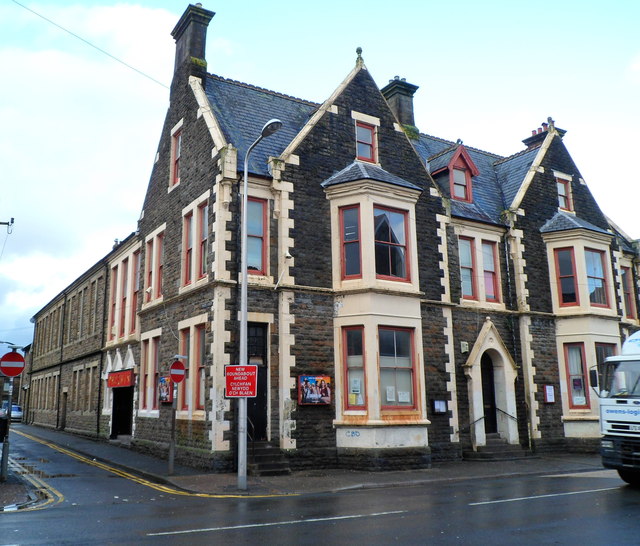
The Maindy and Eastern Workmen's Institute on Church Road, built from the miners' contributions, survives as the Phoenix, a Grade II listed building used as a cinema.
Redevelopment
Unknown.
Nearby mines
- Pentre Colliery — 0.5 miles (0.7 km) N
- Tynybedw Colliery — 0.7 miles (1.2 km) N
- Bodringallt Colliery — 0.8 miles (1.3 km) E
- Gelli Colliery — 1.0 miles (1.6 km) E
- Abergorki Colliery — 1.3 miles (2.0 km) NW
Straight-line distance, within 9 miles (15 km). Show on the map.
What's uncertain
Points where sources disagree or the record could not be settled; both accounts are kept. All open questions in the archive.
- Maendy (Maindy) Colliery dates from 1865 under D. Davies & Partners. (disputed) 2
- Out of money, Davies is said to have thrown his last half crown to his men, who carried on unpaid and struck a seam of steam coal on the seventh day. (uncertain) 1
Recorded claims
Individual factual claims, each attached to the source(s) that support it below. Where sources disagree, both are kept.
- Maindy Colliery was established at Ton Pentre when the first mine was sunk by David Davies & Partners in 1864. 1
- Maendy (Maindy) Colliery dates from 1865 under D. Davies & Partners. (disputed) 2
- Maindy was the first colliery sunk by David Davies of Llandinam, the founder of the Ocean Coal Company. 3
- Out of money, Davies is said to have thrown his last half crown to his men, who carried on unpaid and struck a seam of steam coal on the seventh day. (uncertain) 1
- The mine was near closure in 1866 when the Six Feet seam was found; mining ceased in 1948 but the shaft remained open for ventilation. 1
- In 1894 the colliery employed 1,399, 1,265 of them below ground; in 1947 it employed 336 and raised 68,000 tons. 4
- The colliery belonged to the Ocean Coal Co. Ltd, then Ocean and United National Collieries Ltd, and from 1947 the National Coal Board. 4
- The Ton Pentre Workingmen's Hall and Institute was built from subscriptions from the Maindy and Eastern collieries and opened in 1895; it is now the Phoenix cinema. 1,5
- On 6 April 1909 John Hughes and William Evans were killed when the cage carrying them and ten other men struck a garland curb, canted and threw them into the shaft. 4
Photographs & further reading
A photograph of the blacksmith-shop craftsmen at the old Maindy Colliery, with a note on its founder.
View sourceOwners, output and employment from 1894 to 1947, seams worked and the names of those killed at the colliery.
View sourceThe history of the village that grew around Maindy Colliery, with David Davies's sinking and the workmen's institute.
View sourceSources
- (secondary) Ton Pentre — Wikipedia
- (secondary) List of collieries in the Rhondda Valleys — Wikipedia
- (secondary) Maindy Colliery, photograph (item 87.108I/20) - Amgueddfa Cymru Museum Wales — Amgueddfa Cymru - Museum Wales
- (primary) Durham Mining Museum - Maindy Colliery (UK) — Durham Mining Museum
- (observational) Grade II listed Phoenix Theatre, Ton Pentre (Geograph via Wikimedia Commons, Jaggery) — Wikimedia Commons

Record created: 1 October 2026 · Last researched: 1 October 2026