 MineArchive
Ollerton Colliery
| Location | New Ollerton, Nottinghamshire — 53.2005, -1.0105 (exact) |
|---|---|
| Commodity | Coal |
| Type | Coal |
| Worked | 1923-25 (sinking)–1994-95 |
| Operators | Butterley Company (1923–1947), National Coal Board (1947–1995) |
Overview
A Butterley Company 'Dukeries' colliery whose purpose-built model village, New Ollerton, grew to nearly a thousand houses complete with its own hosiery factory and a church its builders billed as 'the cathedral of the new coalfield' — and where, in 1984, a picketing miner became one of only a handful to die on a UK picket line during the national coal strike.
History
The Butterley Company, one of the most prestigious industrial concerns in the East Midlands — its ironwork included the roof span of London's St Pancras Station — expanded into the concealed Nottinghamshire coalfield from 1890, and sank Ollerton Colliery between 1923 and 1925, with production beginning that year. Around it the company built New Ollerton, one of the largest of the model villages built across the Dukeries in the interwar period, reaching around 932 houses by the Second World War; distance from the existing village of Old Ollerton let Butterley plan the new settlement on its own terms, with graded housing running from Ollerton Hall (the colliery manager's rented Georgian mansion) and Savile Row (management housing) down to plainer housing for ordinary miners along Forest Road, laid out around a radial plan centred on the parish church. The company built a Miners' Institute in 1928 and, uniquely among the Dukeries villages, a hosiery factory in 1937 specifically to employ miners' wives.
The village's parish church, St Paulinus, was originally commissioned from the nationally renowned architect Sir Giles Gilbert Scott in 1926, though he was later dismissed and the commission passed to Naylor, Sale and Woore of Derby; consecrated in 1932 and billed by Butterley as 'the cathedral of the new coalfield', it remains Grade II listed. During the Second World War the colliery hosted training for Bevin Boys, the conscripted miners directed into the coal industry in place of military service.
During the 1984-85 miners' strike, Yorkshire miner David Gareth Jones died while picketing at Ollerton Colliery in 1984, one of only a small number of men to die on a picket line during the strike nationally; a memorial bench near the former colliery entrance commemorates him. Ollerton Colliery itself closed in the mid-1990s, and a statue commemorating its workforce, by steel fabricator Ray Londale, was commissioned in 2019.
Geology
Coal of the Nottinghamshire Dukeries field; the seams worked are not recorded.
Workings
Unknown.
Closure
Ollerton Colliery closed in the mid-1990s; sources differ on the precise year, giving either 1994 or 1995.
What remains
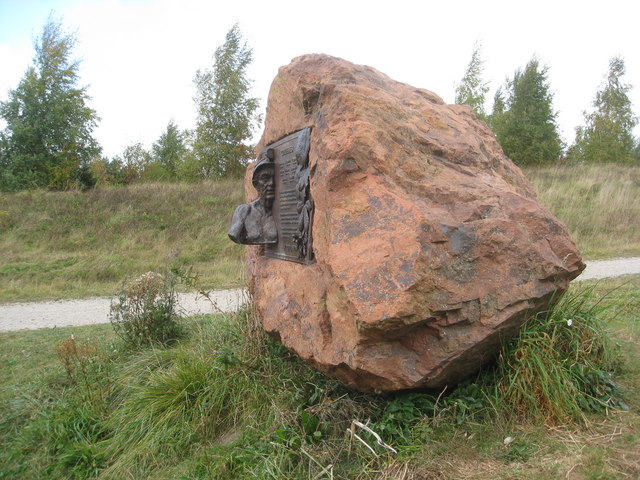
The former colliery site has been restored as Ollerton Pit Woods, part of a wider scheme restoring 14 colliery spoil heaps and 8 former collieries across the district; a commemorative plaque stands near the main entrance. Two memorials near the former colliery entrance recall the site's mining history: a steel bench dedicated to David Gareth Jones, the miner who died picketing here in 1984, and a 2019 statue of a miner by Ray Londale.
No original colliery buildings are known to survive; the site has been restored as woodland (Ollerton Pit Woods).
Related mines
- Thoresby Colliery — Thoresby gained access to the Parkgate seam specifically after the neighbouring Ollerton Colliery closed in 1994.
Nearby mines
- Thoresby Colliery — 1.9 miles (3.0 km) W
- Bilsthorpe Colliery — 3.8 miles (6.2 km) S
- Bevercotes Colliery — 4.5 miles (7.3 km) NE
- Clipstone Colliery — 4.9 miles (7.8 km) SW
- Welbeck Colliery — 5.3 miles (8.6 km) W
Straight-line distance, within 9 miles (15 km). Show on the map.
Culture
- Ollerton Colliery Cricket Club (Sports)
The colliery cricket XI, captained by the Butterley Company's Montague Wright.
Recorded claims
Individual factual claims, each attached to the source(s) that support it below. Where sources disagree, both are kept.
- The Butterley Company sank Ollerton Colliery between 1923 and 1925, building the model village of New Ollerton around it, which reached around 932 houses by the Second World War, with graded housing from Ollerton Hall and Savile Row down to ordinary miners' housing on Forest Road. 1
- The company built a Miners' Institute in 1928 and, uniquely among the Dukeries model villages, a hosiery factory in 1937 specifically to employ miners' wives. 1
- The village's parish church, St Paulinus, billed by Butterley as 'the cathedral of the new coalfield', was originally commissioned from architect Sir Giles Gilbert Scott in 1926, though he was later dismissed and the commission passed to Naylor, Sale and Woore of Derby, consecrated in 1932 and Grade II listed. 1
- A roof fall at Ollerton Colliery on 23 November 1961 trapped four men; two could not be freed until the following morning, by which time they had died, and the other two each had a leg amputated. 2
- Yorkshire miner David Gareth Jones died while picketing at Ollerton Colliery in 1984 during the national miners' strike, one of only a small number of men to die on a picket line during the dispute; a memorial bench near the former colliery entrance commemorates him. 1
- Ollerton Colliery closed in the mid-1990s; the site has since been restored as Ollerton Pit Woods, part of a wider scheme restoring 14 colliery spoil heaps and 8 former collieries across the district. 1,3
Sources
- (primary) Ollerton (Model Villages of the Nottinghamshire Coalfield, Guidebook 9) — Miner2Major Landscape Partnership Scheme (Nottinghamshire County Council)
- (primary) Ollerton Colliery (Accident) (Hansard, 27 November 1961) — UK Parliament, House of Commons (Historic Hansard)
- (secondary) Colliery Villages of Sherwood — Nottinghamshire Historic Environment Record
Record created: 27 August 2026 · Last researched: 27 August 2026