 MineArchive
Newmarket Colliery
| Location | Stanley and Methley, Wakefield, West Yorkshire |
|---|---|
| Commodity | Coal |
| Type | Coal |
| Worked | By 1775 (sunk anew 1837)–1983 |
| Maximum depth | Unknown. |
Overview
A colliery on the Calder near Stanley and Methley, north-east of Wakefield, at work by 1775 and sunk anew in 1837 by the Fentons, later owned by the Charlesworths. Its miners lived at Bottom Boat; six died in an explosion in 1854, and it closed in 1983 as one of the oldest working pits in the country.
History
Newmarket Colliery, near Stanley on the Calder north-east of Wakefield, is the first Wakefield concern of which details survive: it was working by 1775, financed by the Unitarian James Milnes, and sent its coal to staithes on the newly opened canal. A tramway ran from its Spencer and Bye pits down to Bottomboat staith on the Calder at Cringlesworth. The pit was sunk anew in 1837 by the Fentons, the coal kings of the day, and later passed to the Charlesworths; its workings ran as far as Lane Ends under Stanley and were blamed for subsidence at Stanley church. At one time almost every man in Bottom Boat worked there.
The Lofthouse coal at Newmarket was known to give off gas suddenly from the floor and roof. On 11 November 1854 an unusual volume burst up the 'wide bank' in the north-eastern district of the Farm Pit, more than the ventilation could dilute, and fired at the men's naked candles; six were killed. The colliery worked on until 1983, when it closed as one of the oldest working pits in the United Kingdom.
Geology
West Yorkshire Coal Measures: the Lofthouse coal bed, known for sudden outbursts of gas from the floor and roof.
Workings
Several pits, among them the Farm, Spencer and Bye pits; a tramway to Bottomboat staith on the Calder.
Closure
Closed in 1983.
What remains
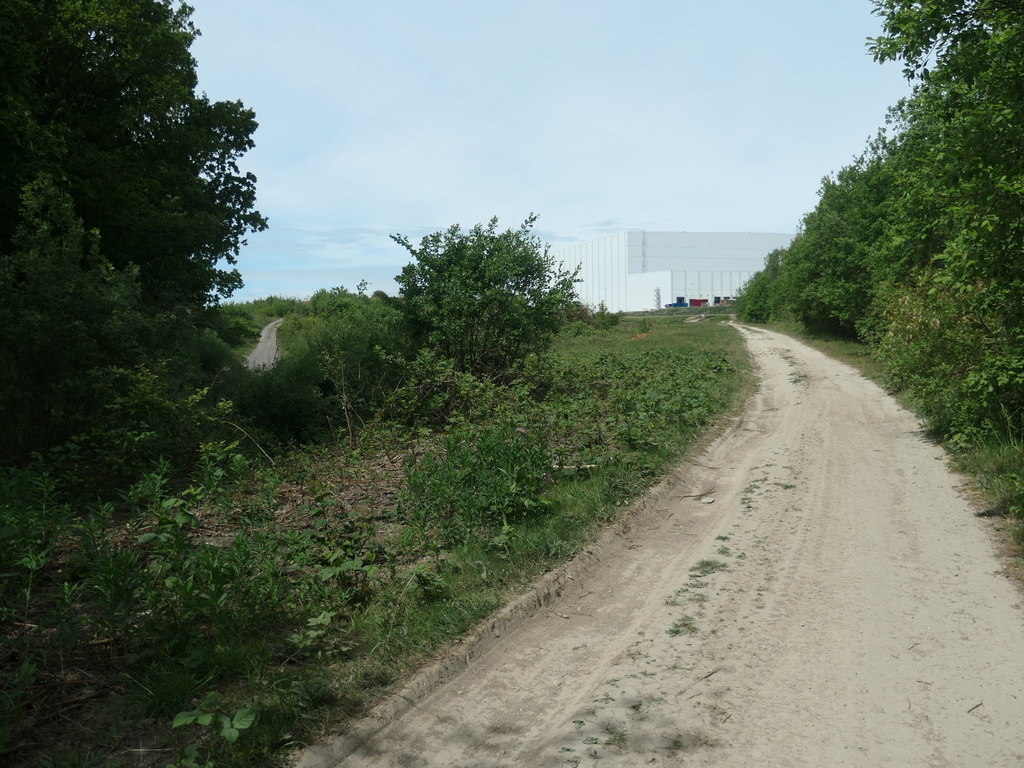
The route of the tramway from the Spencer and Bye pits survives as a track from Newmarket Lane.
Redevelopment
A large cold-store warehouse stands on the colliery site off Newmarket Lane.
Related mines
- Methley Junction Colliery — Both among the pits of the Methley district named on the Methley mining memorial.
- Savile Colliery — Both among the pits of the Methley district named on the Methley mining memorial.
Recorded claims
Individual factual claims, each attached to the source(s) that support it below. Where sources disagree, both are kept.
- Newmarket Colliery was in operation by 1775, financed by James Milnes, and was sunk again in 1837 by the Fentons. 1
- It was later owned by the Charlesworths. 1,2,3
- On 11 November 1854 gas burst up the 'wide bank' of the Farm Pit in the Lofthouse coal and fired at naked candles, killing six. 2,3
- The pit closed in 1983 as one of the oldest working pits in the UK. 1
- Newmarket was one of the former pits of the Methley area. 4
Photographs & further reading
Newmarket's early history, owners, workings and closure.
View sourceThe 1854 explosion in the Farm Pit.
View sourceSources
- (secondary) The History of Coal Mining in Wakefield — On: Yorkshire Magazine
- (secondary) Newmarket Colliery Explosion - Wakefield - 1854 — Northern Mine Research Society
- (primary) Colliery Disaster: Newmarket, 11 November 1854 — Durham Mining Museum
- (secondary) Coal Mining Memorial — Methley Village
Record created: 4 October 2026 · Last researched: 4 October 2026