 MineArchive
Newmarket Colliery explosion, 1854
On 11 November 1854 an unusual outburst of gas from the strata of the Lofthouse bed rose up the 'wide bank' of the Farm Pit at Messrs Charlesworth's Newmarket Colliery, near Wakefield, and fired at the men's naked candles. Six were killed; the inspector found the district getting little more than half the air the manager supposed.
| Date | 11 November 1854 |
|---|---|
| Mine | Newmarket Colliery |
| Region | West Yorkshire |
| Type | Explosion |
| Fatalities | 6 (W. Blackburn, J. Chadwick, R. Chadwick, W. Chadwick, P. Palmer and J. Runder; their ages are not recorded.) |
| Context | During active mining |
Cause
A sudden outburst of gas from the strata of the Lofthouse bed fired at naked candles.
Contributing factors
Too little air reaching the district (3,000 cubic feet a minute against the 5,000 supposed); airways of only thirty square feet; no examination or measurement by the underground steward that day; naked lights in a seam known for sudden outbursts.
What happened
The Lofthouse coal at Newmarket was known to give off large quantities of gas suddenly from strata about two feet above and below the seam. On 11 November 1854 an unusual volume burst up the 'wide bank' in the north-eastern district of the Farm Pit, more than the ventilation could dilute, and the men there were working with naked candles. In the explosion six men were killed: W. Blackburn, J., R. and W. Chadwick, P. Palmer and J. Runder.
The ventilating furnace was attended day and night, and enough air entered the mine as a whole, but it did not reach the district where the explosion happened. The manager, Mr Goodinson, assumed 5,000 cubic feet a minute were passing there, as it was his underground steward's duty to see that the supply never fell below that; the inspector measured 3,000, and found that on the day of the disaster the steward had not visited the north-eastern district or measured the air anywhere in the mine.
Investigation & inquiry
H.M. Inspector found only 3,000 cubic feet of air a minute passing through the district. He recommended enlarging the airways to the district from thirty to forty square feet and those to the bank faces, examining the places daily and measuring the air at least weekly, taking out the bottom coal to lessen the risk of outbursts, and using safety lamps. Messrs Charlesworth assured him that no expense would be spared.
Changes to practice & legislation
The owners undertook to enlarge the airways, examine the workings daily, measure the air weekly, remove the bottom coal and introduce safety lamps, as the inspector recommended.
Recorded claims
Individual factual claims, each attached to the source(s) that support it below. Where sources disagree, both are kept.
- On 11 November 1854 an explosion in the Farm Pit of Messrs Charlesworth's Newmarket Colliery, near Wakefield, killed six men. 1,2
- An unusual volume of gas burst up the 'wide bank' in the north-eastern district of the Lofthouse bed, more than the ventilation could dilute, and fired at the men's naked candles. 1
- After the explosion the inspector found only 3,000 cubic feet of air a minute passing through the district, against the 5,000 the manager believed; the steward had not visited or measured it that day. 1
- The inspector recommended larger airways, daily examinations, weekly air measurements, removal of the bottom coal and the use of safety lamps, and the owners promised to carry them out. 1
Related terminology
Mining terms this disaster is structurally linked to, with the nature of the relationship.
- Coal (contextual relationship)
Named 3 times in this record, first in the narrative: “The Lofthouse coal at Newmarket was known to give off large quantities of gas suddenly…” - Naked Light (contextual relationship)
Named in this record’s contributing factors: “…no examination or measurement by the underground steward that day; naked lights in a seam known for sudden outbursts.” - Outburst (contextual relationship)
Named 4 times in this record, first in the summary: “On 11 November 1854 an unusual outburst of gas from the strata of the Lofthouse bed rose up the 'wide bank'…” - Pithead (contextual relationship)
Named in this record’s investigation: “…to the district from thirty to forty square feet and those to the bank faces, examining the places daily and measuring the air at least…” - Safety Lamp (contextual relationship)
Named twice in this record, first in the investigation: “…out the bottom coal to lessen the risk of outbursts, and using safety lamps. Messrs Charlesworth assured him that no expense would be spared.”
Photographs & further reading
This page doesn't try to reproduce everything — these are the best original sources found for this disaster.
The outburst, the inspector's findings and his recommendations.
View sourceSources
- (secondary) Newmarket Colliery Explosion - Wakefield - 1854 — Northern Mine Research Society
- (primary) Colliery Disaster: Newmarket, 11 November 1854 — Durham Mining Museum
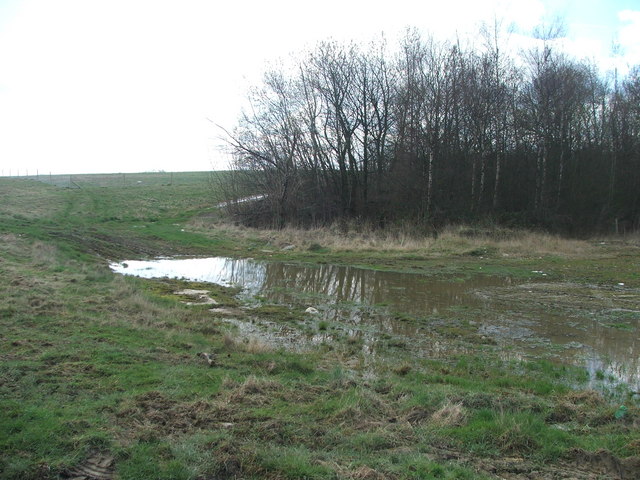
- (observational) Land reclamation, former Newmarket Colliery (Geograph 149758) — Geograph
Record created: 4 October 2026 · Last researched: 4 October 2026