 MineArchive
Newcastle Colliery, Basford
| Also known as | Newcastle Pit, Whitemoor |
|---|---|
| Location | Whitemoor, Basford, north-west Nottingham, Nottinghamshire — 52.9744, -1.1899 (approximate) |
| Commodity | Coal |
| Type | Coal |
| Worked | 1853–1925 |
| Operators | Thomas North (1853–1868), Babbington Coal Company (1868–1925) |
Overview
Thomas North's Newcastle Colliery at Whitemoor, Basford, opened in 1853 beside his mineral railway and named for the Duke of Newcastle from whom he held the coal, and worked by the Babbington Coal Company on the Top Hard to 1925. Over four hundred were employed in 1905 and 1910; its eleven recorded deaths run from a stoker caught in the winding drum in 1857 to a stallman under a weight break in 1915.
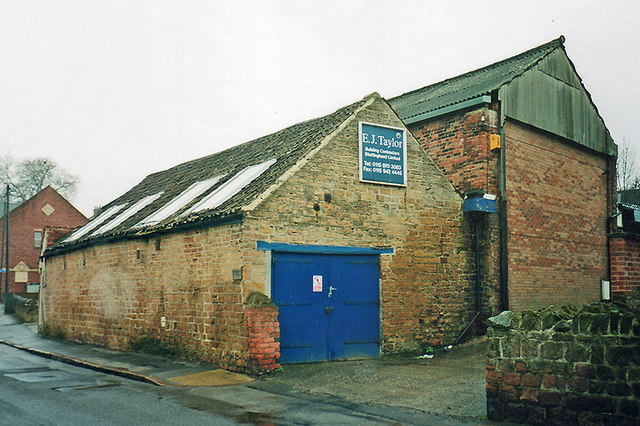
History
Thomas North, the Babbington coalmaster who sank Cinderhill in 1841 to 1843 and built the first steam-worked railway in the district, opened Newcastle Colliery in 1853 alongside the mineral railway at Whitemoor, one of the 9,500 acres of coalfield he held from the Duke of Newcastle by 1856; his initials of that year stand on the cottages of Napoleon Square nearby. By 1861 Cinderhill, Newcastle, Kimberley and Babbington were the main collieries near Nottingham and all his. The inspector John Hedley's reports record the early deaths: a stoker of eighteen entangled in the drum arms of the winding gear in 1857, two men under a fall of roof in January 1861, and further falls in 1863 and 1867. After North's death in 1868 the Babbington Coal Company carried the collieries on, working the Top Hard at Newcastle with George Fowler as manager: 311 employed in 1894, 316 in 1900, 426 in 1905 and 416 in 1910, raising manufacturing, steam and later gas coal. A deputy of 66 was crushed riding between tubs in an eighteen-tub train in 1899, and a stallman was killed by stone from a weight break in November 1915, when 247 were employed. By 1923 the colliery was returned within Cinderhill, and the Durham Mining Museum closes it in 1925; the site was built over as the Melbourne Park estate in the 1970s and 1980s.
Geology
Nottinghamshire coalfield: the Top Hard seam throughout the Lists of Mines.
Geological setting: Sedimentary Beds and Seams (historical documentary reference)
Workings
Shaft colliery on the Top Hard with a main travelling way and tub trains of eighteen by 1899. Employment from the Lists of Mines: 311 in 1894, 181 in 1896, 316 in 1900, 426 in 1905, 416 in 1910, 247 in 1915; returned within Cinderhill in 1923. Depth is not given in the sources read.
Closure
Closed in 1925 according to the museum, having been returned as part of Cinderhill by 1923; the reason is not given in the sources read.
What remains
Built over by the Melbourne Park housing estate between Newcastle Terrace and Melbourne Park in the 1970s and 1980s, according to a search summary not read in full; nothing of the colliery is reported to survive.
None reported in the sources read.
Related mines
- Babbington Colliery — Both Thomas North's pits; Newcastle was returned within Cinderhill (Babbington) by 1923.
- Broxtowe Colliery — Neighbouring Babbington Coal Company pits on the north-west side of Nottingham.
Nearby mines
- Babbington Colliery — 1.7 km NW
- Broxtowe Colliery — 2.2 km W
- Strelley Colliery — 3.3 km W
- Bestwood Colliery — 5.9 km N
- Trowell Moor Colliery — 6.1 km SW
Straight-line distance, within 15 km. Show on the map.
Recorded claims
Individual factual claims, each attached to the source(s) that support it below. Where sources disagree, both are kept.
- Opened in 1853 by Thomas North; the museum closes it in 1925, the 1923 return placing it within Cinderhill. 1,2
- Thomas North, then the Babbington Coal Company with George Fowler as manager in the 1890s. 1,2,3
- 311 employed in 1894, 426 in 1905, 416 in 1910 and 247 in 1915. 2
- The Top Hard throughout. 2
Photographs & further reading
Owners, seams and employment from 1894 to 1923 and eleven named deaths from 1857 to 1915.
View sourceThe life of the Babbington coalmaster who opened Newcastle Colliery in 1853.
View sourceThe suburb's history with North's initials on Napoleon Square and the Babbington company's collieries and brickyards.
View sourceSources
- (secondary) Thomas North (coal owner) — Wikipedia — Wikipedia
- (primary) Newcastle Colliery — Durham Mining Museum — Durham Mining Museum
- (primary) Babbington Coal Co. — Durham Mining Museum company page — Durham Mining Museum
- (secondary) Babbington Colliery — Wikipedia — Wikipedia
- (secondary) Old Nottingham suburbs: then and now, Basford (Mellors, 1914) — Nottinghamshire History — Nottinghamshire History
Record created: 12 September 2026 · Last researched: 12 September 2026