 MineArchive
New Lount Colliery
| Also known as | Lount Colliery (New) |
|---|---|
| Location | Newbold, Coleorton, Leicestershire — 52.7650, -1.4375 (exact) |
| Commodities | Coal, Fireclay |
| Type | Coal |
| Worked | 1924–July 1968 |
| Maximum depth | 151 yards (453 feet) at the No. 2 shaft |
| Operators | Leicestershire Colliery and Pipe Company Ltd (1924–1946), National Coal Board (1947–1968) |
Overview
A deep colliery sunk in 1924 at Newbold, Coleorton, by the Leicestershire Colliery & Pipe Company to win coal left in ground that had been worked for seven centuries; it raised 511,958 tons in 1946, supplied the village with electricity, closed in July 1968 and is now a nature reserve.
History
New Lount Colliery was sunk from March 1924 by the Leicestershire Colliery & Pipe Company Ltd on a site just over a quarter of a mile south of Newbold, in the parish of Coleorton, north-west Leicestershire. It was an odd place for a new colliery, since the ground had been worked for over 700 years, and a former National Coal Board employee called it a mopping-up operation for coal left unworked earlier. Lady Beaumont turned the first turf in 1924. No. 1 shaft, the downcast, was begun in March and finished in late September 1924 at 127 yards; No. 2, the upcast, was begun in May and finished in September. Both were 15 feet across and brick lined. No. 2 was deepened in 1933-34 to the Lower Roaster seam, 151 yards down. Winding engines came from John Wood & Sons of Wigan, an 80 horsepower Sirocco fan ventilated the pit, and electricity, largely bought from the Leicestershire & Warwickshire Electric Supply Company, drove the haulages and pumps; Newbold was among the first villages in England with electric street lighting, and household electricity supplied from the colliery.
Pillar and stall working in the Nether Lount and Upper Roaster seams gave way to longwall between 1930 and 1932, with mechanised cutters from the start. Pithead baths were built in 1930. In December 1932 a coal face struck old workings and two million gallons of water flowed in within two days, all of which the pumps lifted. The company bought the closed Coleorton No. 3 (Bug and Wink) colliery in 1933, and from 1942 bored from the New Lount dip workings into the waterlogged Coleorton workings to drain them. About 1951-52 a surface drift with a trunk belt conveyor replaced winding, and a further drift from the site of Coleorton (New) Colliery followed in 1952-53. In 1946 the colliery raised 511,958 tons of coal and 9,227 tons of clay; in 1952 it had 791 men underground and 165 on the surface.
The National Coal Board took over in 1947. New Lount closed in July 1968, though the shafts were kept open into the 1970s for pumping, and it was the last deep mine in Coleorton parish, ending some 500 years of deep mining there. The site became a local nature reserve in 1995, and in 2017 the Newbold Heritage Group installed a seven-board industrial heritage trail.
Geology
The Middle Lount, Nether Lount and Upper and Lower Roaster seams were worked, with the Slate seam cut in the shaft and fireclay worked beneath the coal. The single Roaster seam splits north of Ravenstone, and at New Lount the Upper Roaster lay 30 yards above the Lower Roaster.
Workings
Two brick-lined shafts 15 feet across, No. 1 (downcast) 127 yards and No. 2 (upcast) 151 yards after deepening, with a surface drift and belt conveyor from about 1951. Pillar and stall working gave way to longwall in 1930-32, and up to 20 grades of coal were produced by the preparation plant.
Closure
The colliery closed in July 1968, and the shafts were kept open until the 1970s for pumping.
What remains
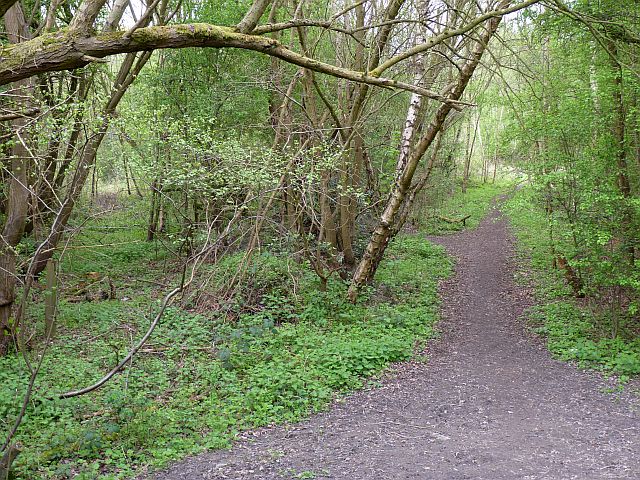
The 19.5-hectare site is New Lount Nature Reserve, a local nature reserve since 1995 with woodland, grassland, ponds and three pools made in 1986; the tarmac of the old sidings remains.
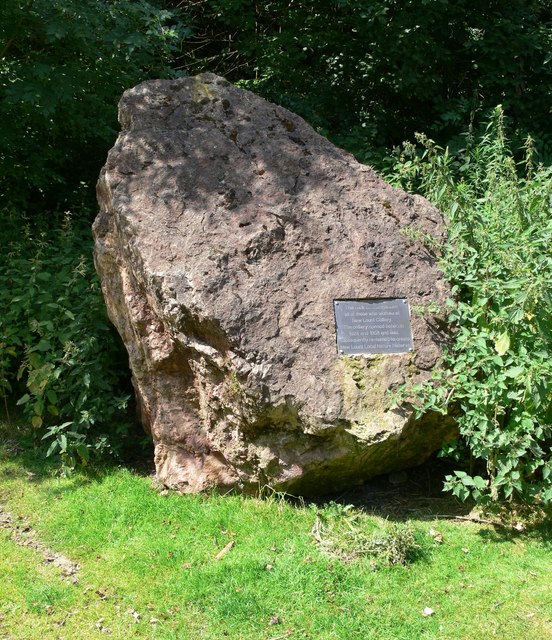
The tarmac of the colliery sidings survives, old colliery roads show under the moss, and a memorial stone to the workers stands in the reserve.
Redevelopment
The site was reclaimed as a nature reserve, now managed by the Coleorton & New Lount Volunteers and Leicestershire County Council.
Related mines
- Bug and Wink Colliery — The Leicestershire Colliery & Pipe Co. bought the closed Coleorton No. 3 colliery in 1933 to work its seams from New Lount, and the National Coal Board's 1952-53 drift from the site gave New Lount a second ventilation circuit and an emergency exit.
Nearby mines
- Bug and Wink Colliery — 1.9 miles (3.0 km) SE
- Califat Coal Mine — 2.2 miles (3.5 km) SE
- Snibston Colliery — 3.5 miles (5.7 km) SE
- Whitwick Colliery — 4.5 miles (7.2 km) SE
- Granville Colliery — 4.7 miles (7.5 km) W, Derbyshire
Straight-line distance, within 9 miles (15 km). Show on the map.
What's uncertain
Points where sources disagree or the record could not be settled; both accounts are kept. All open questions in the archive.
- Pithead baths were built in 1930, apparently the first at any Leicestershire colliery. (uncertain) 1
Recorded claims
Individual factual claims, each attached to the source(s) that support it below. Where sources disagree, both are kept.
- Sinking began in March 1924 just over a quarter of a mile south of Newbold; No. 1 shaft was completed in late September 1924 at 127 yards and No. 2 in September 1924. 1,2
- Lady Beaumont turned the first turf for New Lount Colliery in 1924. 2,3
- No. 2 shaft was deepened from November 1933 to the Lower Roaster seam, 151 yards down, finishing in summer 1934. 1
- In December 1932 a coal face struck old workings and two million gallons of water flowed in within two days, all of which the pit-bottom pumps lifted. 1
- From 1942 the company drained the waterlogged workings of the closed Coleorton Colliery through boreholes drilled from the New Lount Nether Lount dip. 1
- The company bought the closed Coleorton No. 3 (Bug and Wink) colliery in 1933 and worked its seams from New Lount. 2
- The colliery raised 511,958 tons of coal and 9,227 tons of clay in 1946. 1
- In 1952 there were 791 men underground and 165 on the surface. 1
- Pithead baths were built in 1930, apparently the first at any Leicestershire colliery. (uncertain) 1
- Newbold was among the first villages in England with electric street lighting, and household electricity was supplied by the colliery. 3
- The colliery closed in July 1968 and was kept open into the 1970s for pumping. 1,2
- New Lount was the last deep mine in Coleorton parish and its closure ended some 500 years of deep mining there. 4,5
- The site became a local nature reserve in 1995, and a seven-board industrial heritage trail was installed by the Newbold Heritage Group in May 2017. 5,6
- The British Geological Survey catalogues abandonment plans for New Lount Colliery. 7
Photographs & further reading
Shafts, winding engines, ventilation, pumping, working methods, output, workforce and closure, from the Geoff Hayes collection.
View sourceColeorton's pits and their owners, with a section on New Lount Colliery and the 1924 turf-cutting.
View sourceThe nature reserve on the colliery site and a summary of the colliery's history.
View sourceSources
- (secondary) New Lount Colliery (NMRS) — Northern Mine Research Society
- (secondary) Mining in Coleorton (Coleorton Heritage) — Coleorton Heritage
- (secondary) New Lount turf-cutting 1924 (Coleorton Heritage) — Coleorton Heritage
- (secondary) New Lount Nature Reserve (National Forest) — National Forest Company
- (secondary) New Lount Nature Reserve (Leicestershire Country Parks) — Leicestershire County Council
- (secondary) New Lount (Healey Hero: Coal Mining Rescue and Accidents) — Healey Hero
- (primary) BGS / Mining Remediation Authority abandonment plans: NEW LOUNT COLLIERY — British Geological Survey
Record created: 30 September 2026 · Last researched: 30 September 2026