 MineArchive
Bug and Wink Colliery
| Also known as | Coleorton No. 3 Colliery, Checklands Colliery |
|---|---|
| Location | Coleorton, near Coalville, Leicestershire — 52.7433, -1.4111 (approximate) |
| Commodity | Coal |
| Type | Coal |
| Worked | 1875–25 July 1933 |
| Maximum depth | 105 yards in the twin shafts. |
| Operators | G. Checkland & Co. (1875–1933), Leicestershire Colliery and Pipe Company Ltd (1933–?) |
Overview
Coleorton No. 3 Colliery, sunk in 1875 by G. Checkland & Co. and shut in July 1933 with 500 to 600 men on the books, known as the Bug and Wink; William Birch won the Edward Medal there in 1910.
History
Coleorton No. 3 Colliery, known locally as the Bug and Wink or Checklands Colliery, was sunk in 1875 by G. Checkland & Co. at the end of Pitt Lane on Coleorton Moor, on ground already worked by earlier pits. Twin shafts, one downcast and one upcast, went down 105 yards. Little coal remained at first in the Main, Stinking and Nether Lount seams, but in the 1880s workable reserves of Middle Lount and Roaster coal were found and secured the venture. Further reserves of Middle Lount, Nether Lount and Roaster were leased in the 1890s, though the colliery was heavily in debt to the bank and hard to work.
The nickname went through several forms. Canon William Beresford Beaumont, rector of Coleorton from 1864 to 1901, noted in his notebook that the pit was first called the 'Finger and Thumb', perhaps for the diameter of the twin shafts, and later 'Humbug Pit'. It became the Bug n' Wink, which may come from the miners' belief that the owners humbugged and hoodwinked them when working out wages by each butty team's coal. A later rector, A. E. Eager, wrote in 1949 that it was also 'The Bread and Herring' for its poor wages. The company's wagons carried the name Checklands, which gave the third name.
A notice at the pit gate on 25 July 1933 told the men to fetch their tools out the next day, as their terms of service ended at midnight; newspaper reports put the workforce at 500 to 600. The closed colliery was bought by the Leicestershire Colliery & Pipe Co. Ltd, owners of New Lount Colliery, along with leases of some 2,000 acres. They meant to use it as a pumping station, but the shafts collapsed within months and were later filled. In 1952-53 the National Coal Board drove a drift from the old site, graded 1 in 4 and framed in 11 ft by 9 ft steel arches, to give New Lount a second ventilation circuit and an emergency exit. It met the Nether Lount seam and was continued to the Yard seam, and proposals to work 374,868 tons of Yard coal and 349,015 tons of clay from it came to nothing.
On the night shift of 16 December 1910 a fall of roof buried a young man, Charles Marshall of Ashby-de-la-Zouch. William Birch, working with him, kept trying to free him through repeated falls until a fourth buried Marshall completely; it took forty minutes to dig him out and he showed no sign of life. Birch received the Edward Medal of the second class at Buckingham Palace in March 1911 and was met by a crowd of several thousand at Coalville.
Geology
The shafts, 105 yards deep, cut the Main Coal, 5 ft thick, at 183 ft and the Roaster Coal, 2 ft 10 in thick, at 312 ft. The Main, Stinking and Nether Lount seams were worked first, the Middle Lount and Roaster in the 1880s. In the Yard seam, reached by the drift of 1952-53, the coal dips east at 1 in 15 and averages 2 ft 8 in, over a bed of clay 3 ft 3 in thick whose top 16 in suited the pipe works at Newbold.
Workings
Twin shafts, a downcast and an upcast, sunk to 105 yards. The Main, Stinking and Nether Lount seams were worked in the early years, the Middle Lount and Roaster from the 1880s, and the colliery leased more Middle Lount, Nether Lount and Roaster coal in the 1890s. The National Coal Board's drift of 1952-53 ran from the site to the Nether Lount seam and on to the Yard seam.
Closure
The colliery stopped on 25 July 1933, with its workforce of 500 to 600 given notice that day. It was heavily in debt to the bank in the 1890s and hard to work, and the cost of reaching the lower seams once the main coal was worked out is given as the reason it closed in the early 1930s. The Leicestershire Colliery & Pipe Co. bought it in 1932 or 1933 for its leases and as a possible pumping station.
What remains
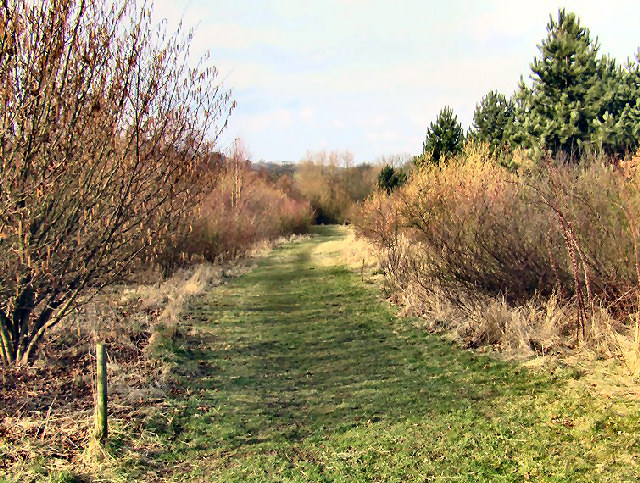
The site is Coleorton Wood, six hectares of mixed woodland planted in the early days of the National Forest.
The shafts collapsed within months of 1933 and were filled; the site is woodland.
Redevelopment
Leicestershire County Council planted the site as part of the National Forest. Coleorton Parish and the Coleorton & New Lount Volunteer Group own and manage it, and it lies on the Mining Heritage Trail.
Related mines
- New Lount Colliery — The Leicestershire Colliery & Pipe Co. bought the closed Coleorton No. 3 colliery in 1933 to work its seams from New Lount, and the National Coal Board's 1952-53 drift from the site gave New Lount a second ventilation circuit and an emergency exit.
Nearby mines
- Califat Coal Mine — 1.0 miles (1.6 km) NE
- Snibston Colliery — 1.7 miles (2.7 km) SE
- New Lount Colliery — 1.9 miles (3.0 km) NW
- Whitwick Colliery — 2.7 miles (4.3 km) SE
- South Leicester Colliery — 3.3 miles (5.4 km) SE
Straight-line distance, within 9 miles (15 km). Show on the map.
Recorded claims
Individual factual claims, each attached to the source(s) that support it below. Where sources disagree, both are kept.
- The colliery was sunk in 1875 by G. Checkland & Co. with twin shafts 105 yards deep. 1,2
- The shafts cut the Main Coal, 5 ft thick, at 183 ft and the Roaster Coal, 2 ft 10 in thick, at 312 ft. 2
- The colliery was called the 'Finger and Thumb', then 'Humbug Pit', then the Bug n' Wink, and was also known as Checklands Colliery and 'The Bread and Herring'. 3,1
- Employment at the colliery ended on 25 July 1933, when 500 to 600 men were employed. 1
- The Leicestershire Colliery & Pipe Co. Ltd, owners of New Lount Colliery, bought the closed colliery in 1932 or 1933; its shafts collapsed within months. 1,2
- In 1952-53 the National Coal Board drove a drift from the site, graded 1 in 4, to give New Lount Colliery a second ventilation circuit and an emergency exit. 2
- The site is now Coleorton Wood, a six-hectare woodland planted in the early days of the National Forest. 3,4,5
- William Birch was awarded the Edward Medal of the second class for trying to free Charles Marshall from a fall of roof at the colliery in December 1910. 3,6
Photographs & further reading
A 1911 newspaper report of William Birch receiving the Edward Medal and his welcome at Coalville.
View sourceThe heritage group's survey of Coleorton's collieries, with the No. 3 pit, the New Lount link, fatalities and William Birch's medal.
View sourceA short article on the Bug n' Wink and the other colourful pit names of the Coleorton area.
View sourceThe society's record of the colliery's shafts, seams, owners and the National Coal Board drift of 1952-53.
View sourceSources
- (secondary) What's in a name — Coleorton Heritage Group
- (secondary) Coleorton Colliery - Northern Mine Research Society — Northern Mine Research Society
- (secondary) Mining in Coleorton (Coleorton Heritage) — Coleorton Heritage
- (secondary) Coleorton Wood — Wikipedia
- (secondary) Mining Heritage Trail, North West Leicestershire — Leicestershire County Council
- (secondary) Heroism in the Coleorton Colliery: brave miner decorated by the King (1911 newspaper report) — Coleorton Heritage Group (reproduced newspaper report)
Record created: 30 September 2026 · Last researched: 1 October 2026