 MineArchive
Snibston Colliery
| Location | Coalville, Leicestershire — 52.7270, -1.3818 (exact) |
|---|---|
| Commodity | Coal |
| Type | Coal |
| Worked | 1831-32 (sinking)–1983 (production) |
| Operators | George and Robert Stephenson (1832–?) |
Overview
A Leicestershire colliery sunk by the celebrated railway engineers George and Robert Stephenson, whose name gave rise to the town of Coalville and whose colliery railway was one of the earliest built anywhere in Britain.
History
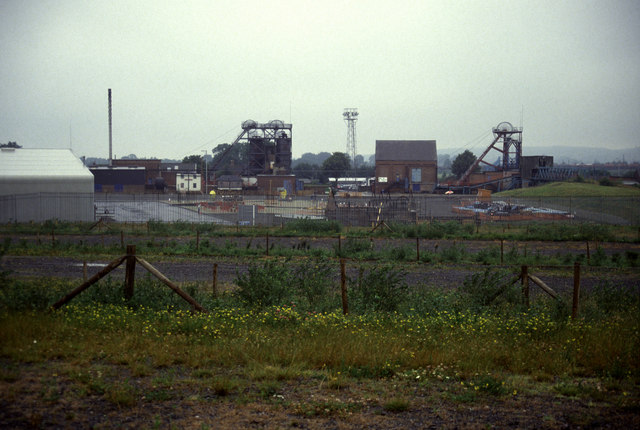
Snibston was one of three collieries sunk in the 1820s and 1830s that between them created the town of Coalville in north-west Leicestershire, taking its own name directly from the mine. The colliery was first developed in 1831-32 by the celebrated railway engineers George and Robert Stephenson, working in partnership with Joseph Sanders and Sir Joshua Warmsley, and produced coal continuously from 1833. Robert Stephenson also built the colliery's own railway, constructed between 1833 and 1836 to connect Snibston to the Leicester and Swannington Railway, making it one of the earliest railways built anywhere in Britain.
The colliery was developed incrementally over the following century and a half: a fourth shaft, later named the No.3 Stephenson Shaft, was sunk during the First World War to relieve a winding and surface-handling bottleneck that had been limiting output; the wooden headgear of No.1 shaft was replaced with steel in 1942; and, following the 1947 nationalisation of the coal industry, the 1950s brought an explosives store, power house, canteen and pithead baths. A further modernisation in the 1960s and 1970s replaced steam winding with electric motors and added a coal preparation plant and small-gauge rail system; from 1961 Snibston became the hub of a group of four linked underground mines, their combined output handled at its own preparation plant, and in 1976 a new fan and fanhouse for No.1 pit pioneered a solution to a noise problem that had affected coal mining generally.
Snibston's own coal production ended in December 1983, though its preparation plant kept processing coal from the other linked mines until the wider site closed in 1986, bringing to an end a working life of a century and a half. Leicestershire County Council bought the site to preserve its most important buildings, and in 1992 opened Snibston Discovery Museum, a major interactive museum of science and working life built around the preserved colliery structures. The museum closed and was largely demolished in 2015 following council funding cuts; the colliery's scheduled core and three further listed buildings survive, and volunteer-led colliery tours, run by the Snibston Heritage Trust since 2022, continue on part of the site.
Geology
Three original shafts were sunk through around 157 feet of water-bearing Triassic rocks, held back with cast-iron tubbing — among the earliest use of the technique in any colliery — then through 22 feet of igneous greenstone resting on the Coal Measures proper, reaching the Middle Lount seam at a depth of 195 metres. Seams worked over the colliery's life included the Roaster (until 1885), Upper Main, Yard, Middle Lount, Nether Lount, Smoile, New Main and Lower Main.
Workings
Coal was raised via shafts sunk by George and Robert Stephenson, working in partnership with Joseph Sanders and Sir Joshua Warmsley; a fourth shaft, sunk during the First World War and later named the No.3 Stephenson Shaft, was added specifically to increase winding capacity, which had been limiting the mine's output. Snibston's own railway, connecting it to the Leicester and Swannington Railway, was one of Britain's earliest, built by Robert Stephenson between 1833 and 1836. From 1961 the colliery became the hub of a group of four mines linked underground, with coal from all four handled at Snibston's own coal preparation plant; a 1976 fan and fanhouse built for No.1 pit pioneered a technical solution to excessive fan and motor noise that had affected coal mining generally.
Closure
Snibston's own coal production ended in December 1983, but its drift and coal preparation plant continued handling coal from the three other, linked mines in its group until the wider site finally closed in 1986; closure followed the exhaustion of viable reserves, negotiated between the Leicester Area NUM and the NCB's South Midlands Area, with Asfordby Colliery expected to replace the lost production capacity.
What remains
Scheduled as an Ancient Monument in 1999, Snibston is one of only four English colliery sites recognised as surviving in near-complete form, representing the industry's development from the late 19th century to its mid-20th-century peak; individually rare surviving features include a double-decker cage, a creeper (small-gauge rail) system and a tandem headgear thought to be one of only two surviving in the country. The Grade II listed Powder Magazine, Locomotive Shed and Offices, Lamp Room and Medical Centre building survive alongside the scheduled core. Snibston Discovery Museum, built around the preserved colliery from 1992, closed in July 2015 after Leicestershire County Council said it could not fund around £900,000 a year in running costs plus an estimated £2.2 million in repairs; much of the surrounding land has since been developed, mainly for housing, though the Snibston Heritage Trust resumed volunteer-led guided tours of the surviving structures in 2022.
The protected historic headstocks and three further listed buildings from the colliery survive, along with the route of Robert Stephenson's early colliery railway.
Nearby mines
- Whitwick Colliery — 1.1 miles (1.7 km) E
- Bug and Wink Colliery — 1.7 miles (2.7 km) NW
- Califat Coal Mine — 1.7 miles (2.7 km) N
- South Leicester Colliery — 1.7 miles (2.7 km) SE
- Ibstock Colliery — 2.2 miles (3.5 km) S
Straight-line distance, within 9 miles (15 km). Show on the map.
Recorded claims
Individual factual claims, each attached to the source(s) that support it below. Where sources disagree, both are kept.
- Snibston Colliery was sunk by George and Robert Stephenson and produced coal continuously from 1833 to 1983. 1,2
- Robert Stephenson built Snibston's own colliery railway between 1833 and 1836 to connect it to the Leicester and Swannington Railway, one of the earliest railways built anywhere in Britain. 1
- Leicestershire County Council bought the site on closure and opened Snibston Discovery Museum in 1992 around the preserved colliery buildings; the museum closed and was largely demolished in 2015 following council funding cuts, though the listed headstocks and three other buildings survive. 2
- Snibston Colliery was first developed in 1831-32 by George and Robert Stephenson, working in partnership with Joseph Sanders and Sir Joshua Warmsley, through three original shafts. 3
- The original shafts were sunk through around 157 feet of water-bearing Triassic rocks, held back with cast-iron tubbing among the earliest such use in any colliery, then through 22 feet of igneous greenstone to reach the Middle Lount seam at 195 metres depth. 4
- A fourth shaft was sunk during the First World War to relieve a winding bottleneck; No.1 shaft's wooden headgear was replaced with steel in 1942; and, after 1947 nationalisation, the 1950s brought an explosives store, power house, canteen and pithead baths, followed by a 1960s-70s modernisation to electric winding and a coal preparation plant. 3
- From 1961 Snibston became the hub of a group of four underground mines linked below ground, their coal all handled at Snibston's own preparation plant; a new fan and fanhouse built for No.1 pit in 1976 pioneered a solution to a fan and motor noise problem that had affected coal mining generally. 3
- Snibston's own coal production ended in December 1983, but its drift and coal preparation plant continued processing coal from the other linked mines until the wider site's final closure in 1986. 3,4
- Scheduled as an Ancient Monument in 1999, Snibston is one of only four English colliery sites recognised as surviving in near-complete form, with individually rare features including a double-decker cage, a creeper rail system and a tandem headgear thought to be one of only two surviving in the country. 3
- Snibston Discovery Museum closed in July 2015 after the county council said it could not fund around £900,000 a year in running costs plus an estimated £2.2 million in repairs; much of the surrounding land has since been developed, mainly for housing. 3,5
Sources
- (secondary) A brief history lesson on Snibston Colliery — Wildgoose Education
- (secondary) Snibston — Wikishire
- (primary) Snibston Colliery, Non Civil Parish — Historic England (Scheduled Monument listing 1018472)
- (secondary) Snibston Colliery — Mining Heritage (National Coal Mining Museum)
- (secondary) Snibston Colliery: A Mine-craft the Prequel project case-study — Mining Heritage (National Coal Mining Museum)
Record created: 21 August 2026 · Last researched: 27 August 2026