 MineArchive
Navigation Colliery
| Also known as | Crumlin Navigation Colliery |
|---|---|
| Location | Crumlin, Caerphilly County Borough, Caerphilly — 51.6823, -3.1425 (exact) |
| Commodity | Coal |
| Type | Coal |
| Worked | 1907 (sinking)–1967 |
| Maximum depth | Unknown. |
| Operators | Partridge, Jones & Co. (1907–?) |
Overview
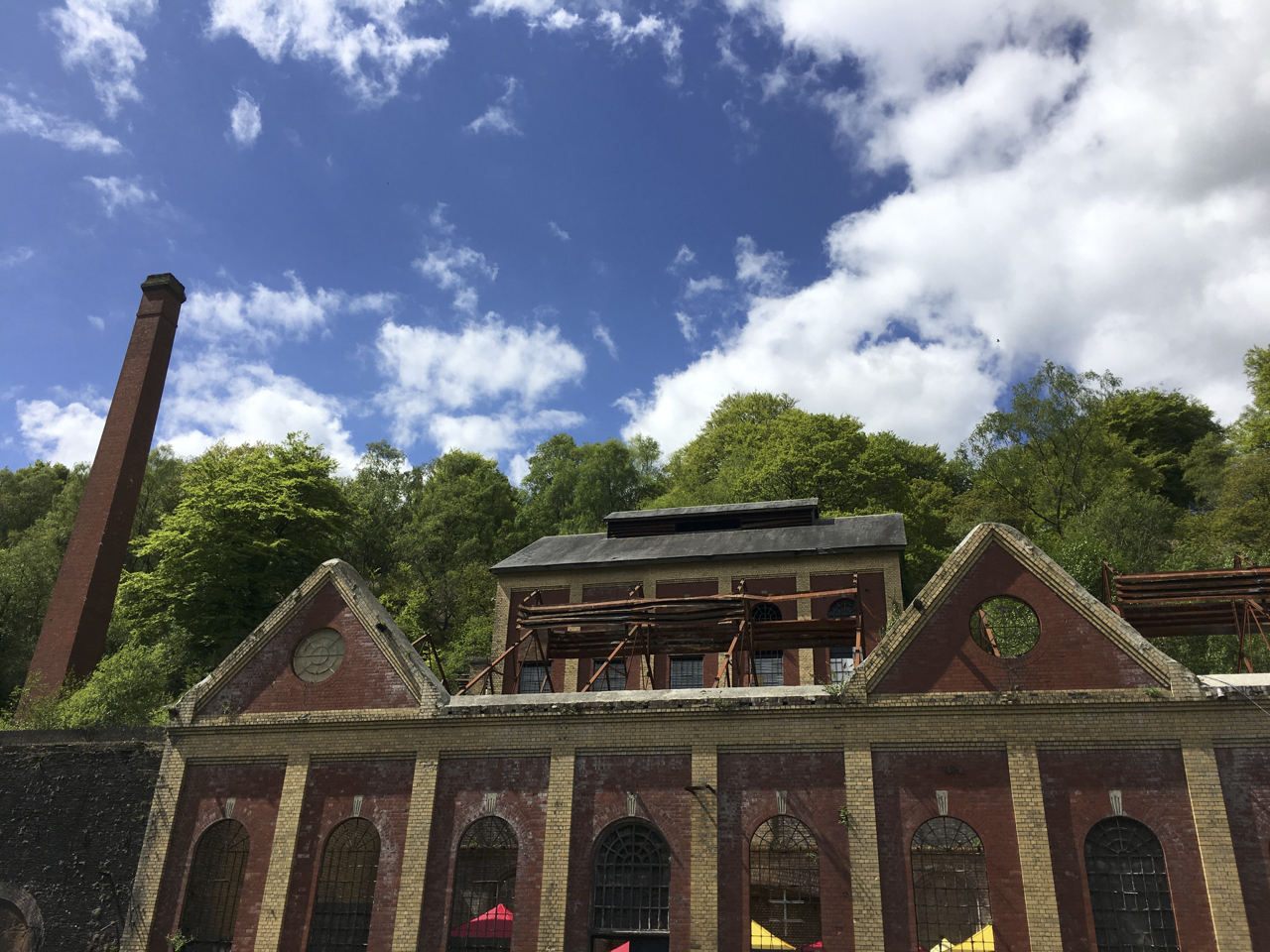
Navigation Colliery was a coal mine at Crumlin in the Ebbw valley, sunk 1907-11 and closed in 1967, whose surviving buildings -- thirteen of them listed, five at Grade II* -- are considered by the Royal Commission on the Ancient and Historical Monuments of Wales to be the best-preserved colliery complex in South Wales. It is a distinct site from Deep Navigation Colliery at Treharris, some 20 kilometres to the west, despite the shared name.
History
Navigation Colliery was sunk by Partridge, Jones & Co. between 1907 and 1911 at Crumlin, in the Ebbw River valley, close to the famous Crumlin Viaduct. By its peak the colliery was raising over 145,000 tonnes of coal a year with a workforce of more than 700 men, and in 1933 pithead baths were added, able to serve 800 miners at a time. Two winding engines served the north and south shafts, both built by Markham and Co. of Chesterfield in 1908 but to different designs -- the North Shaft engine used more modern features (a trunk frame, drop valve inlet, Corliss exhaust valves), while the South Shaft engine retained older technology (Cornish slide valves, four-bar crossheads). Ventilation was provided by a 500-horsepower triple-expansion fan engine built by Walker Brothers of Wigan, driving a 24-foot fan via rope drive and fitted with Corliss valves and a 16-foot flywheel -- a set of engines significant enough that the noted industrial photographer George Watkins recorded them in 1967 for his survey of stationary steam engines in Wales, Cheshire and Shropshire, the same year the colliery closed. Coal winding ended in 1967, but the surviving surface buildings -- engine houses, the chimney, the powerhouse, baths, offices, workshops and more -- were left largely intact rather than demolished, and the Royal Commission on the Ancient and Historical Monuments of Wales has assessed the result as the best-preserved colliery complex anywhere in South Wales. Thirteen structures are individually listed: five at Grade II* (the chimney, fan house, and the north and south winding engine houses and power/pump house) and eight at Grade II (baths, electrical house, offices, workshops, lamp room, heapstead and revetment walls).
Geology
Coal of the South Wales field; the seams worked are not recorded.
Workings
Two shafts, north and south, each with its own Markham and Co. winding engine of 1908; ventilation was provided by a 500-horsepower Walker Brothers triple-expansion fan engine.
Closure
No closing date or reason is recorded for the colliery itself.
What remains
Derelict but structurally largely intact; assessed by the Royal Commission on the Ancient and Historical Monuments of Wales as the best-preserved colliery complex in South Wales. Thirteen structures are individually listed (five Grade II*, eight Grade II). Storm Dennis in 2020 damaged an underground culvert on the site, and securing funding for further conservation remains an ongoing challenge.
Chimney, fan house, north and south winding engine houses, power/pump house (all Grade II*); pithead baths, electrical house, offices, workshops, lamp room, heapstead and revetment walls (all Grade II).
Redevelopment
The charitable trust Glofa Navigation Cyf manages the site and is pursuing community-led redevelopment; the fan engine itself was for a time preserved and displayed at Cardiff Industrial Museum before that museum's closure.
Related mines
- Deep Navigation Colliery — Two distinct South Wales collieries sharing the same name (Treharris and Crumlin, 20km apart) -- explicitly disambiguated in both records to prevent confusion.
Nearby mines
- Kendon Colliery — 0.6 miles (1.0 km) W
- Millbrook Colliery — 0.6 miles (1.0 km) W
- Llanhilleth Colliery — 1.1 miles (1.7 km) NE, Blaenau Gwent
- Twyn Gwyn Colliery — 1.2 miles (2.0 km) SW
- Cwmdows Colliery — 1.4 miles (2.3 km) SW
Straight-line distance, within 9 miles (15 km). Show on the map.
Recorded claims
Individual factual claims, each attached to the source(s) that support it below. Where sources disagree, both are kept.
- The Royal Commission on the Ancient and Historical Monuments of Wales considers Navigation Colliery to be the best-preserved colliery complex in South Wales; thirteen of its structures are individually listed, five at Grade II* and eight at Grade II. 1
- The colliery's two winding engines, built by Markham and Co. of Chesterfield in 1908, used different designs for the north and south shafts, and its 500-horsepower ventilating fan engine by Walker Brothers of Wigan was significant enough to be photographed by George Watkins in 1967 for his survey of stationary steam engines. 2
- Storm Dennis in 2020 damaged an underground culvert on the site; the charitable trust Glofa Navigation Cyf manages the site and continues to seek funding for its conservation and community redevelopment. 1
- A March 2022 observational report found most surface buildings still accessible behind ineffective fencing, the bath house in poor condition with significant decay, the engine houses reduced to little more than shells, and hydrogen sulphide gas present in surviving underground airways near the fan house. 3
Photographs & further reading
The NMRS's own record for the colliery, part of its wider South Wales coalfield coverage.
View sourceSources
- (secondary) Navigation Colliery, Crumlin — Wikipedia
- (secondary) Crumlin Navigation Colliery — Grace's Guide
- (observational) Crumlin Navigation Colliery, Crumlin, South Wales, March 2022 — 28DaysLater.co.uk
Record created: 1 September 2026 · Last researched: 1 September 2026