 MineArchive
Maypole Colliery
| Location | Abram, near Wigan, Lancashire — 53.5110, -2.5950 (exact) |
|---|---|
| Commodity | Coal |
| Type | Coal |
| Worked | 1895–June 1959 |
| Operators | Moss Hall Coal Company (1895–1930), Pearson and Knowles Coal and Iron Company (1907–?), Wigan Coal Corporation Ltd (1930–1946), National Coal Board (1947–1959) |
Overview
Wigan's worst mining disaster happened here — an explosion that killed 76 men and whose last victim was not brought to the surface until nine years afterwards.
History
Maypole Colliery was sunk at Abram, just south-west of Wigan, opening in 1895 and reaching full production by 1898 under the Moss Hall Coal Company, which also owned several other collieries in the district. It became, by 1908, Wigan's worst mining disaster site when an explosion in the Four Feet seam killed 76 men on the night shift of 18 August that year. The colliery reopened afterwards. Pearson and Knowles took a controlling interest in the Moss Hall company in 1907; the Wigan Coal Corporation held Maypole from 1930 and the National Coal Board from 1947. Both shafts, sunk from May 1895 to 623 and 590 yards, were deepened from 1938 to 892 and 887 yards, and the pit went on working the Ince Seven Feet, Binn, Ince Six Feet, Bickershaw Six Feet and Arley seams until it closed in June 1959.
Geology
Maypole worked the Lancashire Coalfield's Four Feet seam, part of the Wigan district's Carboniferous coal measures.
Workings
Underground haulage roadways and coal faces served by a headgear and winding plant at the surface, badly damaged in the 1908 explosion along with the colliery's fan house, the structure responsible for ventilating the whole mine.
Closure
Maypole closed in June 1959 under the National Coal Board, after its shafts had been deepened from 1938 to work the Ince and Arley seams.
What remains
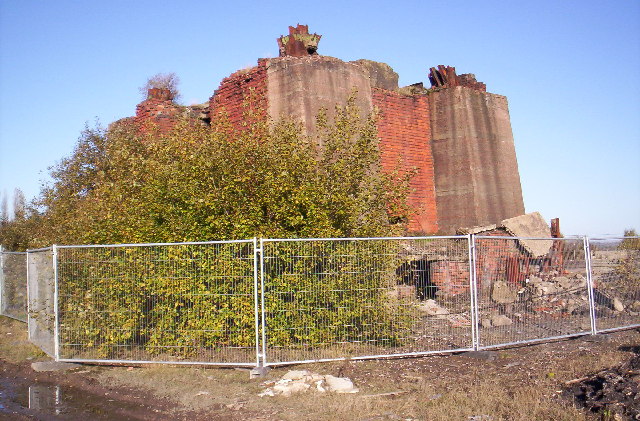
The colliery site has been built over by housing. A section of the original pithead winding gear survives as a preserved feature, and a memorial to the 1908 disaster stands in the churchyard of St John the Evangelist, Abram, rededicated on the centenary of the disaster in 2008.
Preserved remnants of the pithead winding gear, and the 1908 disaster memorial in Abram churchyard.
Redevelopment
Housing now covers the former colliery site.
Related mines
- Low Hall Colliery — Both sunk by the Moss Hall Coal Company at Platt Bridge and Abram, and both threatened by old workings around Ince.
- Wigan Junction Colliery — Connected underground by a tunnel and both subsidiaries of Pearson and Knowles; Wigan Junction's rescuers reached Maypole survivors through it in 1908.
Nearby mines
- Low Hall Colliery — 0.5 miles (0.8 km) N, Greater Manchester
- Wigan Junction Colliery — 0.6 miles (0.9 km) E, Greater Manchester
- Bamfurlong Colliery — 0.6 miles (1.0 km) W, Greater Manchester
- Abram Colliery — 0.9 miles (1.5 km) E, Greater Manchester
- Ince Moss Colliery — 1.4 miles (2.3 km) NW, Greater Manchester
Straight-line distance, within 9 miles (15 km). Show on the map.
Disasters & major incidents
-
Maypole Colliery explosion, 1908
18 August 1908 · Explosion · 76 fatalities
At ten past five in the evening of 18 August 1908, an explosion of firedamp and coal dust tore through the Four Feet seam at Maypole Colliery, Abram, killing 76 men — Wigan's worst mining disaster. The blast wrecked the pithead winding gear and the fan house that ventilated the whole mine, and it took until 1917, nine years later, to recover the last body.
Recorded claims
Individual factual claims, each attached to the source(s) that support it below. Where sources disagree, both are kept.
- Maypole Colliery was sunk at Abram, opening in 1895 and reaching full production by 1898 under the Moss Hall Coal Company. 1
- The site has been built over by housing; a section of the original pithead winding gear is preserved, and a memorial to the 1908 disaster stands in Abram churchyard. 2
- Sinking of the Maypole shafts began in May 1895; No. 1 pit went to 623 yards and No. 2 to 590, and both were deepened from 1938, to 892 and 887 yards. 1
- Pearson and Knowles took a controlling interest in the Moss Hall Coal Company in 1907; the Wigan Coal Corporation held Maypole from 1930 to 1946 and the National Coal Board from 1947 until the colliery closed in June 1959, when it was working the Ince Seven Feet, Binn, Ince Six Feet, Bickershaw Six Feet and Arley seams. 1
Sources
- (primary) Maypole Colliery — Northern Mine Research Society — Northern Mine Research Society
- (secondary) Maypole Colliery disaster — Wikipedia
Record created: 24 August 2026 · Last researched: 24 September 2026