 MineArchive
Maypole Colliery explosion, 1908
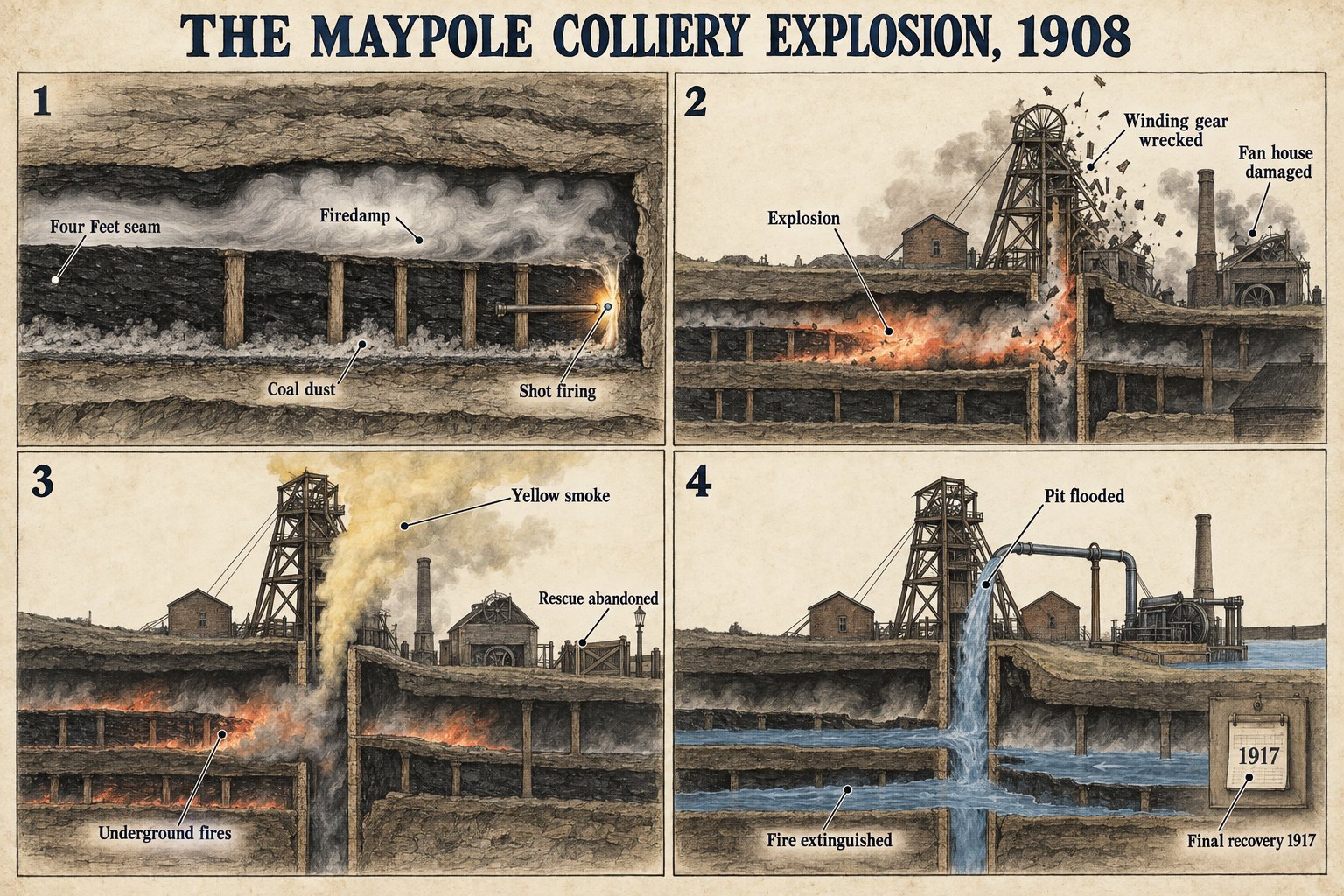
At ten past five in the evening of 18 August 1908, an explosion of firedamp and coal dust tore through the Four Feet seam at Maypole Colliery, Abram, killing 76 men — Wigan's worst mining disaster. The blast wrecked the pithead winding gear and the fan house that ventilated the whole mine, and it took until 1917, nine years later, to recover the last body.
| Date | 18 August 1908 |
|---|---|
| Mine | Maypole Colliery |
| Region | Lancashire |
| Primary type | Explosion |
| Associated types | Rescue |
| Fatalities | 76 (Seventy-six men were killed, mostly shot-firers and maintenance workers underground on the night shift; individual names have not been catalogued.) |
| Context | During active mining (An explosion on the night shift, in a mine the owners maintained was free of gas.) |
Cause
An explosion of firedamp and coal dust, apparently ignited by permitted explosives used in shot-firing.
What happened
The explosion struck at 5:10pm as colliery manager Arthur Rushton reported hearing a rumble and seeing a cloud of dust rise from the pit shaft. Yellow smoke poured from No. 1 shaft for hours afterwards. General manager John Knowles led the immediate rescue effort, but after two days underground fires broke out and rescue attempts had to be abandoned; the pit was deliberately flooded to extinguish the fires, sealing many of the dead underground. Only seven bodies were recovered quickly. Most of the remaining victims were not brought to the surface until November the following year, and the very last body was not recovered until 1917, nine years after the disaster.
Investigation & inquiry
The inquest concluded in July 1909 and returned verdicts of accidental death on all victims. The colliery's owners maintained that no dangerous accumulation of gas had been present, but the coroner found that firedamp and coal dust had caused the explosion regardless.
Memorials & commemoration
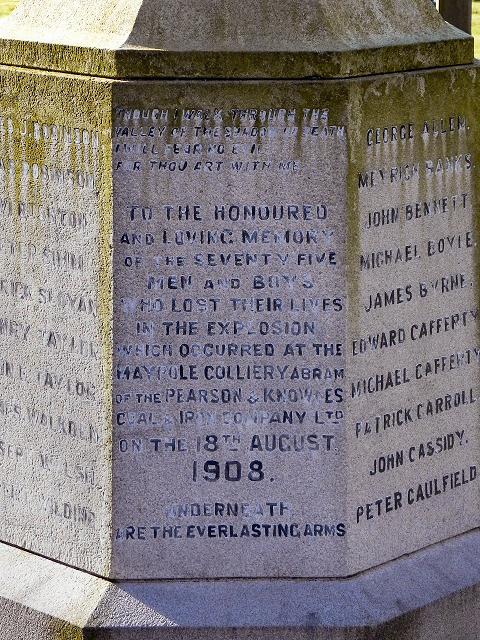
A memorial to the dead stands in the churchyard of St John the Evangelist, Abram, where most of the victims were buried; it was rededicated on the centenary of the disaster in 2008. King Edward VII sent a message of condolence at the time.
Recorded claims
Individual factual claims, each attached to the source(s) that support it below. Where sources disagree, both are kept.
- An explosion of firedamp and coal dust struck the Four Feet seam at 5:10pm on 18 August 1908, killing 76 men. 1,2
- Rescue efforts were abandoned after two days when underground fires broke out, and the pit was deliberately flooded to extinguish them; only seven bodies were recovered quickly, most of the rest by November 1909, and the last not until 1917. 1
- The July 1909 inquest returned verdicts of accidental death, the coroner finding firedamp and coal dust to blame despite the colliery owners' claim that no gas had been present. 1
Related terminology
Mining terms this disaster is structurally linked to, with the nature of the relationship.
- Coal (contextual relationship)
Firedamp and coal dust together tore through the Four Feet seam and killed 76 men — Wigan's worst mining disaster. - Fan House (contextual relationship)
Named in this record’s summary: “…mining disaster. The blast wrecked the pithead winding gear and the fan house that ventilated the whole mine, and it took until 1917, nine years…” - Firedamp (contextual relationship)
The ignition was of firedamp and coal dust, set off by permitted explosives during shot-firing in the Four Feet seam. - Pithead (contextual relationship)
Named in this record’s summary: “…76 men — Wigan's worst mining disaster. The blast wrecked the pithead winding gear and the fan house that ventilated the whole mine, and…” - Shot-firing (contextual relationship)
Shot-firing with permitted explosives is what appears to have lit the firedamp and coal dust — the practice at the centre of the explosion's cause.
Sources
- (secondary) Maypole Colliery disaster — Wikipedia
- (primary) Maypole Colliery Explosion, Abram, 1908 — Northern Mine Research Society
Record created: 24 August 2026 · Last researched: 24 August 2026