 MineArchive
Mansfield Colliery
| Location | Crown Farm, Forest Town, Mansfield, Nottinghamshire — 53.1480, -1.1485 (exact) |
|---|---|
| Commodity | Coal |
| Type | Coal |
| Worked | 1904–early 1988 |
| Maximum depth | 585 yards. |
| Operators | Bolsover Colliery Company (1904–1947), National Coal Board (1947–1988) |
Overview
The Bolsover Colliery Company's pit at Crown Farm east of Mansfield, sunk in 1904-5 to 585 yards and known to the men as Crownie. It brought two and a half thousand workers into a district that had none, and the company built them a village, Forest Town, with its avenues of cottages, an institute and a drill hall. The pit worked the Top Hard and later the High Hazles and Deep Soft, reached a million tonnes a year at its height, and closed in early 1988; the village it created is now part of Mansfield.
History
The Bolsover Colliery Company was founded in 1889 by Emerson Muschamp Bainbridge, a Northumbrian mine owner who took a lease from the Duke of Portland for land at Bolsover. It expanded east into the concealed Nottinghamshire coalfield, securing a lease at Mansfield and sinking the colliery in 1904-5 to 585 yards, at a site by Crown Farm from which the pit took its nickname, Crownie. Sinking is the reason the 1905 return shows 288 people at the colliery with only 127 of them underground; by 1910 there were 2,451, of whom 1,963 worked below, and the figure stayed above two thousand until the 1920s, peaking at 2,861 in 1923. The seam worked throughout that period was the Top Hard, the best in the coalfield.
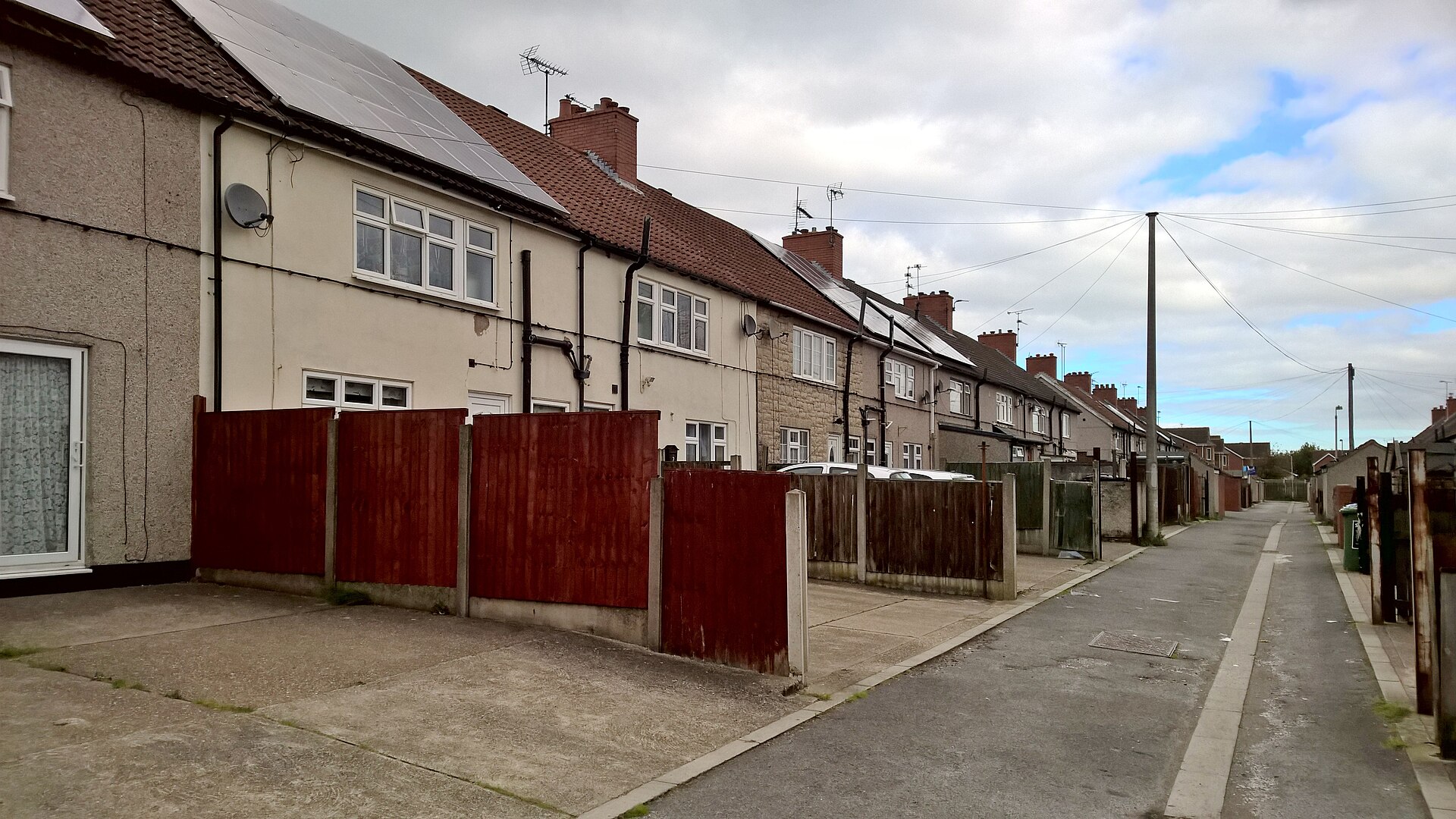
A colliery on that scale in open country needed a village, and the company built one. Forest Town's oldest part, the Avenues, is a grid of about 128 cottage-style houses between First and Fourth Avenue designed by Percy Bond Houfton, with front and back gardens and gables, pantiles and dog-toothed lintels for variety, and a rear pan closet but no bathroom. The Bolsover company added an institute in 1908, with tennis courts and laid-out gardens, and a drill hall in 1909 for the Boys' Brigade and Girls' Brigade and for village meetings; the first was rebuilt in the 1970s as Forest Town Welfare and the second survives as Kingsway Hall. By 1933 the company's six collieries, Bolsover, Clipstone, Creswell, Mansfield, Rufford and Thoresby, employed 9,369 men between them and raised four and a half million tons a year from the Top Hard, Waterloo and High Hazel seams.
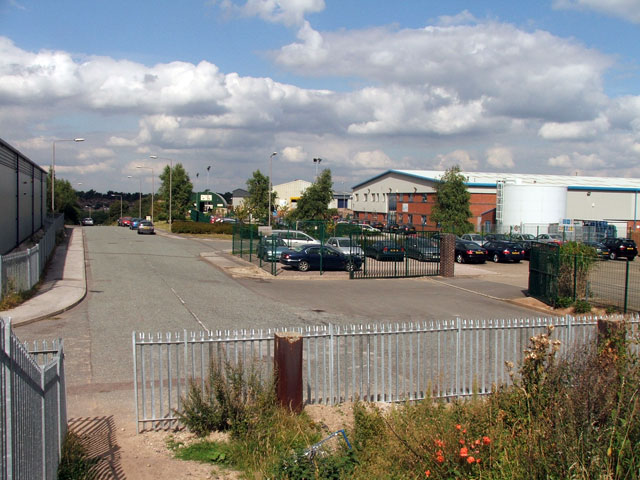
Employment at Mansfield fell to about 1,400 through the 1930s and stood at 1,484 at nationalisation in 1947, when the pit raised 465,650 tons of gas, household and manufacturing coal. Under the National Coal Board a million pounds was spent reorganising it, and by 1967 1,500 men were producing more than 800,000 tons a year from the High Hazles and Deep Soft; at its height the colliery is credited with a million tonnes a year and 2,600 men. It closed in early 1988 after more than eighty years, and the site was gradually given over to industrial units. The coal is not entirely done with: a fabric factory built nearby in the 1990s fires its boilers on methane drawn from the old workings four hundred metres below.
Geology
The colliery worked the concealed part of the Nottinghamshire coalfield, where the Coal Measures lie buried beneath later rocks and have to be reached by deep shafts rather than outcrop workings; 585 yards of sinking was the price of reaching the Top Hard here. That seam carried the pit for its first half-century, after which it turned to the High Hazles and Deep Soft. Methane still rises from the abandoned workings four hundred metres down and is burned by a factory above them.
Geological setting: Concealed Coalfields (historical documentary reference), Sedimentary Beds and Seams (well documented example)
Workings
Deep shafts of 1904-5 to 585 yards, worked on the Top Hard until the seam was exhausted and then on the High Hazles and Deep Soft after a reorganisation costing about a million pounds in the 1960s. The inspectors' accounts of fatal accidents give a picture of the pit at work: horse and pony haulage with sets of tubs on gate roads, a partly covered sump at the shaft bottom, gateside packs built against a collapsing waste, screens on the surface and a two-deck cage signalled from both decks.
Closure
Closed in early 1988 after more than eighty years, and the site was gradually redeveloped for manufacturing on an industrial estate. Local accounts date the closure to March 1988 and say the men were given very short notice of it; the local history society gives early 1988.
What remains
Cleared and redeveloped. The colliery site now carries industrial units off Crown Farm Way, and the housing the company built at Forest Town, the Avenues, still stands and is lived in. A nearby factory burns methane drawn from the old workings beneath it.
None of the colliery. The company's own buildings in the village survive in altered form: the drill hall of 1909 as Kingsway Hall, and the institute site as Forest Town Welfare after rebuilding in the 1970s.
Redevelopment
Industrial estate off Crown Farm Way; the colliery village remains in residential use.
Nearby mines
- Rufford Colliery — 1.8 miles (3.0 km) SE
- Clipstone Colliery — 1.9 miles (3.1 km) NE
- Sherwood Colliery — 2.1 miles (3.4 km) W
- Blidworth Colliery — 3.3 miles (5.4 km) SE
- Shirebrook Colliery — 4.1 miles (6.7 km) NW, Derbyshire
Straight-line distance, within 9 miles (15 km). Show on the map.
Recorded claims
Individual factual claims, each attached to the source(s) that support it below. Where sources disagree, both are kept.
- The Bolsover Colliery Company sank the colliery in 1904-5; it is 585 yards deep. 1
- The pit is often called Crown Farm Colliery, or Crownie, from the farm of that name beside it, and was sunk in 1904. 2,3
- The Bolsover Colliery Company was founded in 1889 by Emerson Muschamp Bainbridge, who secured a lease from the Duke of Portland for land at Bolsover. 4
- Employment rose from 288 during sinking in 1905 to 2,451 in 1910 and 2,861 in 1923, fell to about 1,400 in the 1930s and stood at 1,484 in 1947, when the pit raised 465,650 tons. 1
- The Top Hard was the seam worked from 1905 to 1915; by 1967, after a reorganisation costing about a million pounds, 1,500 men were producing more than 800,000 tons a year from the High Hazles and Deep Soft. 1
- In 1933 the company's Bolsover, Clipstone, Creswell, Mansfield, Rufford and Thoresby collieries employed 9,369 men and raised four and a half million tons from the Top Hard, Waterloo and High Hazel seams. 4,5
- The oldest part of Forest Town, the Avenues, is high-density housing built for the colliery's workers: about 128 cottage-style houses between First and Fourth Avenue designed by Percy Bond Houfton, with gardens front and back, occasional facing gables, pantiles and dog-toothed lintels, a rear pan closet and no bathroom. 4,2
- The Bolsover Colliery Company built an institute at Forest Town, opened in 1908 with tennis courts and gardens and rebuilt in the 1970s as Forest Town Welfare, and a drill hall opened in 1909 for the Boys' Brigade and Girls' Brigade, now Kingsway Hall. 3
- The colliery closed in early 1988 after providing coal for over eighty years, and the site was gradually transformed into an industrial estate. 2,3
- A fabric factory built near the site fires its boilers on methane drawn from the old coal workings four hundred metres below it. 2
- The National Coal Board's own file for Mansfield Colliery in the North Nottinghamshire area (COAL 89/254) runs from May 1968 to March 1988, consistent with the local accounts that date the closure to March 1988. 2,6
- The BGS mine-plans catalogue holds a Mining Remediation Authority abandonment plan titled 'Mansfield' (catalogue EMST41, Spoil Tip, dated 1988). 7
Photographs & further reading
A local history society's account of the colliery village with a postcard of about 1911 showing the institute, the drill hall and the main street.
View sourceOwners, employment by decade, seams, the National Coal Board's 1967 description of the reorganised pit, and the inspectors' accounts of fatal accidents.
View sourceSources
- (primary) Durham Mining Museum: Mansfield Colliery — Durham Mining Museum
- (secondary) Forest Town, Mansfield (Wikipedia) — Wikipedia
- (secondary) Forest Town: mining (Our Mansfield & Area) — Our Mansfield & Area
- (secondary) Bolsover Colliery Company — Wikipedia
- (primary) Durham Mining Museum: Bolsover Colliery Co., Ltd. — Durham Mining Museum
- (primary) The National Archives, Kew COAL 89/254: Mansfield Colliery North Nottinghamshire area (National Archives Discovery) — The National Archives
- (primary) BGS / Mining Remediation Authority mine plans: MANSFIELD — British Geological Survey / Mining Remediation Authority
Record created: 9 September 2026 · Last researched: 9 September 2026