 MineArchive
Mainsforth Colliery
| Location | Ferryhill Station, County Durham — 54.6790, -1.5246 (exact) |
|---|---|
| Commodity | Coal |
| Type | Coal |
| Worked | 1873–6 December 1968 |
| Maximum depth | East pit 850 ft (259 m) to the Harvey seam, plus a 40 ft sump below |
| Operators | Mainsforth Coal Co. (1873–1877), Carlton Iron Co. (1894–1923), Dorman, Long and Company (1923–1947), National Coal Board (1947–1968) |
Overview
A County Durham colliery at Ferryhill Station, seven miles south-south-east of Durham, which failed at the first attempt and succeeded at the second. Two shafts sunk in 1873 reached the Five Quarter seam at 270 ft; the workings were abandoned by 1877 and the shafts used as a rubbish dump. Twenty-three years later the Carlton Iron Company dug them out again, dewatered the workings and deepened them to the Harvey seam at 850 ft. It went on to employ over 2,200 men and closed in December 1968.
History
The colliery dates from 1873, when the Mainsforth Coal Company sank the East and West shafts 270 ft to the Five Quarter seam. The venture was short-lived: by 1877 the mine had been abandoned and the shafts turned into a rubbish dump. The cause is not clear and has been put down both to the slackness in the coal trade that followed the end of the Franco-Prussian war and to an inundation of the pit.
Nothing happened there for twenty-three years. Then the Carlton Iron Company took the lease, re-excavated the buried shafts and dewatered the old workings, and set about widening and deepening both. The East pit, which served as downcast and coal-drawing shaft, went down to the Harvey seam with an inset built at 850 ft; anticipating a return of the water that may have killed the first venture, the company carried the shaft a further 40 ft below that to make a sump. Finished, it was 14 ft 6 in across.
From 51 men in 1902 the colliery grew steadily: 161 in 1905, 957 by 1910, 1,675 by 1921 and over 2,000 through most of the following four decades, peaking at 2,249 in 1940. Dorman, Long & Co. took it over in April 1923 and the National Coal Board in 1947, when it raised 508,809 tons. It produced coking, gas, household, manufacturing and steam coals. Winding stopped on 6 December 1968; the Brockwell seam had already been abandoned in 1960, the Bottom Hutton, Harvey and Main Coal in 1964, and the Top and Bottom Busty in 1969.
Geology
The Durham coalfield's normal succession, worked here as a stack of named seams. The first venture took only the Five Quarter at 270 ft; the second went down through it to the Harvey at 850 ft and worked the Brockwell, Bottom Hutton, Main Coal or Yard and the Top and Bottom Busty as well. Water was the controlling problem at the first attempt and was designed around at the second — the 40 ft of shaft sunk below the Harvey inset purely to hold a sump is the clearest statement of what the Carlton Iron Company expected.
Geological setting: Sedimentary Beds and Seams (well documented example)
Workings
Two shafts, the East and the West. The East was the downcast and the coal-drawing shaft, finished at 14 ft 6 in diameter and sunk to an inset at 850 ft in the Harvey seam with a sump 40 ft below it. Both had first been sunk in 1873 to only 270 ft, then filled with rubbish, and had to be re-excavated and dewatered before the second working could begin.
Closure
The colliery closed on 6 December 1968. Its seams were abandoned over the decade around closure: Brockwell in 1960, Bottom Hutton, Harvey and Main Coal in 1964, and the Top and Bottom Busty in 1969, the year after winding stopped.
What remains
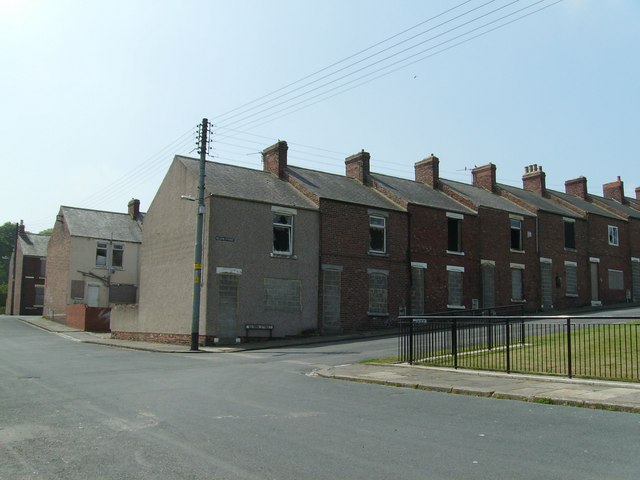
The colliery is gone. The rows built to house its workers at Ferryhill Station outlived it, though by 2007 Nelson Street was scheduled for demolition. Pit tubs from the district stand preserved outside Ferryhill Town Hall.
Nothing of the colliery; the rows built for its workers at Ferryhill Station outlived it, and pit tubs from the district stand outside Ferryhill Town Hall.
Related mines
- Bishop Middleham Colliery — Under Dorman, Long and Company from 1923 Bishop Middleham was worked as a small satellite of Mainsforth, and in 1918 the agent at Mainsforth was overseeing drifts driven into the Bishop Middleham royalty in the Busty seam.
- East Howle Colliery — Ferryhill collieries both owned by the Carlton Iron Company.
- Windlestone Colliery — Sunk in the same year, 1876, in the same Ferryhill district, and both had interrupted early lives — Mainsforth abandoned by 1877 and dug out again after 1900, Windlestone standing idle through 1883 and 1884.
Nearby mines
- Little Chilton Colliery — 0.3 miles (0.5 km) W
- Dean and Chapter Colliery — 1.4 miles (2.2 km) NW
- Thrislington Colliery — 1.4 miles (2.2 km) N
- Bishop Middleham Colliery — 1.5 miles (2.3 km) E
- Windlestone Colliery — 1.7 miles (2.7 km) SW
Straight-line distance, within 9 miles (15 km). Show on the map.
Culture
- Norman Cornish (Art)
Cornish was transferred here in 1962 and was working here when he was commissioned to paint the Durham Miners' Gala mural.
People
- Norman Cornish (1919–2014) · worker, from 1962 — Transferred here in 1962; given a year's unpaid leave to paint the Gala mural.
What's uncertain
Points where sources disagree or the record could not be settled; both accounts are kept. All open questions in the archive.
- Two shafts were sunk in 1873 to 270 ft to the Five Quarter seam; the mine was abandoned by 1877 and the shafts used as a rubbish dump. The cause has been attributed both to the slack coal trade after the Franco-Prussian war and to an inundation of the pit. (uncertain) 1
Recorded claims
Individual factual claims, each attached to the source(s) that support it below. Where sources disagree, both are kept.
- Two shafts were sunk in 1873 to 270 ft to the Five Quarter seam; the mine was abandoned by 1877 and the shafts used as a rubbish dump. The cause has been attributed both to the slack coal trade after the Franco-Prussian war and to an inundation of the pit. (uncertain) 1
- The Carlton Iron Company acquired the lease twenty-three years later, re-excavated the shafts, dewatered the workings, and deepened the East pit to an inset at 850 ft in the Harvey seam with a further 40 ft below it for a sump, finishing that shaft at 14 ft 6 in diameter. 1
- The workforce grew from 51 in 1902 to 957 by 1910 and 1,675 by 1921, peaking at 2,249 in 1940 and standing at 2,244 as late as 1955. 1
- The colliery raised 508,809 tons in 1947 and produced coking, gas, household, manufacturing and steam coals; it closed on 6 December 1968. 1
- The BGS mine-plans catalogue holds a Mining Remediation Authority abandonment plan titled 'Mainsforth' (catalogue D1228, Harvey 'N', dated 1967). 2
Photographs & further reading
The full owner, output, employment and seam tables, the account of the failed first sinking and the reopening, and the roll of those killed at the colliery.
View sourceSources
- (primary) Mainsforth Colliery — Durham Mining Museum
- (primary) BGS / Mining Remediation Authority mine plans: MAINSFORTH — British Geological Survey / Mining Remediation Authority
- (observational) Nelson Street, Ferryhill Station — colliery rows built for Mainsforth workers — Geograph Britain and Ireland
Record created: 9 September 2026 · Last researched: 9 September 2026