 MineArchive
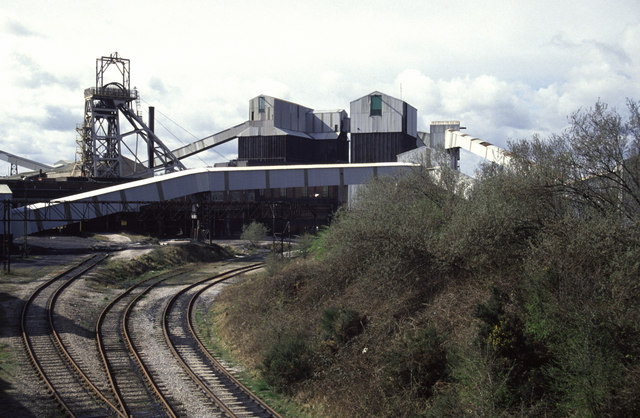
Littleton Colliery
| Location | Huntington, near Cannock, Staffordshire — 52.7136, -2.0444 (exact) |
|---|---|
| Commodity | Coal |
| Type | Coal |
| Worked | From 1877 (sinking)–3 December 1993 |
| Maximum depth | No.2 shaft reached 1,644ft (later replacement shaft to 1,662ft) |
| Operators | Lord Hatherton (1897–1947), National Coal Board (1947–1993) |
Overview
The last deep coal mine on the Cannock Chase Coalfield, closed in December 1993 after a government 'core pit' reprieve granted the previous year was overturned — ending centuries of deep mining in Staffordshire and, with it, over 800 jobs.
History
The first attempt to sink a colliery at Littleton began in 1877, when the Cannock and Huntingdon Colliery Company started a No.1 shaft; at 438ft it struck water, flooded, and the company was wound up in 1884 with the shaft never recovered. The mine's real history began in 1897, when the landowner Lord Hatherton — whose family had taken the Littleton surname in 1812 — organised the sinking of a new No.2 shaft, completed to 1,644ft in February 1899. Recovery of the old flooded No.1 shaft was abandoned in May 1900 and a replacement sunk in its place, reaching 1,662ft by November 1902. The colliery grew over the 20th century into one of the largest in the Midlands and, as neighbouring pits closed one by one, the last working colliery left on the Cannock Chase Coalfield. Substantially modernised by the National Coal Board with skip winding in the 1960s, it was regularly raising over a million tons of coal a year by the 1980s, employing around 1,900 miners in 1982.
Littleton's closure became a genuine political flashpoint. When British Coal announced in October 1992 that 31 pits nationally were to close, Littleton was among them — but following public outcry, parliamentary debate and union appeals, it was named a protected 'core' pit at the end of 1992, seemingly securing its future. That reprieve was overturned within the year, and Littleton closed for good on 3 December 1993, taking over 800 jobs with it and ending Staffordshire's long history of deep coal mining at a stroke.
Geology
Littleton worked the Productive Coal Measures of the Cannock Chase Coalfield, a Upper Carboniferous sequence forming the northern extension of the wider South Staffordshire coalfield, reached here at unusually great depth for the district — its shafts among the deepest sunk anywhere on Cannock Chase.
Workings
A conventional deep shaft mine, its No.2 shaft and a later replacement shaft both reaching over 1,600ft; skip winding was installed as part of 1960s National Coal Board modernisation, allowing the substantially increased output the colliery achieved through the 1970s and 80s.
Closure
Littleton closed on 3 December 1993, after a 'core pit' reprieve granted in late 1992 was overturned, with the loss of over 800 jobs — the last deep coal mine to close on the Cannock Chase Coalfield.
What remains
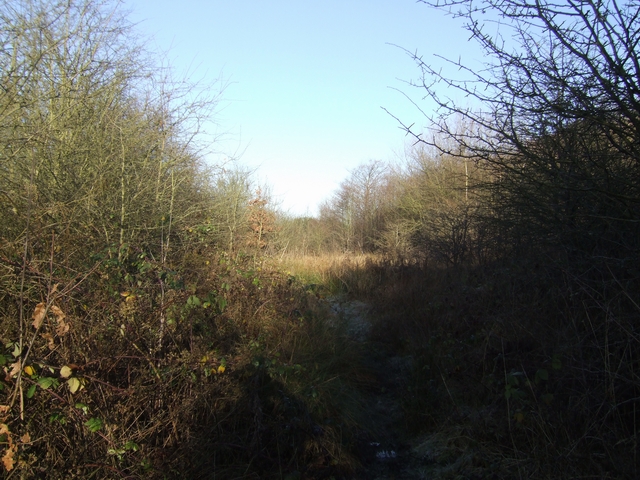
The colliery has been completely demolished; the site is now shared between Littleton Green Community School and a housing development, while the former spoil tip has been landscaped into Littleton Leisure Park, used for walking and managed for wildlife. One of the colliery's own steam locomotives, Littleton No.5, survives and is under restoration at the Avon Valley Railway.
Nothing of the colliery's own surface buildings survives on site; Littleton Leisure Park, laid out on the former spoil tip, is the main visible legacy, alongside the preserved locomotive Littleton No.5 at the Avon Valley Railway.
Related mines
- Cannock and Leacroft Colliery — Littleton's upcast shaft was kept open specifically to pump water and protect the neighbouring Cannock and Leacroft from flooding.
Nearby mines
- Cannock and Leacroft Colliery — 2.1 miles (3.3 km) SE
- Wimblebury Colliery — 2.8 miles (4.6 km) E
- Hawkins Colliery — 3.1 miles (5.0 km) S
- Cannock Old Coppice Colliery — 3.2 miles (5.1 km) E
- East Cannock Colliery — 3.3 miles (5.3 km) E
Straight-line distance, within 9 miles (15 km). Show on the map.
Recorded claims
Individual factual claims, each attached to the source(s) that support it below. Where sources disagree, both are kept.
- The Cannock and Huntingdon Colliery Company's No.1 shaft, begun in 1877, flooded at 438ft around 1880, and the company was wound up in 1884 without recovering it. 1
- Lord Hatherton organised the sinking of a new No.2 shaft from 1897, completed to 1,644ft in February 1899; a replacement for the abandoned No.1 shaft reached 1,662ft by November 1902. 1,2
- Following National Coal Board modernisation with skip winding in the 1960s, the colliery employed around 1,900 miners and regularly raised close to or over a million tons of coal a year by 1982. 1,3
- Littleton was named among 31 pits for closure in October 1992, was then designated a protected 'core' pit at the end of 1992, and that reprieve was overturned within the year, with the colliery closing on 3 December 1993 and the loss of over 800 jobs. 1,3
Sources
- (secondary) Littleton Colliery — Northern Mine Research Society
- (primary) BGS/Mining Remediation Authority mine plans — Littleton — British Geological Survey / Mining Remediation Authority
- (secondary) Littleton Colliery — Wikipedia
Record created: 26 August 2026 · Last researched: 26 August 2026