 MineArchive
Lilley Drift
| Location | Rowlands Gill, Tyne and Wear — 54.9282, -1.7405 (exact) |
|---|---|
| Commodities | Coal, Fireclay |
| Type | Coal |
| Worked | 1877–6 January 1957 |
| Maximum depth | Unknown. |
| Operators | Joseph Cowen & Co. (1877–?), Priestman Collieries Ltd (?–1947), National Coal Board (1947–1957) |
Overview
A drift mine at Rowlands Gill opened by Joseph Cowen & Co. in 1877, later Priestman's, working the Brockwell and other seams for coal and fireclay until the National Coal Board closed it in January 1957.
History
Lilley Drift was a drift mine at Rowlands Gill, in the Derwent valley about six miles west-south-west of Newcastle. Joseph Cowen & Co., who also worked the colliery at Blaydon Burn, opened it in 1877. Whellan's directory of 1894 found about 100 men there working the Brockwell seam, three feet six inches thick; the colliery as a whole employed 202 that year, 240 in 1896 and 290 in 1900, raising gas and manufacturing coal along with fireclay.
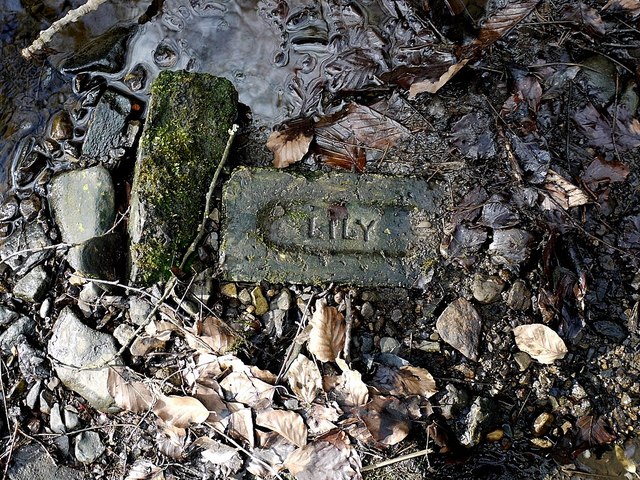
The Priestman Colliery Company built coke ovens at the drift around 1883, and Priestman Collieries Ltd owned it by the 1910s and held it until the National Coal Board took over in 1947. Its fireclay fed the Lilley brickworks beside it, whose bricks were stamped 'Lily'. Brick production peaked in 1955 at about 150,000 a week, mostly for local pits, and after 1964 the works made facing bricks used across the North East; it closed in 1976 or 1977.
Under the Coal Board the drift raised coking coal from the Brockwell, Five Quarter and Victoria seams: 25,000 tons in 1947, with between 106 and 200 men through the 1950s. It closed on 6 January 1957. The Coal Authority holds plans of its Victoria and Brockwell workings abandoned that year, Brockwell plans shared with Blaydon Burn's Mary pit, and Towneley plans of 1953.
Eleven men are recorded killed at the drift between 1891 and 1933, most by falls of stone. In December 1896 the furnaceman Isaac Hetherington, aged 70, died when water coming away in the upcast shaft reversed the ventilation and drove the furnace smoke onto him.
Geology
Worked the Brockwell seam, three feet six inches thick in 1894, and under the Coal Board the Brockwell, Five Quarter and Victoria; earlier plans show the Towneley. Fireclay was worked with the coal.
Workings
A drift, ventilated in the 1890s by a furnace and upcast shaft; coke ovens were built at the drift around 1883.
Closure
Closed by the National Coal Board on 6 January 1957; plans of the Victoria and Brockwell workings are dated 1957.
What remains
The brickworks site beside the drift was reclaimed for agriculture after it closed in 1976.
The Lilley brickworks' office building, with a plaque, stands on the A694 at Rowlands Gill; a siding platform beside a pond and derelict engine sheds by the Derwent Walk survive at the brickworks site.
Redevelopment
The brickworks site was reclaimed for agriculture.
Related mines
- Barlow Towneley Drift — Both worked the Towneley seam a short distance apart (Lilley Towneley plans 1953, BGS 21894082; Barlow Towneley 1961).
- Blaydon Burn Colliery — Both owned by Joseph Cowen & Co. and then Priestman; Brockwell plans of 1957 cover 'Blaydon Burn / Mary / Lilley' together (BGS 21896843).
Nearby mines
- Barlow Towneley Drift — 0.2 miles (0.3 km) N
- Bryan's Leap Colliery — 0.8 miles (1.3 km) S, County Durham
- Barcus Close Colliery — 0.9 miles (1.5 km) S, County Durham
- Clockburn Drift — 1.4 miles (2.2 km) NE
- South Garesfield Colliery — 1.4 miles (2.3 km) SW
Straight-line distance, within 9 miles (15 km). Show on the map.
What's uncertain
Points where sources disagree or the record could not be settled; both accounts are kept. All open questions in the archive.
Recorded claims
Individual factual claims, each attached to the source(s) that support it below. Where sources disagree, both are kept.
- Opened in 1877 by Joseph Cowen & Co. 1,2
- About 100 men worked the Brockwell seam, three feet six inches thick, in 1894. 3
- Priestman Collieries Ltd owned the drift until the National Coal Board took over in 1947. 3,1
- The Priestman Colliery Company built coke ovens at the drift around 1883. 4
- Closed on 6 January 1957. 5,3,1
- Plans of the Victoria workings were abandoned in 1957 and of the Towneley in 1953. 6,7
- The brickworks closed in 1976. (disputed) 4
- The brickworks remained open until 1977. (disputed) 2
Photographs & further reading
Owners, output, employment 1894-1957, seams, Whellan's 1894 note and the names of those killed.
View sourceHistoric Environment Record entry with the opening, owners and closure date.
View sourceThe brickworks beside the drift: coke ovens, brick output, closure and surviving buildings.
View sourceSources
- (secondary) Tyne and Wear HER 6912: Rowland's Gill, Lilley Drift — Tyne and Wear Historic Environment Record
- (observational) Geograph 2825892: 'Lily' bricks, Blaydon Burn (Andrew Curtis) — Geograph
- (primary) Durham Mining Museum: Lilley Drift — Durham Mining Museum
- (secondary) Tyne and Wear HER 5140: Lilley Brickworks — Tyne and Wear Historic Environment Record
- (secondary) NCB Collieries - England (Northern Mine Research Society) — Northern Mine Research Society
- (primary) BGS / Mining Remediation Authority mine plan: LILLEY, Victoria 'T' seam, abandoned 1957 — British Geological Survey
- (primary) BGS / Mining Remediation Authority mine plan: LILLEY, Towneley seam, abandoned 1953 — British Geological Survey
Record created: 10 October 2026 · Last researched: 10 October 2026