 MineArchive
South Garesfield Colliery
| Also known as | Friarside Colliery, North Lintz Colliery |
|---|---|
| Location | Low Friarside, Rowlands Gill, Tyne and Wear — 54.9092, -1.7550 (approximate) |
| Commodities | Coal, Fireclay |
| Type | Coal |
| Worked | 1865–February 1960 |
| Maximum depth | Unknown. |
| Operators | Mrs C. M. Richardson (1880–1889), South Garesfield Colliery Co. Ltd (1890–1946), National Coal Board (1947–1960) |
Overview
A drift colliery on the Derwent at Low Friarside near Rowlands Gill, also known as North Lintz and Friarside, working coking coal and fireclay from 1865 until February 1960; three men died of carbon monoxide after shot firing in 1929.
History
South Garesfield Colliery stood on the Derwent at Low Friarside, near Rowlands Gill, and was also known as Friarside Colliery and North Lintz Colliery. The Durham Mining Museum gives 1865 as its opening; the history of Rowlands Gill says it opened in August 1887, but the Museum holds archive papers under the name North Lintz from 1870 and South Garesfield from 1878, so the name was in use earlier. Whellan's directory of 1894 describes North Lintz, 'or South Garesfield, as it is now designated', carried on by the South Garesfield Coal Co., Limited, working the Busty, Three Quarter and Brockwell seams by three drifts for an output of about 80,000 tons a year from some 230 men and boys.
Mrs C. M. Richardson was the owner in the 1880s and the South Garesfield Colliery Co. Ltd in the 1890s; the National Coal Board took over in 1947. The Museum lists five drifts (Beaumont, Busty, Towneley, Water Level and Yew Tree) and coking coal throughout, with gas, manufacturing and steam coals from the 1920s and fireclay as a second product. Seams worked over the life of the colliery included the Brockwell, Busty, Hutton, Three Quarter, Tilley, Towneley and Victoria, with the Main and Beaumont added in the 1930s. Five rows of houses and flats by the river at Rowlands Gill, known locally as The Bottoms, were built to house the colliery's men.
Employment was 308 in 1894, 390 in 1900, 368 in 1921, 159 in 1925, 348 in 1930, 248 in 1950 and 120 in 1960. William Braidford junior was manager from 1888 to 1909, F. R. A. Shiel managed in 1910 and 1915 and was agent from 1915 to 1935, William Braidford managed again in 1919 to 1925 and F. G. Braidford from 1930 through the 1950s. The Museum lists 22 deaths from 1880 to 1945, most of them from falls of stone.
On 17 May 1929 three men died of carbon monoxide after shot firing in the Victoria seam (see Disasters, below); a fan was put in at the Lintz Anna shaft afterwards.
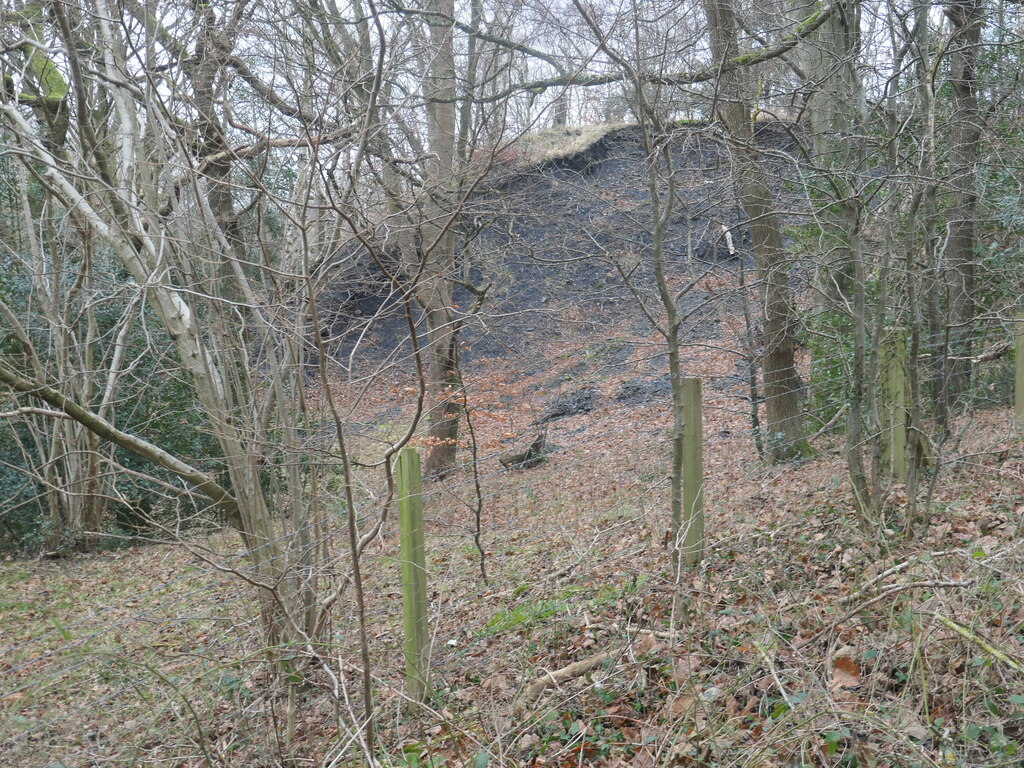
The colliery closed in February 1960, when 120 men were employed, 90 below ground and 30 on the surface. The Ordnance Survey large-scale maps show no spoil heap here in 1915 or earlier but one on the map revised in 1939, and part of it remains in woodland on the south side of a railway path between the Tyne valley and Consett.
Geology
Coking coal and fireclay. The Brockwell, Busty (top and bottom), Three Quarter, Tilley, Towneley, Victoria, Hutton (big and little), Main and Beaumont seams were worked. The Victoria seam was about 1 ft 4 in thick with a blue metal roof and a hard fireclay floor. The Main seam was recorded as abandoned on 8 June 1938 and the Big Hutton, Little Hutton and Three Quarter seams in 1950.
Workings
Worked by drifts: Beaumont, Busty, Towneley, Water Level and Yew Tree. The Victoria seam was worked bord and pillar, the coal hand-got with gelignite and open lights used throughout, firedamp being unknown. Before 1929 no artificial ventilation was used: the intakes were the drifts and the return was the Lintz Anna shaft, about 500 feet above the drift entrances.
Closure
The colliery closed in February 1960 with 120 men on the books; only the Tilley and Towneley seams are listed as worked that year.
What remains
Part of the colliery spoil heap survives in woodland on the south side of a railway path between the Tyne valley and Consett.
Part of the colliery spoil heap.
Redevelopment
Unknown.
Related mines
- Lintz Colliery — The 1929 accident's return airway was the Lintz Anna shaft, the Durham Mining Museum lists North Lintz as another name for South Garesfield, and the South Garesfield Colliery Company worked Lintz's Anna and Esther pits by 1896.
Nearby mines
- Lintz Colliery — 0.7 miles (1.1 km) S, County Durham
- Burnopfield Colliery — 1.2 miles (1.9 km) SE, County Durham
- Byermoor Colliery — 1.9 miles (3.1 km) E
- Garesfield Colliery — 2.0 miles (3.2 km) NW
- Hamsterley Colliery — 2.5 miles (4.1 km) W, County Durham
Straight-line distance, within 9 miles (15 km). Show on the map.
Disasters & major incidents
-
South Garesfield Colliery carbon monoxide accident, 1929
17 May 1929 · Gas / Asphyxiation · 3 fatalities
On 17 May 1929 the deputy and shotfirer Richard Lowes and two pony drivers, William Matthew Malcolm, 14, and Joseph Taylor, 16, died of carbon monoxide in the Victoria seam of South Garesfield Colliery after blasting in a district with almost no air. Rescue parties saved others and five men received the Edward Medal.
What's uncertain
Points where sources disagree or the record could not be settled; both accounts are kept. All open questions in the archive.
- The Durham Mining Museum gives 1865 as the year South Garesfield Colliery opened. (disputed) 1
- The history of Rowlands Gill says South Garesfield Colliery near Low Friarside opened in August 1887. (disputed) 2
Recorded claims
Individual factual claims, each attached to the source(s) that support it below. Where sources disagree, both are kept.
- South Garesfield Colliery was also known as Friarside Colliery and North Lintz Colliery. 1
- The Durham Mining Museum gives 1865 as the year South Garesfield Colliery opened. (disputed) 1
- The history of Rowlands Gill says South Garesfield Colliery near Low Friarside opened in August 1887. (disputed) 2
- The colliery closed in February 1960; a Geograph description also gives its working life as 1865 to 1960. 1,3
- Mrs C. M. Richardson owned the colliery in the 1880s, the South Garesfield Colliery Co. Ltd in the 1890s and the National Coal Board from 1947. 1
- Whellan's 1894 directory describes North Lintz, or South Garesfield, working the Busty, Three Quarter and Brockwell seams by three drifts, with an average annual output of 80,000 tons and about 230 men and boys. 1,4
- The colliery worked the Beaumont, Busty, Towneley, Water Level and Yew Tree drifts. 1
- Employment was 308 in 1894, 390 in 1900, 368 in 1921, 159 in 1925, 348 in 1930, 248 in 1950 and 120 in 1960. 1
- William Braidford junior was manager from 1888 to 1909, F. R. A. Shiel in 1910 and 1915, and F. G. Braidford from 1930 to the 1950s. 5
- The Main seam was recorded as abandoned on 8 June 1938, and the Big Hutton, Little Hutton and Three Quarter seams in 1950. 1
- A ventilating fan was installed at the Lintz Anna shaft after the 1929 accident. 6
- The Museum lists 22 deaths at the colliery between 1880 and 1945, most of them from falls of stone. 1
- Five rows of houses and flats by the river at Rowlands Gill, known locally as The Bottoms, were built to house miners working at South Garesfield Colliery. 2
- Ordnance Survey large-scale maps show no spoil heap at South Garesfield in 1915 or before but show one on the map revised in 1939. 3
Photographs & further reading
Owners, drifts, seams, output, employment 1894 to 1960, abandonments and the names of the 22 men killed.
View sourceThe inspector's account of the carbon monoxide accident of 17 May 1929 in the Victoria seam, with the rescue.
View sourceA photograph of the surviving spoil heap with notes on when it first appears on Ordnance Survey maps.
View sourceSources
- (primary) Durham Mining Museum - South Garesfield Colliery — Durham Mining Museum
- (secondary) Rowlands Gill (GENUKI) — GENUKI
- (observational) Remains of a South Garesfield colliery spoil heap (Geograph 7973411) — Geograph
- (primary) Durham Mining Museum - South Garesfield Colliery Research Notes — Durham Mining Museum
- (primary) Durham Mining Museum - South Garesfield Colliery Management — Durham Mining Museum
- (primary) Durham Mining Museum - Colliery Accident 1929: South Garesfield — Durham Mining Museum
Record created: 30 September 2026 · Last researched: 30 September 2026