 MineArchive
Barbara Pit, Kirkland
| Also known as | Kirkland Barbara Pit, Kirkland Iron Ore Mine |
|---|---|
| Location | Kirkland, Lamplugh, between Rowrah and Kelton Fell, west Cumberland, Cumbria — 54.5500, -3.4344 (approximate) |
| Commodity | Iron |
| Type | Iron |
| Worked | 1923–31 March 1926 |
| Operators | Kirkland Iron Ore Company Limited (1923–1926) |
Overview
A last small hematite pit of the Kelton and Knockmurton iron field at Kirkland, Lamplugh, worked by the Kirkland Iron Ore Company from 1923 to 1925 with never more than seventeen hands, and abandoned on 31 March 1926 as the West Cumberland ore trade collapsed.
History
The fells above Kirkland had been mined for hematite since the 1850s, Bairds' Kelton Fell and Knockmurton mines expanding greatly from 1869 and drawing Cornish miners whose Bible Christian chapel still stands in the village; the Rowrah and Kelton Fell mineral railway of 1877 carried the ore out until it closed in 1914. Kelton Fell mine shut in 1913 and most of the others in the 1920s, and the township's population fell sharply through that decade. The Barbara Pit was a late small venture on the Kirkland ground: the Durham Mining Museum returns it under the Kirkland Iron Ore Company Limited raising red hematite with 12 employed in 1923, 16 in 1924 and 17 in 1925, when it was returned as abandoned; the catalogue of plans gives the abandonment date as 31 March 1926. The Northern Mine Research Society's history of the Kelton and Knockmurton mines covers it in two pages, which were not available for this record.
Geology
Red hematite of the West Cumberland iron field, in the Carboniferous Limestone at the foot of Kelton Fell.
Geological setting: Iron Replacement Deposits (historical documentary reference)
Workings
A single pit; employment 12 in 1923 (6 below), 16 in 1924, 17 in 1925 (10 below). Depth and output are not in the sources read.
Closure
Returned as abandoned in the 1925 list; the abandonment plan (8,469) gives 31 March 1926.
What remains
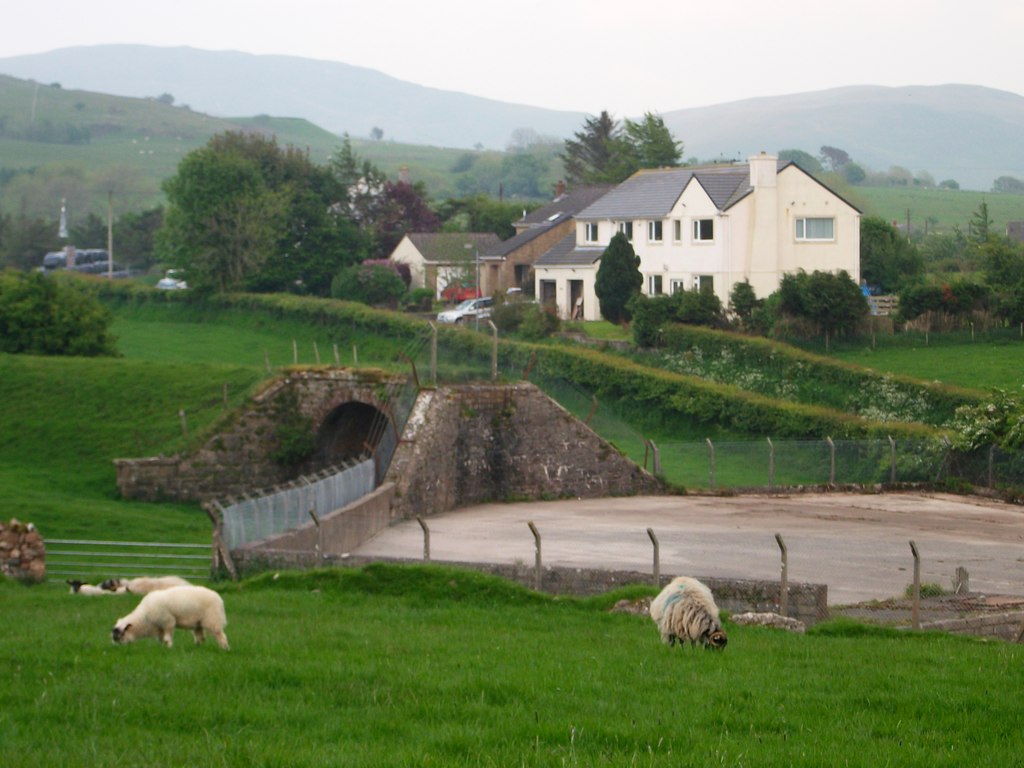
On private land at 207 metres above Kirkland; the state of the site is not recorded in the sources read. The embankments and a bridge of the Rowrah and Kelton Fell railway survive nearby.
Not recorded in the sources read.
Related mines
- Eskett Pit — Neighbouring hematite pits of the Rowrah and Frizington district, two miles apart.
- Frizington Iron Mines — Part of the same West Cumberland hematite field.
Nearby mines
- Frizington Iron Mines — 2.7 km SW
- Eskett Pit — 2.9 km SW
- Mowbray Mine — 3.9 km SW
- Crossgill Mine — 4.2 km W
- Crossfield Mine — 6.6 km SW
Straight-line distance, within 15 km. Show on the map.
Recorded claims
Individual factual claims, each attached to the source(s) that support it below. Where sources disagree, both are kept.
- Returned 1923 to 1925 and abandoned on 31 March 1926. 1,2
- Kirkland Iron Ore Co. Ltd. 1,3
- 12 employed in 1923, 16 in 1924 and 17 in 1925. 1
- Iron mining at Murton and Kelton Fell ran from the 1850s, served by the Rowrah and Kelton Fell railway from 1877; Kelton Fell closed in 1913 and most mines in the 1920s. 4
Photographs & further reading
The 1923 to 1925 returns of owner, output and employment.
View sourceGrid reference and the British Mining 36 pages that cover the pit.
View sourceSources
- (primary) Kirkland 'Barbara' Pit (Iron Ore) — Durham Mining Museum — Durham Mining Museum
- (primary) Catalogue of plans of abandoned mines: Kirkland, Barbara — Durham Mining Museum — Durham Mining Museum
- (secondary) Barbara Pit — Buddlepit Mine Database — Buddlepit
- (secondary) Lamplugh township — Cumbria County History Trust — Cumbria County History Trust
- (secondary) Kirkland, Lamplugh — Wikipedia — Wikipedia
Record created: 12 September 2026 · Last researched: 12 September 2026