 MineArchive
Mowbray Mine
| Location | Frizington, Cumbria — 54.5333, -3.4883 (approximate) |
|---|---|
| Commodity | Iron |
| Type | Iron |
| Worked | 1842–Early 20th century |
| Maximum depth | Unknown. |
| Operators | Mowbray Iron Ore Company (1864–?) |
Overview
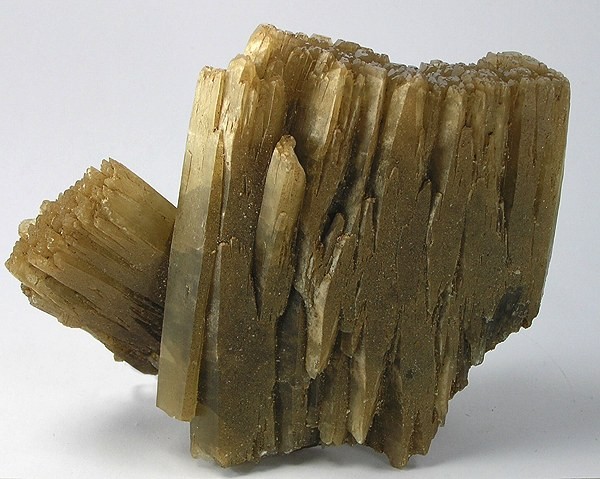
A haematite iron mine at Frizington in the West Cumbrian iron field, worked by the Mowbray Iron Ore Company from the 1860s and now remembered chiefly for the exceptional mineral specimens -- baryte, fluorite and calcite alongside its haematite -- that its workings produced.
History
Iron ore was first identified on the Mowbray Estate by a borehole in 1842, and royalty leases to work it followed from 1849. A new shaft was being sunk by the Mowbray Iron Ore Company in 1864, and by 1883 the reorganised Mowbray Iron Ore Company Limited was working Mowbray No. 1 Pit at Frizington, part of the wider West Cumbrian haematite field that also supported neighbouring mines at Cleator Moor and Egremont. Like most of the district's mines, Mowbray was worked hardest through the mid-to-late 19th century and closed in the early 20th century as richer, more accessible ore bodies elsewhere undercut the West Cumbrian field. The mine survives today chiefly in mineral collections rather than in history books: its baryte, fluorite, calcite and dolomite specimens, often found alongside the haematite itself, are held in university and private collections, including material from the Dan Ehrling and University of Chicago collections.
Geology
Haematite iron ore hosted in Carboniferous Limestone of the West Cumbrian iron field, with associated gangue minerals including baryte, fluorite, calcite and dolomite.
Workings
A new shaft was being sunk in 1864, and by 1883 the reorganised company was working Mowbray No. 1 Pit at Frizington.
Closure
Worked hardest through the middle and later 19th century and closed in the early 20th, like most of the district's mines.
What remains
The mine survives today chiefly in mineral collections rather than on the ground.
Related mines
- Frizington Iron Mines — One of the Frizington haematite pits.
Nearby mines
- Eskett Pit — 0.7 miles (1.2 km) E
- Frizington Iron Mines — 0.8 miles (1.2 km) NE
- Crossgill Mine — 1.2 miles (1.9 km) N
- Crossfield Mine — 1.6 miles (2.6 km) SW
- Crowgarth Mine — 1.7 miles (2.7 km) SW
Straight-line distance, within 9 miles (15 km). Show on the map.
Recorded claims
Individual factual claims, each attached to the source(s) that support it below. Where sources disagree, both are kept.
- A borehole on the Mowbray Estate found iron ore in 1842, royalty leases to work it followed from 1849, and the Mowbray Iron Ore Company was sinking a new shaft by 1864. 1
- By 1883 the Mowbray Iron Ore Company Limited was operating Mowbray No. 1 Pit at Frizington. 1
- The Mining Remediation Authority holds abandonment plans OM3325 (three sheets, haematite iron ore, 33 feet to the inch) and OM7463 for Mowbray, and a plan of Mowbray Mines No. 3 Pit on the No. 3 eye (17353). 2
- Mowbray was an iron-ore mine of the West Cumbrian iron field whose baryte specimens are of particular interest to collectors, alongside its calcite, dolomite, fluorite and hematite. 3
Photographs & further reading
A short company-history entry for the mine's operator.
View sourceSources
- (secondary) Mowbray Iron Ore Co — Graces Guide
- (primary) Mowbray abandonment plans OM3325 (BGS mine plans catalogue) — British Geological Survey / Mining Remediation Authority
- (secondary) Mowbray mine, Frizington (Albion Fire and Ice) — Albion Fire and Ice
- (secondary) Baryte specimen from Mowbray Mine — Wikimedia Commons (Rob Lavinsky, iRocks.com)

Record created: 30 August 2026 · Last researched: 24 September 2026