 MineArchive
Huncoat Colliery
| Also known as | Broadmeadow Colliery |
|---|---|
| Location | Huncoat, Accrington, Lancashire — 53.7730, -2.3470 (approximate) |
| Commodity | Coal |
| Type | Coal |
| Worked | 1885 or 1890 (sinking)–9 February 1968 |
| Maximum depth | 850 feet (shaft) |
| Operators | Hargreaves Collieries Ltd (?–1947), National Coal Board (1947–1968), George Hargreaves & Co. |
Overview
George Hargreaves & Co.'s colliery at Huncoat, near Accrington, sunk in the late 1880s or early 1890s to the Upper and Lower Mountain. It wound the coal of Calder and Scaitcliffe, fed Huncoat power station and closed on 9 February 1968.
History
Huncoat Colliery, also called Broadmeadow, stood north of Huncoat station by Meadow Top Bridge. George Hargreaves & Co. sank it to the Upper and Lower Mountain mines; its first shaft is dated to 1885 locally and the sinking to 1890-93 elsewhere, and the shaft eventually reached 850 feet. It raised coking, household and manufacturing coal, and over a hundred coke ovens stood at the colliery by 1910. Employment rose from 222 in 1894 to 577 in 1910 and 689 in 1923. Before 1930 the company linked its Calder and Scaitcliffe collieries to Huncoat underground, and Huncoat wound the coal from all three.
The National Coal Board took over in 1947, when the pit raised 78,000 tons. It modernised the pit bottom, fitted larger cages and brought in diesel locomotives hauling three-ton mine cars, and in the 1950s Huncoat once raised 1,300 tons in a day. From 1952 it fed Huncoat power station along a half-mile railway and an overhead conveyor in a concrete duct. Three men were injured by an explosion in December 1946. The saddle tanks Raven and Linnet were still working its sidings in 1960. The colliery closed on 9 February 1968 when its workable coal was exhausted, leaving over a million tons of uneconomic coal behind. The western end of the pit top is now a nature reserve.
Geology
Lower Coal Measures of the Burnley coalfield: the Upper and Lower Mountain mines, with fireclay.
Workings
Shafts to the Upper and Lower Mountain, linked underground with Calder and Scaitcliffe; over a hundred coke ovens by 1910; NCB-era larger cages and diesel haulage of three-ton mine cars; railway and overhead conveyor to Huncoat power station.
Closure
Closed on 9 February 1968 as its workable coal was exhausted, abandoning over a million tons of uneconomic coal.
What remains
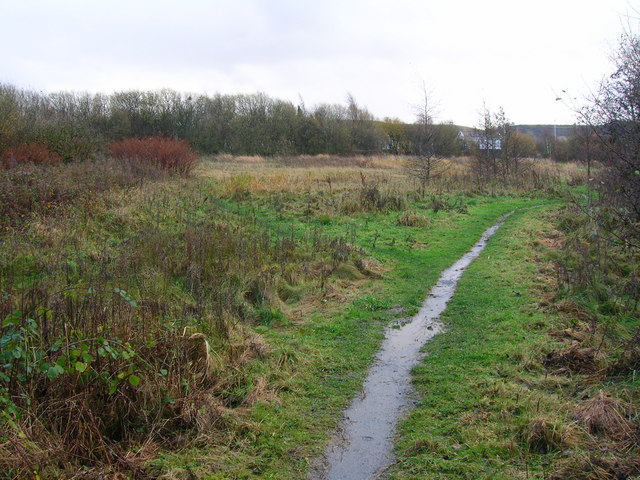
The western end of the old pit top is a nature reserve with paths and young woodland; an old mineral-railway underbridge survives by Enfield Road.
A mineral-railway underbridge by Enfield Road.
Redevelopment
The western end of the pit top was landscaped as the Old Pit Top Nature Reserve.
Related mines
- Scaitcliffe Colliery — Linked underground before 1930; Huncoat wound Scaitcliffe's coal.
Nearby mines
- Moorfield Colliery — 0.5 miles (0.7 km) NW
- Whinney Hill Colliery — 1.1 miles (1.8 km) W
- Scaitcliffe Colliery — 1.7 miles (2.8 km) SW
- Hapton Valley Colliery — 2.3 miles (3.7 km) E
- Martholme Colliery — 2.3 miles (3.7 km) NW
Straight-line distance, within 9 miles (15 km). Show on the map.
What's uncertain
Points where sources disagree or the record could not be settled; both accounts are kept. All open questions in the archive.
- Sunk by George Hargreaves & Co. between 1890 and 1893 to the Upper and Lower Mountain. (disputed) 1
- Its first shaft was sunk in 1885 and eventually reached 850 feet. (disputed) 2
Recorded claims
Individual factual claims, each attached to the source(s) that support it below. Where sources disagree, both are kept.
- Sunk by George Hargreaves & Co. between 1890 and 1893 to the Upper and Lower Mountain. (disputed) 1
- Its first shaft was sunk in 1885 and eventually reached 850 feet. (disputed) 2
- Before 1930 Calder and Scaitcliffe were linked to it underground, and Huncoat wound their coal. 1,3
- Employed 222 in 1894 and 689 in 1923; 78,000 tons in 1947. 3
- It supplied Huncoat power station by a half-mile railway and overhead conveyor. 2,4
- Closed on 9 February 1968, its coal exhausted. 1,2
- The western part of the pit top is a nature reserve. 2,5
- Its Lower Mountain workings, planned with Calder and Scaitcliffe, are dated 1962. 6
Photographs & further reading
Owners, seams and employment 1894-1954, and those killed.
View sourceThe village's history year by year, including the colliery, its coke ovens and the power station.
View sourceHuncoat among the collieries of the Burnley coalfield.
View sourceSources
- (secondary) Burnley Coalfield — Wikipedia — Wikipedia
- (secondary) Timeline — Huncoat Community
- (primary) Huncoat Colliery — Durham Mining Museum
- (secondary) Huncoat Power Station — Wikipedia
- (observational) Old Pit Top Nature Reserve (photograph) — Geograph
- (primary) Mine plan: Huncoat, Calder, Scaitcliffe, Lower Mountain — British Geological Survey
Record created: 2 October 2026 · Last researched: 3 October 2026