 MineArchive
Hapton Valley Colliery
| Location | Hapton, near Burnley, Lancashire — 53.7780, -2.2920 (exact) |
|---|---|
| Commodity | Coal |
| Type | Coal |
| Worked | early 1850s–1982 |
| Operators | National Coal Board (1947–1982) |
Overview
The last deep coal mine working the Burnley Coalfield, whose nearly 130-year working life was marked by a 1962 gas explosion that killed 19 men.
History
Hapton Valley Colliery's first shafts were sunk in the early 1850s, and the mine went on to have a working life of almost 130 years, surviving to become the last deep mine operating on the Burnley Coalfield. At its height it employed 386 men underground and 67 on the surface, producing around 700 tons of saleable coal a day. The seams worked at Hapton Valley carried high levels of firedamp, and two gas ignitions in summer 1960 and a third on 4 April 1961 established a clear pattern of hazardous conditions before, at just after 9.45am on 22 March 1962, a major explosion in the number two district killed 16 men outright, with three more dying later of their injuries — 19 deaths in total. Official investigators concluded the explosion was most likely caused by an ignition of firedamp, possibly combined with coal dust, though they could not conclusively identify its exact source or ignition point despite a thorough inquiry. The colliery finally closed in 1982.
Geology
Hapton Valley worked coal seams of the Burnley Coalfield known to carry unusually high levels of firedamp.
Workings
Coal was worked from shafts sunk in the early 1850s, developed over almost 130 years into the last deep working mine on the Burnley Coalfield.
Closure
Hapton Valley Colliery closed in 1982.
What remains
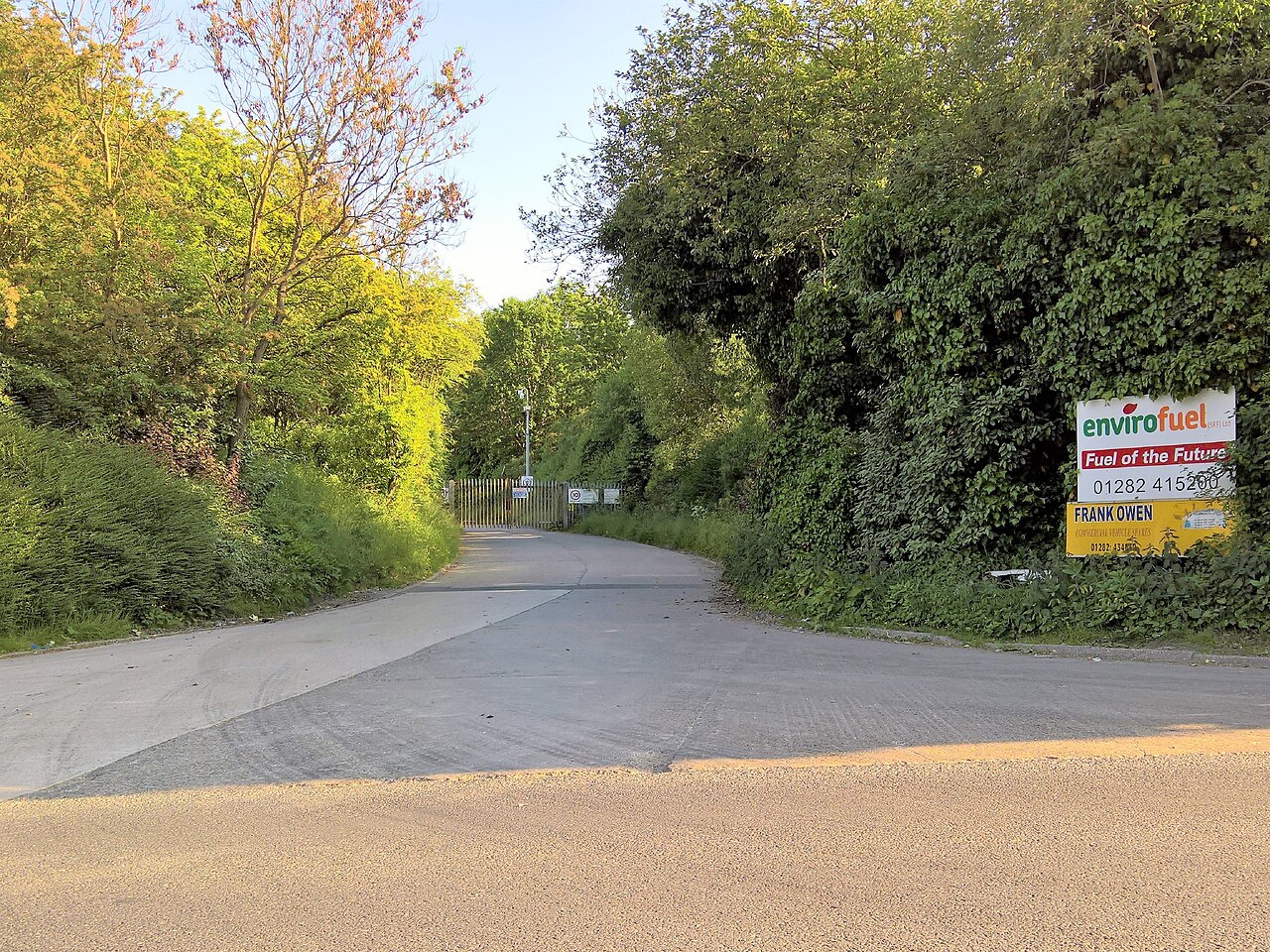
Little of the colliery survives above ground; the site has been redeveloped.
Little of the original colliery structures survive above ground today.
Related mines
- Burnt Hills Colliery — Hapton Valley took over Burnt Hills' workings about 1910; their tramroads were joined in 1880.
Nearby mines
- Gannow Colliery — 1.0 miles (1.6 km) NE
- Habergham Colliery — 1.3 miles (2.1 km) N
- Burnt Hills Colliery — 2.1 miles (3.4 km) SE
- Huncoat Colliery — 2.3 miles (3.7 km) W
- Towneley Colliery — 2.5 miles (4.0 km) E
Straight-line distance, within 9 miles (15 km). Show on the map.
Disasters & major incidents
-
Hapton Valley Colliery explosion, 1962
22 March 1962 · Explosion · 19 fatalities
A gas explosion at Hapton Valley Colliery just after 9.45am on 22 March 1962 killed 16 men outright, with three more later dying of their injuries, in a mine whose seams were already known to carry unusually high levels of firedamp.
Recorded claims
Individual factual claims, each attached to the source(s) that support it below. Where sources disagree, both are kept.
- Hapton Valley Colliery's first shafts were sunk in the early 1850s; it went on to become the last deep mine operating on the Burnley Coalfield, working almost 130 years. 1
- Two gas ignitions in summer 1960 and a further ignition on 4 April 1961 established a clear pattern of hazardous firedamp conditions before the fatal 1962 explosion. 1
- An explosion just after 9.45am on 22 March 1962 in the number two district killed 16 men outright, with three more later dying of their injuries — 19 deaths in total. 1,2
- Hapton Valley Colliery closed in 1982. 1
- Located at about 53.778 N, 2.292 W. 1
Sources
- (secondary) Hapton Valley Colliery — Wikipedia
- (secondary) Hapton Valley Colliery Explosion - Burnley - 1962 — Northern Mine Research Society
Record created: 21 August 2026 · Last researched: 21 August 2026